

199
14 Phytoplankton Assemblages as an Indicator of Water Quality in Seven Temperate Estuarine Lakes in South-East Australia
usually show no strong seasonal peak (Anderson et al. 1994;
Domingues et al. 2005).
14.4 Discussion
Based on the environmental data and cluster analysis, the
environmental conditions of the seven lakes displayed significant differences and they could be classified into three
groups: (1) Lake Illawarra; (2) St. Georges Basin and Coila
Lake; (3) Durras Lake, Burrill Lake, Conjola Lake, and
Swan Lake (Fig. 14.6).
Correlations between environmental factors and phytoplankton assemblages are discussed below to help evaluate
the indicative role of phytoplankton as a water quality and
eutrophication status indicator for coastal lakes.
14.4.1 The Indicative Role of Phytoplankton
Species Composition in Various Habitats
Phytoplankton species composition can be impacted by the
physical (e.g., temperature, salinity, pH), chemical (e.g., eutrophication) and even biological conditions. In this study,
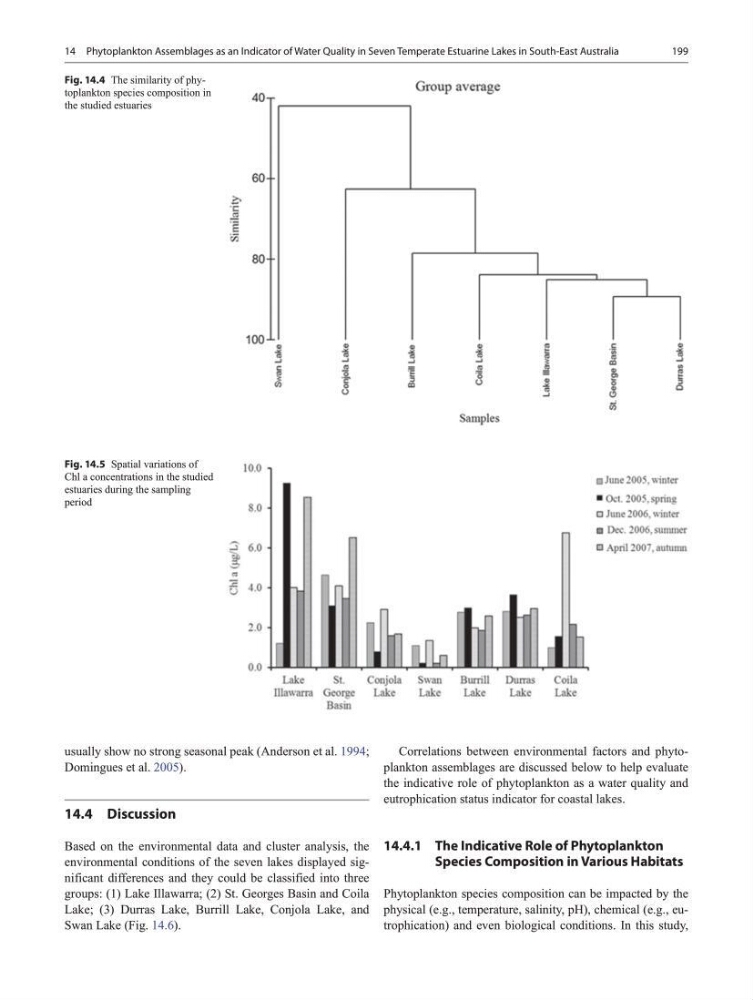
Fig. 14.4 The similarity of phytoplankton species composition in
the studied estuaries
Fig. 14.5 Spatial variations of
Chl a concentrations in the studied
estuaries during the sampling
period
14 Phytoplankton Assemblages as an Indicator of Water Quality in Seven Temperate Estuarine Lakes in South-East Australia
usually show no strong seasonal peak (Anderson et al. 1994;
Domingues et al. 2005).
14.4 Discussion
Based on the environmental data and cluster analysis, the
environmental conditions of the seven lakes displayed significant differences and they could be classified into three
groups: (1) Lake Illawarra; (2) St. Georges Basin and Coila
Lake; (3) Durras Lake, Burrill Lake, Conjola Lake, and
Swan Lake (Fig. 14.6).
Correlations between environmental factors and phytoplankton assemblages are discussed below to help evaluate
the indicative role of phytoplankton as a water quality and
eutrophication status indicator for coastal lakes.
14.4.1 The Indicative Role of Phytoplankton
Species Composition in Various Habitats
Phytoplankton species composition can be impacted by the
physical (e.g., temperature, salinity, pH), chemical (e.g., eutrophication) and even biological conditions. In this study,
Fig. 14.4 The similarity of phytoplankton species composition in
the studied estuaries
Fig. 14.5 Spatial variations of
Chl a concentrations in the studied
estuaries during the sampling
period