

SeaWiFS data, were found to be highly correlated with large-scale and long-term
climate variability (Martinez et al. 2009). Similarly, the correlations between Chl
and climate fluctuations have been reported by Behrenfeld et al. (2008) through
paired Chl and sea surface temperature (SST) observations.
Other physical variables such as wind and sea surface height have also been
used to study the global biological variability in the context of physical dynamics
(Wilson and Adamec 2002; Doney et al. 2003; Uz and Yoder 2004; Wilson and
Coles 2005). In particular, several studies documented the Rossby wave signatures
in the global Chl patterns (Cipollini et al. 2001; Uz et al. 2001; Charria et al. 2003;
Dandonneau et al. 2003; Killworth et al. 2004), although there has been some
debate on the exact mechanism leading to such patterns, either through upwellinginduced biomass enhancement or wave-induced surface accumulation (Dandonneau et al. 2004; Killworth 2004). In a broader context, physical mechanisms
shaping Chl patterns associated with meso-scale eddies (both cyclonic and anticyclonic) have been addressed using satellite and other observations (Brown et al.
1985; McGillicuddy et al. 2001, 2007). Increased Chl is found in cyclonic eddies, a
result of uplifts of the isopycnals and the nutricline. Further, McGillicuddy et al.
(2007) demonstrated that interactions between wind and eddies can retard
upwelling in cyclonic eddies.
Time
Jan98
Jan00
Jan02
Jan04
Jan06
Jan08
Satellite Chl (mg m
-3
)
0.16
0.18
0.20
0.22
0.24
SeaWiFS
MODISA
(b)
(a)
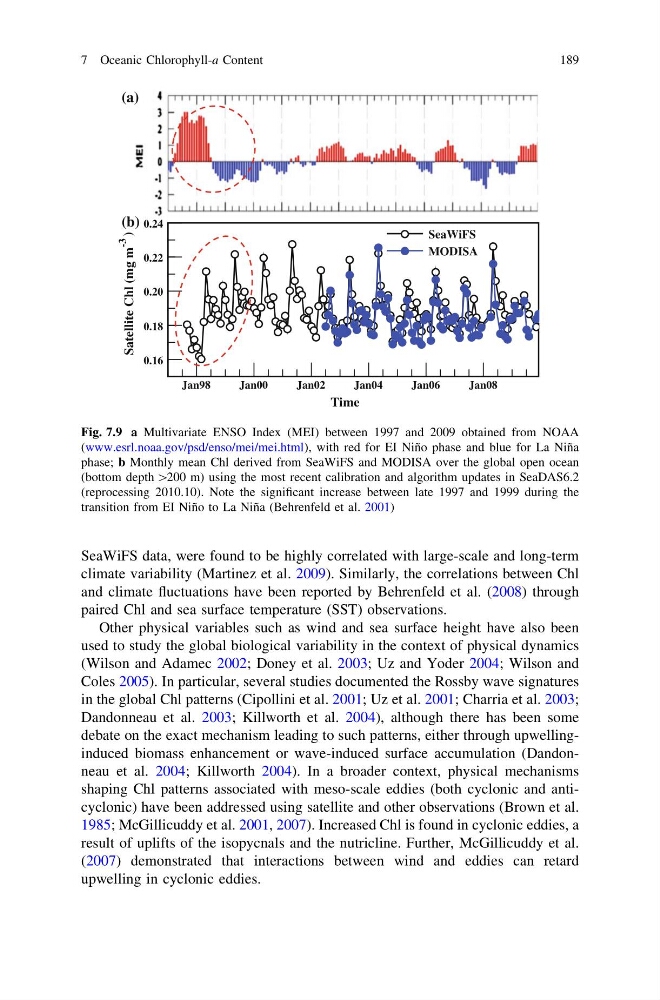
Fig. 7.9 a Multivariate ENSO Index (MEI) between 1997 and 2009 obtained from NOAA
(www.esrl.noaa.gov/psd/enso/mei/mei.html), with red for EI Niño phase and blue for La Niña
phase; b Monthly mean Chl derived from SeaWiFS and MODISA over the global open ocean
(bottom depth [200 m) using the most recent calibration and algorithm updates in SeaDAS6.2
(reprocessing 2010.10). Note the significant increase between late 1997 and 1999 during the
transition from EI Niño to La Niña (Behrenfeld et al. 2001)
7 Oceanic Chlorophyll-a Content
189
climate variability (Martinez et al. 2009). Similarly, the correlations between Chl
and climate fluctuations have been reported by Behrenfeld et al. (2008) through
paired Chl and sea surface temperature (SST) observations.
Other physical variables such as wind and sea surface height have also been
used to study the global biological variability in the context of physical dynamics
(Wilson and Adamec 2002; Doney et al. 2003; Uz and Yoder 2004; Wilson and
Coles 2005). In particular, several studies documented the Rossby wave signatures
in the global Chl patterns (Cipollini et al. 2001; Uz et al. 2001; Charria et al. 2003;
Dandonneau et al. 2003; Killworth et al. 2004), although there has been some
debate on the exact mechanism leading to such patterns, either through upwellinginduced biomass enhancement or wave-induced surface accumulation (Dandonneau et al. 2004; Killworth 2004). In a broader context, physical mechanisms
shaping Chl patterns associated with meso-scale eddies (both cyclonic and anticyclonic) have been addressed using satellite and other observations (Brown et al.
1985; McGillicuddy et al. 2001, 2007). Increased Chl is found in cyclonic eddies, a
result of uplifts of the isopycnals and the nutricline. Further, McGillicuddy et al.
(2007) demonstrated that interactions between wind and eddies can retard
upwelling in cyclonic eddies.
Time
Jan98
Jan00
Jan02
Jan04
Jan06
Jan08
Satellite Chl (mg m
-3
)
0.16
0.18
0.20
0.22
0.24
SeaWiFS
MODISA
(b)
(a)
Fig. 7.9 a Multivariate ENSO Index (MEI) between 1997 and 2009 obtained from NOAA
(www.esrl.noaa.gov/psd/enso/mei/mei.html), with red for EI Niño phase and blue for La Niña
phase; b Monthly mean Chl derived from SeaWiFS and MODISA over the global open ocean
(bottom depth [200 m) using the most recent calibration and algorithm updates in SeaDAS6.2
(reprocessing 2010.10). Note the significant increase between late 1997 and 1999 during the
transition from EI Niño to La Niña (Behrenfeld et al. 2001)
7 Oceanic Chlorophyll-a Content
189