

dataset. Using supervised classification it was possible to achieve high thematic
detail (8 classes) at high classification accuracy (75 %). This is a significant first
step towards the long-term goal of developing a hierarchical classification scheme
based on geomorphology and biotic cover that would be applicable to multiple
sites and have high accuracy, even at a fine level of thematic detail. Future
directions should seek to merge these methods or otherwise build on them to
achieve the same ends.
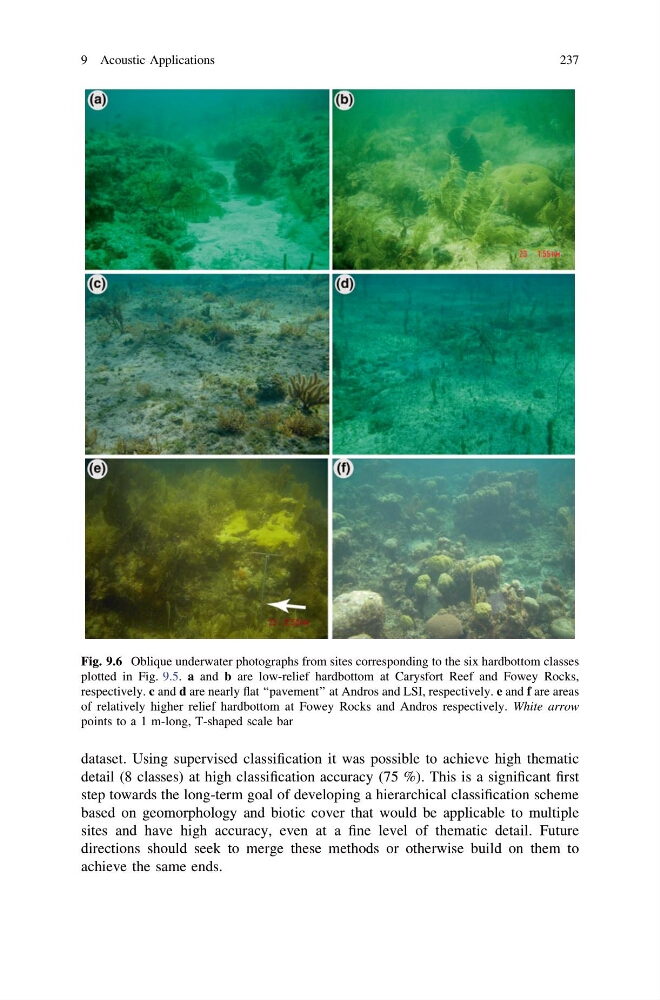
Fig. 9.6 Oblique underwater photographs from sites corresponding to the six hardbottom classes
plotted in Fig. 9.5. a and b are low-relief hardbottom at Carysfort Reef and Fowey Rocks,
respectively. c and d are nearly flat ‘‘pavement’’ at Andros and LSI, respectively. e and f are areas
of relatively higher relief hardbottom at Fowey Rocks and Andros respectively. White arrow
points to a 1 m-long, T-shaped scale bar
9 Acoustic Applications
237
detail (8 classes) at high classification accuracy (75 %). This is a significant first
step towards the long-term goal of developing a hierarchical classification scheme
based on geomorphology and biotic cover that would be applicable to multiple
sites and have high accuracy, even at a fine level of thematic detail. Future
directions should seek to merge these methods or otherwise build on them to
achieve the same ends.
Fig. 9.6 Oblique underwater photographs from sites corresponding to the six hardbottom classes
plotted in Fig. 9.5. a and b are low-relief hardbottom at Carysfort Reef and Fowey Rocks,
respectively. c and d are nearly flat ‘‘pavement’’ at Andros and LSI, respectively. e and f are areas
of relatively higher relief hardbottom at Fowey Rocks and Andros respectively. White arrow
points to a 1 m-long, T-shaped scale bar
9 Acoustic Applications
237