

designing targeted monitoring activities, and for improving our ecological
understanding of coral reef ecosystems. Nevertheless, a general consensus from
these studies is that finer-scale in situ measurements of topographic complexity
were more strongly correlated with fish variables than LiDAR-derived variables
(Wedding and Friedlander 2008; Pittman et al. 2009; Walker et al. 2009). This
suggests that finer resolution LiDAR may be required to boost the predictive
power of remotely sensed topographic complexity.
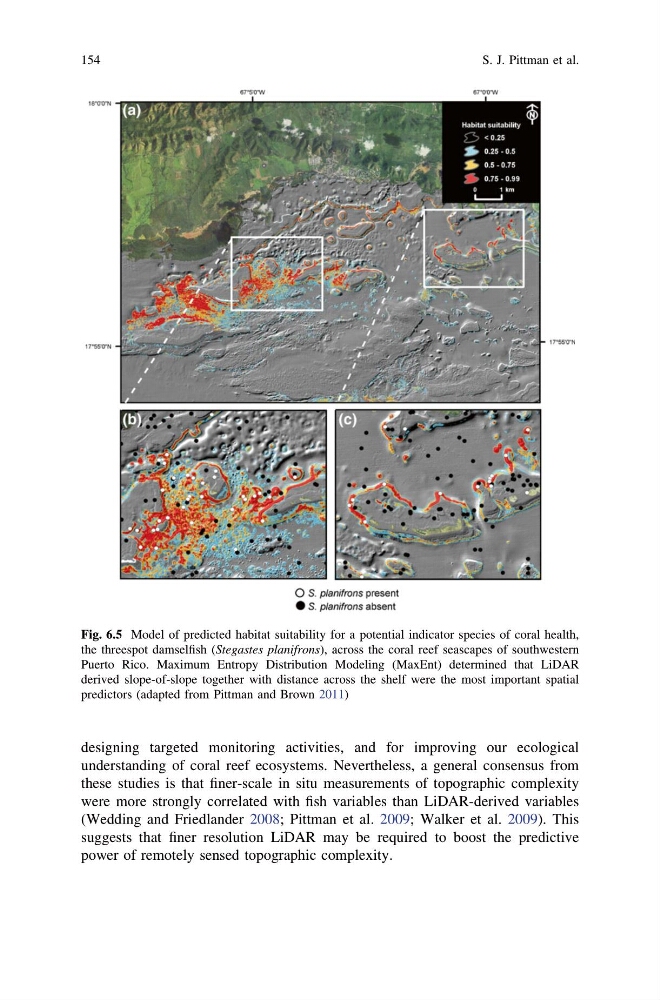
Fig. 6.5 Model of predicted habitat suitability for a potential indicator species of coral health,
the threespot damselfish (Stegastes planifrons), across the coral reef seascapes of southwestern
Puerto Rico. Maximum Entropy Distribution Modeling (MaxEnt) determined that LiDAR
derived slope-of-slope together with distance across the shelf were the most important spatial
predictors (adapted from Pittman and Brown 2011)
154
S. J. Pittman et al.
understanding of coral reef ecosystems. Nevertheless, a general consensus from
these studies is that finer-scale in situ measurements of topographic complexity
were more strongly correlated with fish variables than LiDAR-derived variables
(Wedding and Friedlander 2008; Pittman et al. 2009; Walker et al. 2009). This
suggests that finer resolution LiDAR may be required to boost the predictive
power of remotely sensed topographic complexity.
Fig. 6.5 Model of predicted habitat suitability for a potential indicator species of coral health,
the threespot damselfish (Stegastes planifrons), across the coral reef seascapes of southwestern
Puerto Rico. Maximum Entropy Distribution Modeling (MaxEnt) determined that LiDAR
derived slope-of-slope together with distance across the shelf were the most important spatial
predictors (adapted from Pittman and Brown 2011)
154
S. J. Pittman et al.