

126
T. Ohde and H. Siegel
-0.60
-0.30
0.00
0.30
0.60
-0.02
-0.01
0.00
0.01
0.02
-0.10
-0.05
0.00
0.05
0.10
0.15
01/01/00
01/01/01
01/01/02
01/01/03
01/01/04
01/01/05
01/01/06
01/01/07
01/01/08
AOD
dust anomaly
anomaly (N/m
2
)
Chl-a anomaly (mg/m 3
)
0
1
2
3
4
0.02
0.04
0.06
0.08
0.10
0.12
0.0
0.2
0.4
0.6
0.8
Chl-a (mg/m3)
v
Ј
v
Ј
(N/m2)
AODdust
high
low
b
a
01/01/00
01/01/01
01/01/02
01/01/03
01/01/04
01/01/05
01/01/06
01/01/07
01/01/08
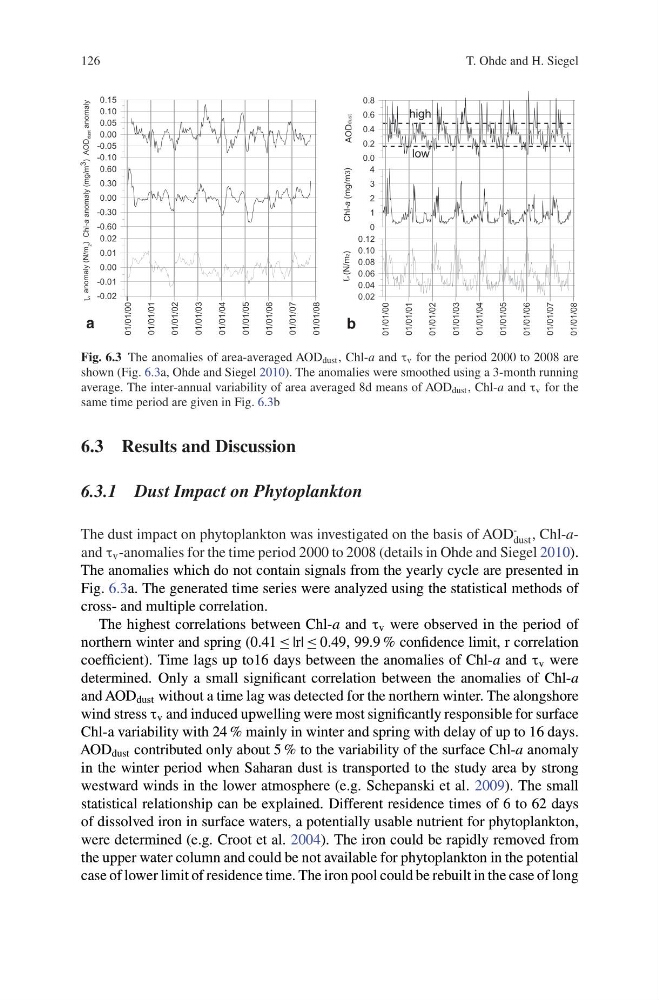
Fig. 6.3 The anomalies of area-averaged AOD dust , Chl-a and τ v for the period 2000 to 2008 are
shown (Fig. 6.3a, Ohde and Siegel 2010). The anomalies were smoothed using a 3-month running
average. The inter-annual variability of area averaged 8d means of AOD dust , Chl-a and τ v for the
same time period are given in Fig. 6.3b
6.3 Results and Discussion
6.3.1 Dust Impact on Phytoplankton
The dust impact on phytoplankton was investigated on the basis of AOD
-
dust , Chl-aand τ v -anomalies for the time period 2000 to 2008 (details in Ohde and Siegel 2010).
The anomalies which do not contain signals from the yearly cycle are presented in
Fig. 6.3a. The generated time series were analyzed using the statistical methods of
cross- and multiple correlation.
The highest correlations between Chl-a and τ v were observed in the period of
northern winter and spring (0.41 ≤ |r| ≤ 0.49, 99.9 % confidence limit, r correlation
coefficient). Time lags up to16 days between the anomalies of Chl-a and τ v were
determined. Only a small significant correlation between the anomalies of Chl-a
and AOD dust without a time lag was detected for the northern winter. The alongshore
wind stress τ v and induced upwelling were most significantly responsible for surface
Chl-a variability with 24 % mainly in winter and spring with delay of up to 16 days.
AOD dust contributed only about 5 % to the variability of the surface Chl-a anomaly
in the winter period when Saharan dust is transported to the study area by strong
westward winds in the lower atmosphere (e.g. Schepanski et al. 2009). The small
statistical relationship can be explained. Different residence times of 6 to 62 days
of dissolved iron in surface waters, a potentially usable nutrient for phytoplankton,
were determined (e.g. Croot et al. 2004). The iron could be rapidly removed from
the upper water column and could be not available for phytoplankton in the potential
case of lower limit of residence time. The iron pool could be rebuilt in the case of long
T. Ohde and H. Siegel
-0.60
-0.30
0.00
0.30
0.60
-0.02
-0.01
0.00
0.01
0.02
-0.10
-0.05
0.00
0.05
0.10
0.15
01/01/00
01/01/01
01/01/02
01/01/03
01/01/04
01/01/05
01/01/06
01/01/07
01/01/08
AOD
dust anomaly
anomaly (N/m
2
)
Chl-a anomaly (mg/m 3
)
0
1
2
3
4
0.02
0.04
0.06
0.08
0.10
0.12
0.0
0.2
0.4
0.6
0.8
Chl-a (mg/m3)
v
Ј
v
Ј
(N/m2)
AODdust
high
low
b
a
01/01/00
01/01/01
01/01/02
01/01/03
01/01/04
01/01/05
01/01/06
01/01/07
01/01/08
Fig. 6.3 The anomalies of area-averaged AOD dust , Chl-a and τ v for the period 2000 to 2008 are
shown (Fig. 6.3a, Ohde and Siegel 2010). The anomalies were smoothed using a 3-month running
average. The inter-annual variability of area averaged 8d means of AOD dust , Chl-a and τ v for the
same time period are given in Fig. 6.3b
6.3 Results and Discussion
6.3.1 Dust Impact on Phytoplankton
The dust impact on phytoplankton was investigated on the basis of AOD
-
dust , Chl-aand τ v -anomalies for the time period 2000 to 2008 (details in Ohde and Siegel 2010).
The anomalies which do not contain signals from the yearly cycle are presented in
Fig. 6.3a. The generated time series were analyzed using the statistical methods of
cross- and multiple correlation.
The highest correlations between Chl-a and τ v were observed in the period of
northern winter and spring (0.41 ≤ |r| ≤ 0.49, 99.9 % confidence limit, r correlation
coefficient). Time lags up to16 days between the anomalies of Chl-a and τ v were
determined. Only a small significant correlation between the anomalies of Chl-a
and AOD dust without a time lag was detected for the northern winter. The alongshore
wind stress τ v and induced upwelling were most significantly responsible for surface
Chl-a variability with 24 % mainly in winter and spring with delay of up to 16 days.
AOD dust contributed only about 5 % to the variability of the surface Chl-a anomaly
in the winter period when Saharan dust is transported to the study area by strong
westward winds in the lower atmosphere (e.g. Schepanski et al. 2009). The small
statistical relationship can be explained. Different residence times of 6 to 62 days
of dissolved iron in surface waters, a potentially usable nutrient for phytoplankton,
were determined (e.g. Croot et al. 2004). The iron could be rapidly removed from
the upper water column and could be not available for phytoplankton in the potential
case of lower limit of residence time. The iron pool could be rebuilt in the case of long