

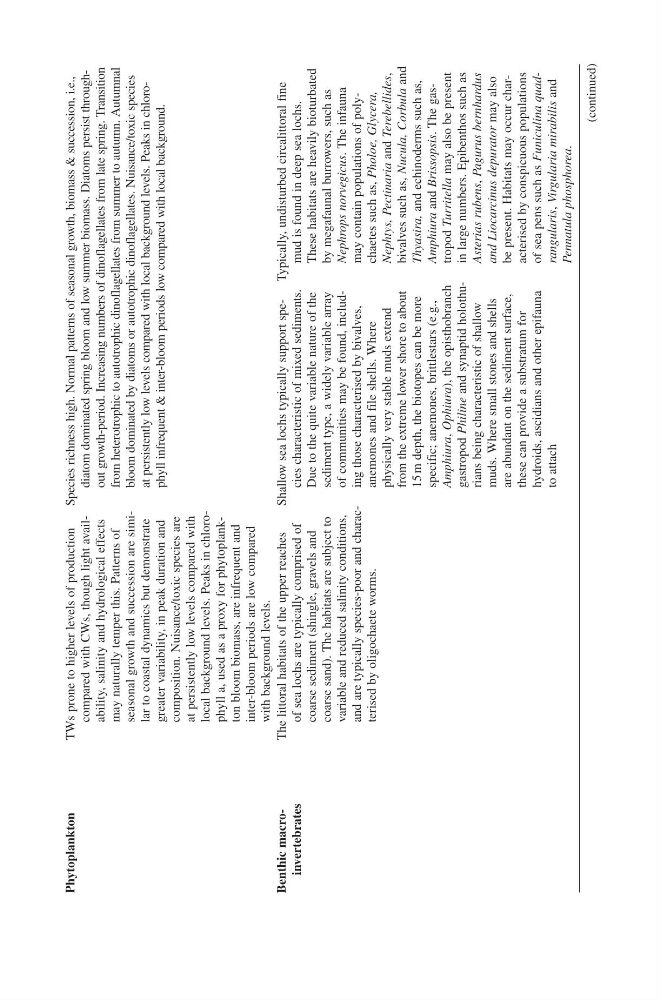
Phytoplankton
TWs prone to higher levels of production
compared with CWs, though light availability, salinity and hydrological effects
may naturally temper this. Patterns of
seasonal growth and succession are similar to coastal dynamics but demonstrate
greater variability, in peak duration and
composition. Nuisance/toxic species are
at persistently low levels compared with
local background levels. Peaks in chlorophyll a, used as a proxy for phytoplankton bloom biomass, are infrequent and
inter-bloom periods are low compared
with background levels.
Species richness high. Normal patterns of seasonal growth, biomass & succession, i.e.,
diatom dominated spring bloom and low summer biomass. Diatoms persist throughout growth-period. Increasing numbers of dinoflagellates from late spring. Transition
from heterotrophic to autotrophic dinoflagellates from summer to autumn. Autumnal
bloom dominated by diatoms or autotrophic dinoflagellates. Nuisance/toxic species
at persistently low levels compared with local background levels. Peaks in chlorophyll infrequent & inter-bloom periods low compared with local background.
Benthic macroinvertebrates
The littoral habitats of the upper reaches
of sea lochs are typically comprised of
coarse sediment (shingle, gravels and
coarse sand). The habitats are subject to
variable and reduced salinity conditions,
and are typically species-poor and characterised by oligochaete worms.
Shallow sea lochs typically support species characteristic of mixed sediments.
Due to the quite variable nature of the
sediment type, a widely variable array
of communities may be found, including those characterised by bivalves,
anemones and file shells. Where
physically very stable muds extend
from the extreme lower shore to about
15 m depth, the biotopes can be more
specific; anemones, brittlestars (e.g.,
Amphiura, Ophiura),
the opisthobranch
gastropod Philine
and synaptid holothurians being characteristic of shallow
muds. Where small stones and shells
are abundant on the sediment surface,
these can provide a substratum for
hydroids, ascidians and other epifauna
to attach
Typically, undisturbed circalittoral fine
mud is found in deep sea lochs.
These habitats are heavily bioturbated
by megafaunal burrowers, such as
Nephrops norvegicus.
The infauna
may contain populations of polychaetes such as, Pholoe, Glycera,
Nephtys, Pectinaria
and Terebellides,
bivalves such as, Nucula, Corbula
and
Thyasira,
and echinoderms such as,
Amphiura
and Brissopsis.
The gastropod Turritella
may also be present
in large numbers. Epibenthos such as
Asterias rubens, Pagurus bernhardus
and Liocarcinus depurator
may also
be present. Habitats may occur characterised by conspicuous populations
of sea pens such as Funiculina quadrangularis, Virgularia mirabilis
and
Pennatula phosphorea.
(continued)
TWs prone to higher levels of production
compared with CWs, though light availability, salinity and hydrological effects
may naturally temper this. Patterns of
seasonal growth and succession are similar to coastal dynamics but demonstrate
greater variability, in peak duration and
composition. Nuisance/toxic species are
at persistently low levels compared with
local background levels. Peaks in chlorophyll a, used as a proxy for phytoplankton bloom biomass, are infrequent and
inter-bloom periods are low compared
with background levels.
Species richness high. Normal patterns of seasonal growth, biomass & succession, i.e.,
diatom dominated spring bloom and low summer biomass. Diatoms persist throughout growth-period. Increasing numbers of dinoflagellates from late spring. Transition
from heterotrophic to autotrophic dinoflagellates from summer to autumn. Autumnal
bloom dominated by diatoms or autotrophic dinoflagellates. Nuisance/toxic species
at persistently low levels compared with local background levels. Peaks in chlorophyll infrequent & inter-bloom periods low compared with local background.
Benthic macroinvertebrates
The littoral habitats of the upper reaches
of sea lochs are typically comprised of
coarse sediment (shingle, gravels and
coarse sand). The habitats are subject to
variable and reduced salinity conditions,
and are typically species-poor and characterised by oligochaete worms.
Shallow sea lochs typically support species characteristic of mixed sediments.
Due to the quite variable nature of the
sediment type, a widely variable array
of communities may be found, including those characterised by bivalves,
anemones and file shells. Where
physically very stable muds extend
from the extreme lower shore to about
15 m depth, the biotopes can be more
specific; anemones, brittlestars (e.g.,
Amphiura, Ophiura),
the opisthobranch
gastropod Philine
and synaptid holothurians being characteristic of shallow
muds. Where small stones and shells
are abundant on the sediment surface,
these can provide a substratum for
hydroids, ascidians and other epifauna
to attach
Typically, undisturbed circalittoral fine
mud is found in deep sea lochs.
These habitats are heavily bioturbated
by megafaunal burrowers, such as
Nephrops norvegicus.
The infauna
may contain populations of polychaetes such as, Pholoe, Glycera,
Nephtys, Pectinaria
and Terebellides,
bivalves such as, Nucula, Corbula
and
Thyasira,
and echinoderms such as,
Amphiura
and Brissopsis.
The gastropod Turritella
may also be present
in large numbers. Epibenthos such as
Asterias rubens, Pagurus bernhardus
and Liocarcinus depurator
may also
be present. Habitats may occur characterised by conspicuous populations
of sea pens such as Funiculina quadrangularis, Virgularia mirabilis
and
Pennatula phosphorea.
(continued)