

539
12 Species Case Studies
In Palau at least 38 inshore areas were once known (McVey 1972 ) where fi sh
gathered 3–7 days after the new moon reportedly year round as dense schools of
gravid fi sh prior to migrating across shallow reefs to reef front spawning locations.
The present status of most of these sites is unknown. Airai Bay, on southeastern
Babeldaob, is known as one of the largest dusky rabbitfi sh PSA areas in Palau. Such
aggregations had 50–1,000 fi sh in past years, although much lower numbers are seen
now. During 1990–1992 Kitalong and Oiterong ( 1992 ) observed up to 8 PSA schools
in Airai Bay with 100–500 fi sh each, as well as other schools with as few as 15 fi sh.
In Airai Bay PSAs begin forming in the southeast and southwest areas, then move
along and across the reef fl ats and channels to the outer reef where fi sh are known to
release their eggs and sperm in shallow breaking surf at the reef edge. Fishermen
standing in shallow water with cast nets position themselves along the migration path
in the late afternoon, mostly along two natural sandy depressions along the eastern
reef where the fi sh concentrate as they head to the outer reef. They throw their nets to
capture fi sh as they pass over the shallow (0.5 m or less depth) areas.
12.22.4 Conservation and Management Concerns and Action
In the early 1990s fi shers became concerned about the decline in the number and
sizes of PSAs. In 1994 legislation (“Marine Protection Act”) banned fi shing for
dusky rabbitfi sh from March 1 to May 31 during the supposed peak spawning
season. For the years of 1994–1996 there were no reported commercial landings,
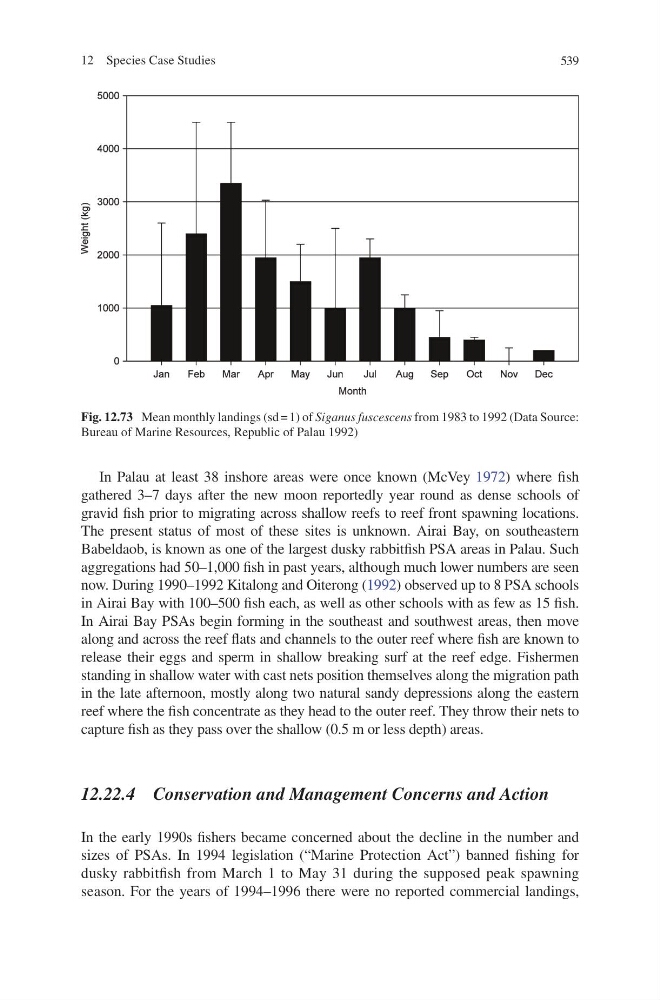
Fig. 12.73 Mean monthly landings (sd = 1) of Siganus fuscescens from 1983 to 1992 (Data Source:
Bureau of Marine Resources, Republic of Palau 1992)
12 Species Case Studies
In Palau at least 38 inshore areas were once known (McVey 1972 ) where fi sh
gathered 3–7 days after the new moon reportedly year round as dense schools of
gravid fi sh prior to migrating across shallow reefs to reef front spawning locations.
The present status of most of these sites is unknown. Airai Bay, on southeastern
Babeldaob, is known as one of the largest dusky rabbitfi sh PSA areas in Palau. Such
aggregations had 50–1,000 fi sh in past years, although much lower numbers are seen
now. During 1990–1992 Kitalong and Oiterong ( 1992 ) observed up to 8 PSA schools
in Airai Bay with 100–500 fi sh each, as well as other schools with as few as 15 fi sh.
In Airai Bay PSAs begin forming in the southeast and southwest areas, then move
along and across the reef fl ats and channels to the outer reef where fi sh are known to
release their eggs and sperm in shallow breaking surf at the reef edge. Fishermen
standing in shallow water with cast nets position themselves along the migration path
in the late afternoon, mostly along two natural sandy depressions along the eastern
reef where the fi sh concentrate as they head to the outer reef. They throw their nets to
capture fi sh as they pass over the shallow (0.5 m or less depth) areas.
12.22.4 Conservation and Management Concerns and Action
In the early 1990s fi shers became concerned about the decline in the number and
sizes of PSAs. In 1994 legislation (“Marine Protection Act”) banned fi shing for
dusky rabbitfi sh from March 1 to May 31 during the supposed peak spawning
season. For the years of 1994–1996 there were no reported commercial landings,
Fig. 12.73 Mean monthly landings (sd = 1) of Siganus fuscescens from 1983 to 1992 (Data Source:
Bureau of Marine Resources, Republic of Palau 1992)