

477
12 Species Case Studies
GJ unpublished data). However, snapper are considered to be more robust than
many other species and in the shallow waters of the inner gulfs (mostly < 20 m),
discard mortality due to barotrauma is not considered to be signifi cant (Lenanton
et al. 2009 ) . Commercial trawl fi sheries for prawns and scallops operate in limited
areas of Denham Sound where numbers of age (years) 0+ and 1+ snapper (10–15 cm
TL) may be taken as bycatch. Research has shown that the prawn fi shery reduces
juvenile snapper survival from 8% to 6% per year. This equates to a loss in annual
yield similar in magnitude to that resulting from the return of undersized fi sh
(discard mortality) in the recreational fi shery (Moran and Kangas 2003 ) .
Spatial closures can be effective when the spawning aggregations are within a
well-defi ned and manageable area, as they are off Monkey Mia in the Eastern Gulf.
A similar approach was discussed in relation to the management of snapper in
Denham Sound (in 2002) where the spawning grounds cover an extensive area but
the local community was not prepared to support the large spatial closure required.
Spatial closures also present challenges to authorities as they need to be effectively
marked on-the-water and regularly monitored by compliance offi cers.
Temporal closures to protect spawning aggregations can be effective in some
cases. Their effectiveness depends on their timing and duration that in turn require
a sound knowledge of the reproductive biology of the target species. Because snapper in the inner gulfs spawn over 3-4 months and are aggregated throughout this
period, spawning closures need to be extensive to be effective. The success of management in the Eastern Gulf during 2003–2005 was mostly due to the 4-month
duration of the spawning closure; catches were 13-23% of the TAC during this
period but rose to 25-28% of the TAC in 2006-2007 following a reduction in the
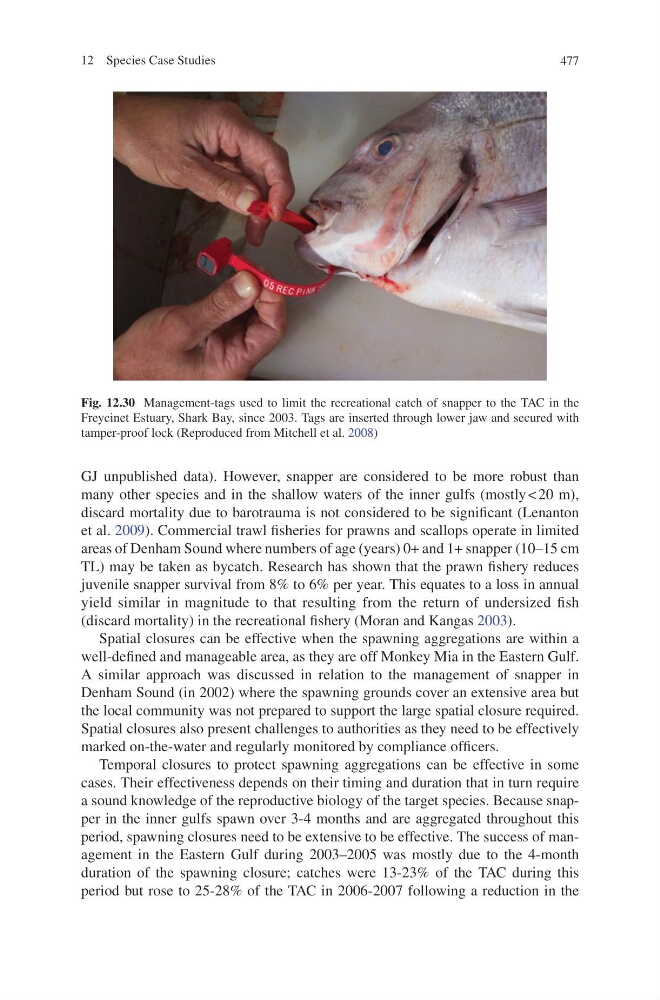
Fig. 12.30 Management-tags used to limit the recreational catch of snapper to the TAC in the
Freycinet Estuary, Shark Bay, since 2003. Tags are inserted through lower jaw and secured with
tamper-proof lock (Reproduced from Mitchell et al. 2008 )
12 Species Case Studies
GJ unpublished data). However, snapper are considered to be more robust than
many other species and in the shallow waters of the inner gulfs (mostly < 20 m),
discard mortality due to barotrauma is not considered to be signifi cant (Lenanton
et al. 2009 ) . Commercial trawl fi sheries for prawns and scallops operate in limited
areas of Denham Sound where numbers of age (years) 0+ and 1+ snapper (10–15 cm
TL) may be taken as bycatch. Research has shown that the prawn fi shery reduces
juvenile snapper survival from 8% to 6% per year. This equates to a loss in annual
yield similar in magnitude to that resulting from the return of undersized fi sh
(discard mortality) in the recreational fi shery (Moran and Kangas 2003 ) .
Spatial closures can be effective when the spawning aggregations are within a
well-defi ned and manageable area, as they are off Monkey Mia in the Eastern Gulf.
A similar approach was discussed in relation to the management of snapper in
Denham Sound (in 2002) where the spawning grounds cover an extensive area but
the local community was not prepared to support the large spatial closure required.
Spatial closures also present challenges to authorities as they need to be effectively
marked on-the-water and regularly monitored by compliance offi cers.
Temporal closures to protect spawning aggregations can be effective in some
cases. Their effectiveness depends on their timing and duration that in turn require
a sound knowledge of the reproductive biology of the target species. Because snapper in the inner gulfs spawn over 3-4 months and are aggregated throughout this
period, spawning closures need to be extensive to be effective. The success of management in the Eastern Gulf during 2003–2005 was mostly due to the 4-month
duration of the spawning closure; catches were 13-23% of the TAC during this
period but rose to 25-28% of the TAC in 2006-2007 following a reduction in the
Fig. 12.30 Management-tags used to limit the recreational catch of snapper to the TAC in the
Freycinet Estuary, Shark Bay, since 2003. Tags are inserted through lower jaw and secured with
tamper-proof lock (Reproduced from Mitchell et al. 2008 )