

436
J. Iglesias and L. Fuentes
shows the culture conditions used, including the different feeding strategies, prey
concentrations and larval densities.
The main problem that hampers the success of commercial culture of octopus is
the high mortality rate observed during the first 2 months of paralarval rearing. The
lack of a standardised culture system and the absence of appropriate food sources
that fulfil nutritional requirements have been identified as two possible factors responsible for this mortality (Iglesias et al. 2007). Even if survival rates during the
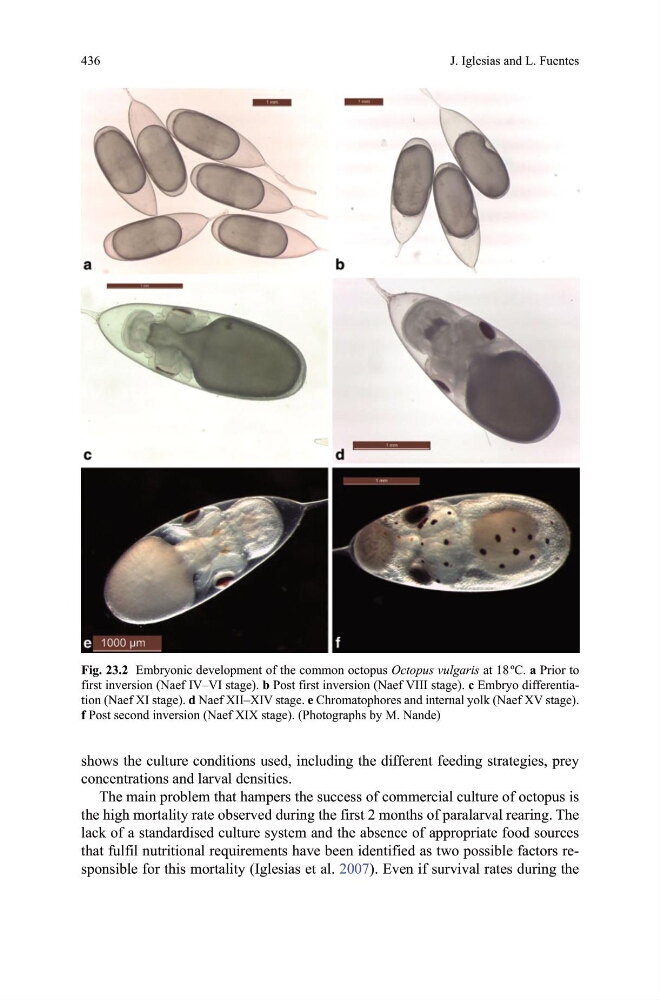
Fig. 23.2 Embryonic development of the common octopus Octopus vulgaris at 18 ºC. a Prior to
first inversion (Naef IV–VI stage). b Post first inversion (Naef VIII stage). c Embryo differentiation (Naef XI stage). d Naef XII–XIV stage. e Chromatophores and internal yolk (Naef XV stage).
f Post second inversion (Naef XIX stage). (Photographs by M. Nande)
J. Iglesias and L. Fuentes
shows the culture conditions used, including the different feeding strategies, prey
concentrations and larval densities.
The main problem that hampers the success of commercial culture of octopus is
the high mortality rate observed during the first 2 months of paralarval rearing. The
lack of a standardised culture system and the absence of appropriate food sources
that fulfil nutritional requirements have been identified as two possible factors responsible for this mortality (Iglesias et al. 2007). Even if survival rates during the
Fig. 23.2 Embryonic development of the common octopus Octopus vulgaris at 18 ºC. a Prior to
first inversion (Naef IV–VI stage). b Post first inversion (Naef VIII stage). c Embryo differentiation (Naef XI stage). d Naef XII–XIV stage. e Chromatophores and internal yolk (Naef XV stage).
f Post second inversion (Naef XIX stage). (Photographs by M. Nande)