

435
23 Octopus vulgaris. Paralarval Culture
larval rearing (phytoplankton and Artemia; Boletzky 1987). Figure 23.2 shows the
evolution of the embryonic development of O� vulgaris at 18 ºC, which takes around
38 days to hatch; the different stages have been identified according to Naef (1928).
Transportation of egg strings should be performed together with the female in
the original spawning shelter, and swinging movements that would cause damage
to the egg mass should be avoided. In order to avoid premature hatching, this process must be performed before the second embryonic inversion occurs (Fig. 23.2f).
Due to high oxygen consumption by eggs (Parra et al. 2000), additional oxygenation should be used during transportation. Drastic fluctuations in other parameters
(e.g. temperature, salinity, pH, light intensity) should be avoided to prevent premature hatching.
In cases when egg strings need to be transported without the female, they should
be placed in plastic containers filled with oxygen supersaturated seawater and a low
temperature be maintained. Strings should be held in a vertical position by hanging
them from the container cap.
23.4 Paralarvae Culture Conditions
Since the 1990s, many attempts have been made by several research groups to determine the feasibility of paralarval culture, and a wide range of rearing conditions
have been tested (reviewed by Iglesias et al. 2007; De Wolf et al. 2011). Table 23.1
0
10
20
30
40
50
60
70
0
5 00
1000
1500
2000
2500
3000
3500
4000
4500
Weight loss (%)
Initial weight (g)
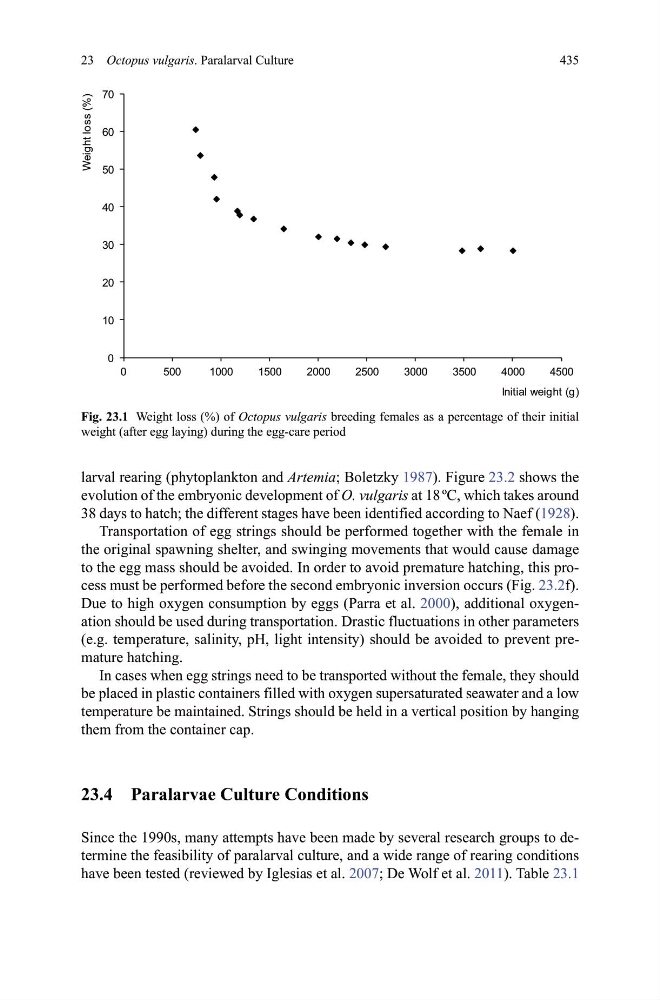
Fig. 23.1 Weight loss (%) of Octopus vulgaris breeding females as a percentage of their initial
weight (after egg laying) during the egg-care period
23 Octopus vulgaris. Paralarval Culture
larval rearing (phytoplankton and Artemia; Boletzky 1987). Figure 23.2 shows the
evolution of the embryonic development of O� vulgaris at 18 ºC, which takes around
38 days to hatch; the different stages have been identified according to Naef (1928).
Transportation of egg strings should be performed together with the female in
the original spawning shelter, and swinging movements that would cause damage
to the egg mass should be avoided. In order to avoid premature hatching, this process must be performed before the second embryonic inversion occurs (Fig. 23.2f).
Due to high oxygen consumption by eggs (Parra et al. 2000), additional oxygenation should be used during transportation. Drastic fluctuations in other parameters
(e.g. temperature, salinity, pH, light intensity) should be avoided to prevent premature hatching.
In cases when egg strings need to be transported without the female, they should
be placed in plastic containers filled with oxygen supersaturated seawater and a low
temperature be maintained. Strings should be held in a vertical position by hanging
them from the container cap.
23.4 Paralarvae Culture Conditions
Since the 1990s, many attempts have been made by several research groups to determine the feasibility of paralarval culture, and a wide range of rearing conditions
have been tested (reviewed by Iglesias et al. 2007; De Wolf et al. 2011). Table 23.1
0
10
20
30
40
50
60
70
0
5 00
1000
1500
2000
2500
3000
3500
4000
4500
Weight loss (%)
Initial weight (g)
Fig. 23.1 Weight loss (%) of Octopus vulgaris breeding females as a percentage of their initial
weight (after egg laying) during the egg-care period