

421
22 Octopus minor
Due to the mortality, hatchling density decreases progressively from 500 to 100
individuals m
-3
during the 1st month of culture. When food is offered in sufficient
amount, very few hatchlings fight and compete with each other. The mean hatchling
weight increases to 2.2 g, and survival rate reaches 75 % after 1 month of rearing.
22.5 Ongrowing
After a month of hatchling rearing, O� minor juveniles have reached the ongrowing stage. At this period, seawater temperature should range from 15 to 20 °C and
the other physical and chemical parameters should be similar to those used in the
previous hatchling process. Octopus juveniles have many characteristics similar to
adults, such as aggressiveness, territoriality and cannibalism. When they are fed in
the evening, the phenomenon of fierce fighting is observed, especially between the
bigger and smaller individuals. Therefore, they must be separated based on their
size, but in any case the survival rate during this growing period decreases to 50 %.
Some live small bivalves (genus Potamocorbula) are used as diet due to their
affordable price and easy availability from the fishery market. The seaweed U� pertusa is not only a kind of essential shelter to juveniles but also a suitable food
to cultivate gammarids which are also a favourite prey of octopus juveniles. At
2mm
1cm
2cm
50μm
a
b
c
d
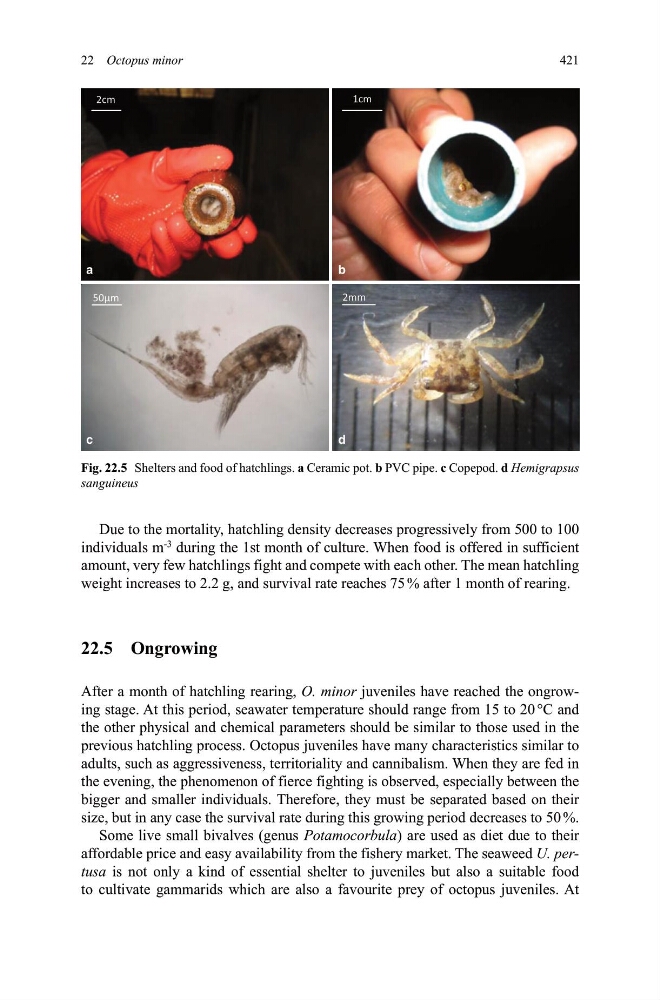
Fig. 22.5 Shelters and food of hatchlings. a Ceramic pot. b PVC pipe. c Copepod. d Hemigrapsus
sanguineus
22 Octopus minor
Due to the mortality, hatchling density decreases progressively from 500 to 100
individuals m
-3
during the 1st month of culture. When food is offered in sufficient
amount, very few hatchlings fight and compete with each other. The mean hatchling
weight increases to 2.2 g, and survival rate reaches 75 % after 1 month of rearing.
22.5 Ongrowing
After a month of hatchling rearing, O� minor juveniles have reached the ongrowing stage. At this period, seawater temperature should range from 15 to 20 °C and
the other physical and chemical parameters should be similar to those used in the
previous hatchling process. Octopus juveniles have many characteristics similar to
adults, such as aggressiveness, territoriality and cannibalism. When they are fed in
the evening, the phenomenon of fierce fighting is observed, especially between the
bigger and smaller individuals. Therefore, they must be separated based on their
size, but in any case the survival rate during this growing period decreases to 50 %.
Some live small bivalves (genus Potamocorbula) are used as diet due to their
affordable price and easy availability from the fishery market. The seaweed U� pertusa is not only a kind of essential shelter to juveniles but also a suitable food
to cultivate gammarids which are also a favourite prey of octopus juveniles. At
2mm
1cm
2cm
50μm
a
b
c
d
Fig. 22.5 Shelters and food of hatchlings. a Ceramic pot. b PVC pipe. c Copepod. d Hemigrapsus
sanguineus