

420
X. D. Zheng et al.
a stress situation and ink ejection, hatchlings will hide in the den surface to avoid
being harmed.
As nurseries, concrete pools of around 400 mm depth are used, where the behaviour of hatchlings can be easily observed. In addition to the previously mentioned
seaweeds, ceramic pots of 8–12 mm inner diameter (Fig. 22.5a) and grey-green
PVC pipes of 10 mm diameter (Fig. 22.5b) should also be supplied in the pool bottom as hatchling shelters. The number of these shelters must be 1.5–2 times the total
number of hatchlings. The inner diameter should become a bit larger after 2 months
of rearing. Light intensity is important in hatchling culture and should be controlled
under the condition of 200–800 Lx in the pool surface.
Live enriched Artemia nauplii (density: 0.5–1 individuals mL
−1
), cladocerans
and copepods (5–10 individuals cm
-2
) are an adequate initial feed for the new hatchlings (Fig. 22.5c). Instead of Artemia nauplii, Hemigrapsus sanguineus of less than
4 mm body width are used to feed the 10-day-old hatchlings (Fig. 22.5d). The prey
density should be three to four times the total number of hatchlings. At this age,
the density of cladocerans and copepods will be decreased to 1–3 individuals cm
−2
.
During the period of hatchling culture, the water must be kept clean and half of
the whole volume must be changed every day. Physical and chemical parameters
must also be kept in the following ranges: water temperature of 10–25 °C, pH 7.6–
8.6, dissolved oxygen > 5 mg L
−1
and ammonia nitrogen < 0.2 mg L
−1
.
Ė
ė
Ę
ę
Ě
ě
Ĝ
ĝ
Ğ
ğ
Ġ
ġ
ğĘ
ğę
ğĚ
ğě
ğĜ
ğĝ ğĞ
ğğ
FP
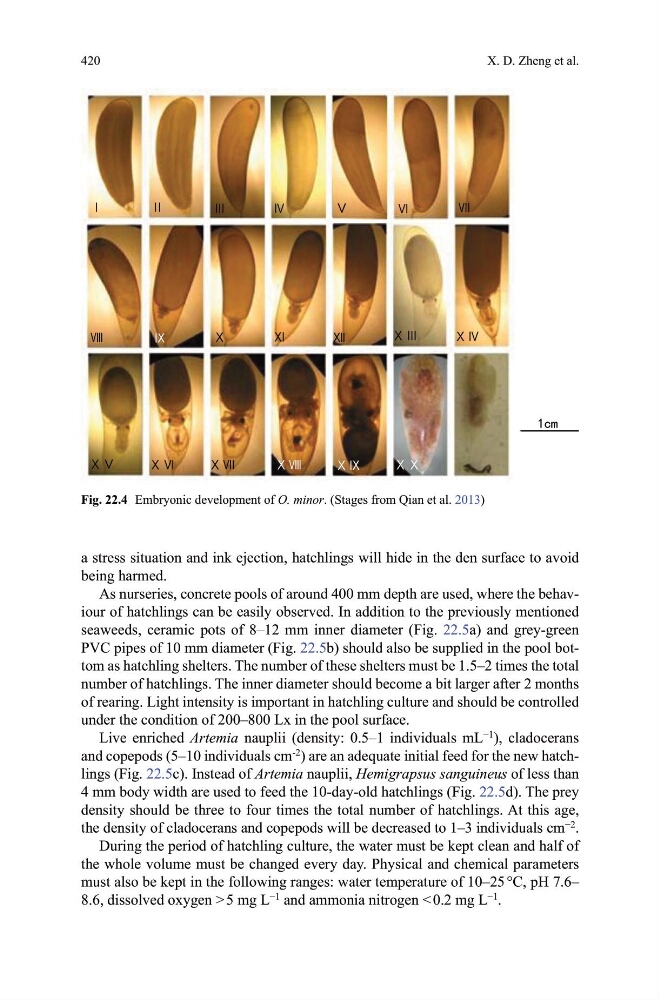
Fig. 22.4 Embryonic development of O� minor. (Stages from Qian et al. 2013)
X. D. Zheng et al.
a stress situation and ink ejection, hatchlings will hide in the den surface to avoid
being harmed.
As nurseries, concrete pools of around 400 mm depth are used, where the behaviour of hatchlings can be easily observed. In addition to the previously mentioned
seaweeds, ceramic pots of 8–12 mm inner diameter (Fig. 22.5a) and grey-green
PVC pipes of 10 mm diameter (Fig. 22.5b) should also be supplied in the pool bottom as hatchling shelters. The number of these shelters must be 1.5–2 times the total
number of hatchlings. The inner diameter should become a bit larger after 2 months
of rearing. Light intensity is important in hatchling culture and should be controlled
under the condition of 200–800 Lx in the pool surface.
Live enriched Artemia nauplii (density: 0.5–1 individuals mL
−1
), cladocerans
and copepods (5–10 individuals cm
-2
) are an adequate initial feed for the new hatchlings (Fig. 22.5c). Instead of Artemia nauplii, Hemigrapsus sanguineus of less than
4 mm body width are used to feed the 10-day-old hatchlings (Fig. 22.5d). The prey
density should be three to four times the total number of hatchlings. At this age,
the density of cladocerans and copepods will be decreased to 1–3 individuals cm
−2
.
During the period of hatchling culture, the water must be kept clean and half of
the whole volume must be changed every day. Physical and chemical parameters
must also be kept in the following ranges: water temperature of 10–25 °C, pH 7.6–
8.6, dissolved oxygen > 5 mg L
−1
and ammonia nitrogen < 0.2 mg L
−1
.
Ė
ė
Ę
ę
Ě
ě
Ĝ
ĝ
Ğ
ğ
Ġ
ġ
ğĘ
ğę
ğĚ
ğě
ğĜ
ğĝ ğĞ
ğğ
FP
Fig. 22.4 Embryonic development of O� minor. (Stages from Qian et al. 2013)