

359
18 Amphioctopus aegina
months. The subsequent reproductive phase lasts for 34 % of the species lifespan
(Promboon et al. 2011). Since females cease food intake and subsequently lose their
weight at spawning, harvest for a maximum aquaculture yield is recommended to
be prior to spawning.
18.7 Trends in Research and Industrial Level
The purpose of culturing Amphioctopus aegina for human consumption has declined at present due to its high unit cost. Future research should focus on the reduction of unit costs through increasing the survival, hence increasing production. Such
development encounters similar bottleneck obstacles to that of the other cephalopods, the requirement and availability for live food during the planktonic stage,
as well as the efficient supply of such food. In the short term, other species used
as food organisms should be studied as options, particularly the species that are
already commercially produced. In the long term, development of artificial feed is
necessary in order to replace the live food and eliminate these obstacles.
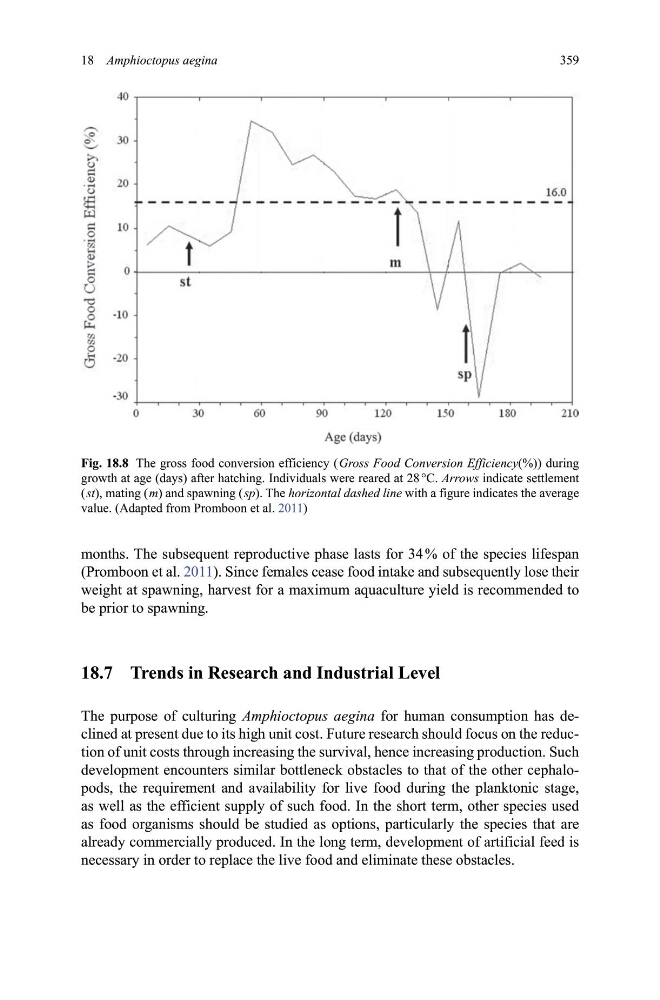
Fig. 18.8 The gross food conversion efficiency ( Gross Food Conversion Efficiency(%)) during
growth at age (days) after hatching. Individuals were reared at 28 °C. Arrows indicate settlement
( st), mating ( m) and spawning ( sp). The horizontal dashed line with a figure indicates the average
value. (Adapted from Promboon et al. 2011)
18 Amphioctopus aegina
months. The subsequent reproductive phase lasts for 34 % of the species lifespan
(Promboon et al. 2011). Since females cease food intake and subsequently lose their
weight at spawning, harvest for a maximum aquaculture yield is recommended to
be prior to spawning.
18.7 Trends in Research and Industrial Level
The purpose of culturing Amphioctopus aegina for human consumption has declined at present due to its high unit cost. Future research should focus on the reduction of unit costs through increasing the survival, hence increasing production. Such
development encounters similar bottleneck obstacles to that of the other cephalopods, the requirement and availability for live food during the planktonic stage,
as well as the efficient supply of such food. In the short term, other species used
as food organisms should be studied as options, particularly the species that are
already commercially produced. In the long term, development of artificial feed is
necessary in order to replace the live food and eliminate these obstacles.
Fig. 18.8 The gross food conversion efficiency ( Gross Food Conversion Efficiency(%)) during
growth at age (days) after hatching. Individuals were reared at 28 °C. Arrows indicate settlement
( st), mating ( m) and spawning ( sp). The horizontal dashed line with a figure indicates the average
value. (Adapted from Promboon et al. 2011)