

273
16 Loligo vulgaris and Doryteuthis opalescens
near the surface, then seiner boats capture them with purse-seine nets’ (Jereb and
Roper 2010 p. 64).
One of the most popular capture methods in recreational and artisanal fishery is
hand jigging. For L. vulgaris in the Mediterranean, there are at least two variants,
one with bare jiggers (generally used along with a surface light) and the other using
jiggers partly wrapped with fish fillets (supposed to act chemically as a ‘tasteful
lure’, G. Celentano, personal communication). Hand jigging is minimally traumatic
for specimens of medium to large size, and therefore can be recommended for field
collections serving the establishment of a breeding stock.
16.2 State of the Art
Before approaching the questions of culture techniques and the aims of specific culture projects, it may be useful to survey the scientific literature on the two species
considered, especially with regard to their biology.
Many of the early accounts of the fishery and biology of L. vulgaris were related to the activities of the Zoological Station at Naples (Italy), beginning with
Jatta (1896) and Lo Bianco (1899), continuing with Bauer (1909), Naef (1921/1923,
1928), Sereni (1930) and with Grimpe (1928) who also worked at the Helgoland
Station and studied the cephalopods of the North Sea, including L. vulgaris (Grimpe
1925). A highlight of cephalopod biology research at the Naples Station was the description of giant nerve fibres in L. vulgaris (Young 1938, 1939). A great part of the
detailed studies of Bidder (1950) on digestive mechanisms in squid was achieved
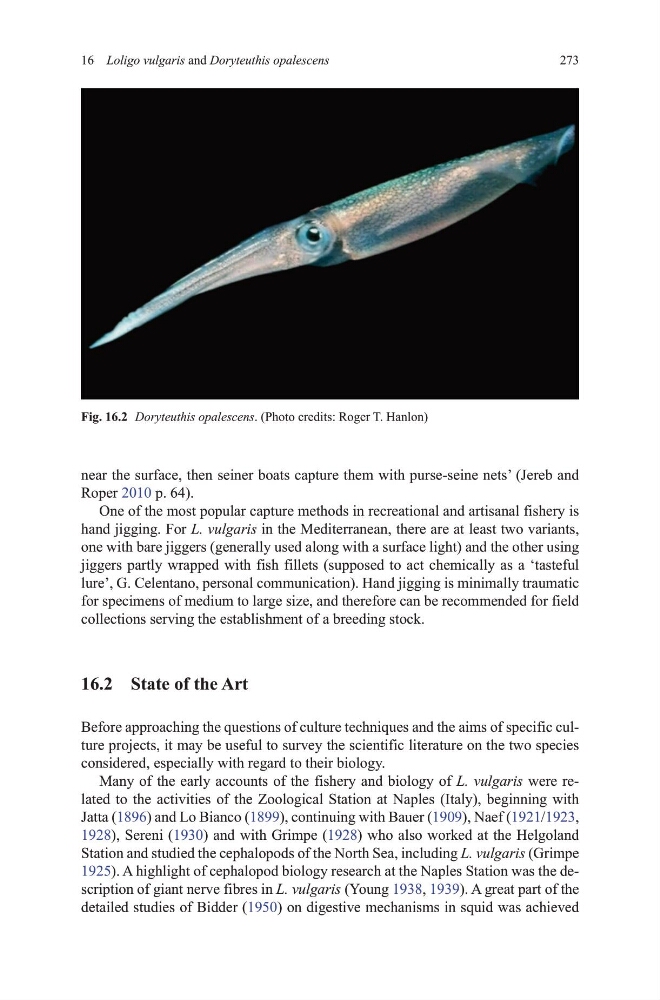
Fig. 16.2 Doryteuthis opalescens. (Photo credits: Roger T. Hanlon)
16 Loligo vulgaris and Doryteuthis opalescens
near the surface, then seiner boats capture them with purse-seine nets’ (Jereb and
Roper 2010 p. 64).
One of the most popular capture methods in recreational and artisanal fishery is
hand jigging. For L. vulgaris in the Mediterranean, there are at least two variants,
one with bare jiggers (generally used along with a surface light) and the other using
jiggers partly wrapped with fish fillets (supposed to act chemically as a ‘tasteful
lure’, G. Celentano, personal communication). Hand jigging is minimally traumatic
for specimens of medium to large size, and therefore can be recommended for field
collections serving the establishment of a breeding stock.
16.2 State of the Art
Before approaching the questions of culture techniques and the aims of specific culture projects, it may be useful to survey the scientific literature on the two species
considered, especially with regard to their biology.
Many of the early accounts of the fishery and biology of L. vulgaris were related to the activities of the Zoological Station at Naples (Italy), beginning with
Jatta (1896) and Lo Bianco (1899), continuing with Bauer (1909), Naef (1921/1923,
1928), Sereni (1930) and with Grimpe (1928) who also worked at the Helgoland
Station and studied the cephalopods of the North Sea, including L. vulgaris (Grimpe
1925). A highlight of cephalopod biology research at the Naples Station was the description of giant nerve fibres in L. vulgaris (Young 1938, 1939). A great part of the
detailed studies of Bidder (1950) on digestive mechanisms in squid was achieved
Fig. 16.2 Doryteuthis opalescens. (Photo credits: Roger T. Hanlon)