

260
15.5.2 System Requirements and Management
Nursing of young is performed using the same system as for nursing of eggs for
both species.
15.5.3 Feeding
The general task is to feed planktonic food to juvenile squids before the settling stage,
at which time the squids are column feeders. Subsequently, benthic food is provided
after the settling stage, when the juvenile squids settle to the bottom (Hanlon 1990;
Hanlon et al. 1997; Nabhitabhata et al. 2005). E� hyllebergi hatchlings are fed with
live, hatchery-produced penaeid shrimp larvae ( Penaeus merguiensis, P� monodon)
of the protozoea and mysis stages for 5 days after hatching (Fig. 15.7). Postlarvae
of penaeid shrimps of the same species as well as wild mysids ( Mesopodopsis
orientalis) are also fed to the squids from hatching to 40 days. The planktonic
young seize and eat its prey in the water column while hovering. After 25 days, the
juvenile gradually changes to a benthic feeder, seizing its prey in the water column
and then consuming it on the bottom substrate.
After 30 days, supplementary prey organisms for E� hyllebergi are palaemonid shrimps ( Palaemon styliferus) and wild mysids ( Acetes spp.). Training
the squids to feed on dead fish meat ( Caranx leptolepis) begins during this
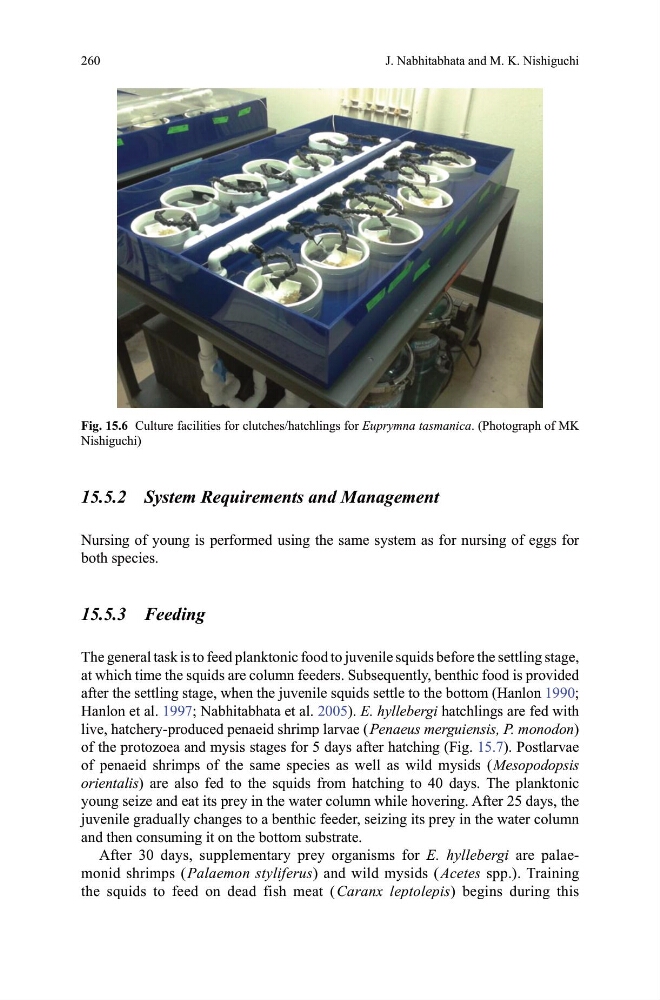
Fig. 15.6 Culture facilities for clutches/hatchlings for Euprymna tasmanica. (Photograph of MK
Nishiguchi)
J. Nabhitabhata and M. K. Nishiguchi
15.5.2 System Requirements and Management
Nursing of young is performed using the same system as for nursing of eggs for
both species.
15.5.3 Feeding
The general task is to feed planktonic food to juvenile squids before the settling stage,
at which time the squids are column feeders. Subsequently, benthic food is provided
after the settling stage, when the juvenile squids settle to the bottom (Hanlon 1990;
Hanlon et al. 1997; Nabhitabhata et al. 2005). E� hyllebergi hatchlings are fed with
live, hatchery-produced penaeid shrimp larvae ( Penaeus merguiensis, P� monodon)
of the protozoea and mysis stages for 5 days after hatching (Fig. 15.7). Postlarvae
of penaeid shrimps of the same species as well as wild mysids ( Mesopodopsis
orientalis) are also fed to the squids from hatching to 40 days. The planktonic
young seize and eat its prey in the water column while hovering. After 25 days, the
juvenile gradually changes to a benthic feeder, seizing its prey in the water column
and then consuming it on the bottom substrate.
After 30 days, supplementary prey organisms for E� hyllebergi are palaemonid shrimps ( Palaemon styliferus) and wild mysids ( Acetes spp.). Training
the squids to feed on dead fish meat ( Caranx leptolepis) begins during this
Fig. 15.6 Culture facilities for clutches/hatchlings for Euprymna tasmanica. (Photograph of MK
Nishiguchi)
J. Nabhitabhata and M. K. Nishiguchi