

261
period. Size grading is also initiated and continued every 10 days. The density is
reduced from the initial 2–6 individuals L
− 1
by at least 25 % after each grading
(Nabhitabhata et al. 2005). E� tasmanica juveniles are fed on live, mysid shrimp
for the first month (~ 30 days), i.e. Tasmanomysis oculata, Paramesopodopsis
refa, and then are moved to smaller, post-larval panaeid shrimp ( Penaeus sp.).
Since E� tasmanica are larger when hatched, they are capable of obtaining bigger
prey items earlier in their development than E� hyllebergi. Enriched brine shrimps
( Artemia parthenogenetica and A� franciscana) can be used as substituted food
when mysids are unavailable (Sinn 2005; Sinn and Moltschaniwskyj 2005; Sinn
et al. 2008) although they are generally less preferred. E� tasmanica does not take
dead prey, although there is no attempt to train juveniles to feed on this type of
material.
15.5.4 Euprymna hyllebergi Growth
Hatchlings of Thai bobtail squid grow from about 2-mm ML and 0.004-g weight
to 7-mm ML and 0.26 g in the first month (Fig. 15.8a, b; Nabhitabhata et al. 2005).
The daily or instantaneous relative growth rate (IGR) is the highest between 10
and 20 days after hatching, about 5 % in length and 17 % in weight (Fig. 15.8b).
The survival in the nursing phase from hatching to settling stage (0–30 days) is
approximately 30 %.
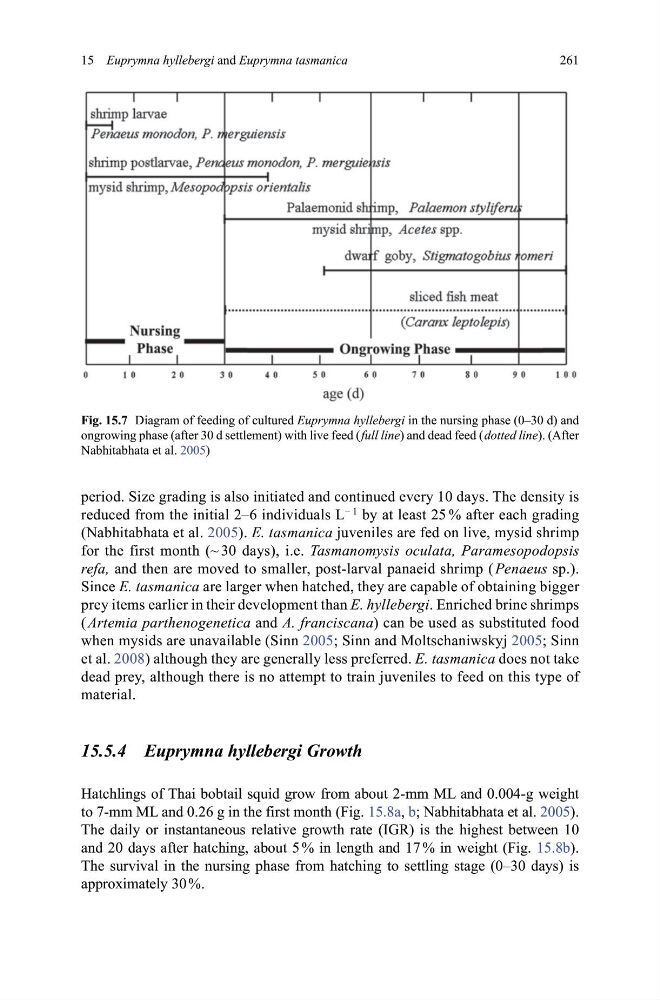
Fig. 15.7 Diagram of feeding of cultured Euprymna hyllebergi in the nursing phase (0–30 d) and
ongrowing phase (after 30 d settlement) with live feed ( full line) and dead feed ( dotted line). (After
Nabhitabhata et al. 2005)
15 Euprymna hyllebergi and Euprymna tasmanica
period. Size grading is also initiated and continued every 10 days. The density is
reduced from the initial 2–6 individuals L
− 1
by at least 25 % after each grading
(Nabhitabhata et al. 2005). E� tasmanica juveniles are fed on live, mysid shrimp
for the first month (~ 30 days), i.e. Tasmanomysis oculata, Paramesopodopsis
refa, and then are moved to smaller, post-larval panaeid shrimp ( Penaeus sp.).
Since E� tasmanica are larger when hatched, they are capable of obtaining bigger
prey items earlier in their development than E� hyllebergi. Enriched brine shrimps
( Artemia parthenogenetica and A� franciscana) can be used as substituted food
when mysids are unavailable (Sinn 2005; Sinn and Moltschaniwskyj 2005; Sinn
et al. 2008) although they are generally less preferred. E� tasmanica does not take
dead prey, although there is no attempt to train juveniles to feed on this type of
material.
15.5.4 Euprymna hyllebergi Growth
Hatchlings of Thai bobtail squid grow from about 2-mm ML and 0.004-g weight
to 7-mm ML and 0.26 g in the first month (Fig. 15.8a, b; Nabhitabhata et al. 2005).
The daily or instantaneous relative growth rate (IGR) is the highest between 10
and 20 days after hatching, about 5 % in length and 17 % in weight (Fig. 15.8b).
The survival in the nursing phase from hatching to settling stage (0–30 days) is
approximately 30 %.
Fig. 15.7 Diagram of feeding of cultured Euprymna hyllebergi in the nursing phase (0–30 d) and
ongrowing phase (after 30 d settlement) with live feed ( full line) and dead feed ( dotted line). (After
Nabhitabhata et al. 2005)
15 Euprymna hyllebergi and Euprymna tasmanica