

259
can be maintained at approximately 28.2 °C, pH 8.0 and salinity at 32.5 psu. For
E� tasmanica, clutches are placed in a 100-L polycarbonate tank with ultraviolet
(UV)-filtered artificial seawater. Each individual clutch is placed in a cage made
out of 2 pieces of PVC tubing, cut longitudinally and then glued back together with
mesh netting in between. The clutches are placed in these cages so as not to have
hatchlings mix with other clutches, as well as receiving enough aeration from below
during development. Each cage is aerated with water from an individual spout that
provides oxygenated seawater (Fig. 15.6). Water is kept at constant temperature
(20 °C) with pH 8.0 and salinity 34.0 psu. Water changes are completed every other
day to maintain salinity due to evaporation.
15.5 Nursing of Young
15.5.1 Hatchling Characteristics
The living mode of the hatchling includes a planktonic phase lasting from 6 to 8 h before the hatchling gradually adopts a benthic habit. The settling stage is approximately
5 days. Juvenile squids still enter the water column on a regular basis, alternatively
planktonic and benthic, until 25–30 days after hatching. The internal yolk sac is still
visible through the transparent mantle from hatching until the third day (Fig. 15.4).
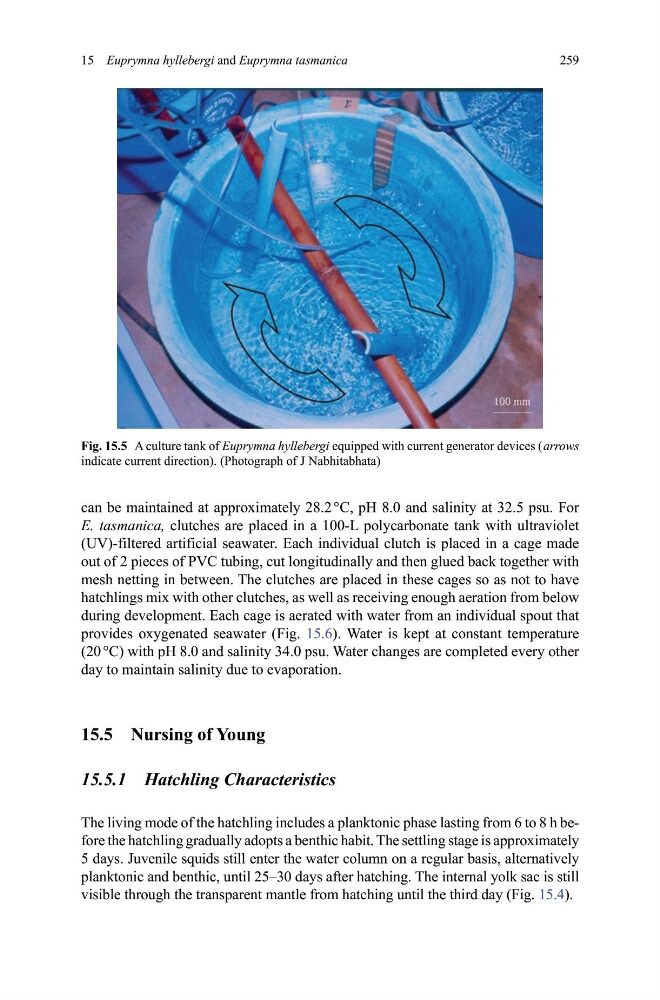
Fig. 15.5 A culture tank of Euprymna hyllebergi equipped with current generator devices ( arrows
indicate current direction). (Photograph of J Nabhitabhata)
15 Euprymna hyllebergi and Euprymna tasmanica
can be maintained at approximately 28.2 °C, pH 8.0 and salinity at 32.5 psu. For
E� tasmanica, clutches are placed in a 100-L polycarbonate tank with ultraviolet
(UV)-filtered artificial seawater. Each individual clutch is placed in a cage made
out of 2 pieces of PVC tubing, cut longitudinally and then glued back together with
mesh netting in between. The clutches are placed in these cages so as not to have
hatchlings mix with other clutches, as well as receiving enough aeration from below
during development. Each cage is aerated with water from an individual spout that
provides oxygenated seawater (Fig. 15.6). Water is kept at constant temperature
(20 °C) with pH 8.0 and salinity 34.0 psu. Water changes are completed every other
day to maintain salinity due to evaporation.
15.5 Nursing of Young
15.5.1 Hatchling Characteristics
The living mode of the hatchling includes a planktonic phase lasting from 6 to 8 h before the hatchling gradually adopts a benthic habit. The settling stage is approximately
5 days. Juvenile squids still enter the water column on a regular basis, alternatively
planktonic and benthic, until 25–30 days after hatching. The internal yolk sac is still
visible through the transparent mantle from hatching until the third day (Fig. 15.4).
Fig. 15.5 A culture tank of Euprymna hyllebergi equipped with current generator devices ( arrows
indicate current direction). (Photograph of J Nabhitabhata)
15 Euprymna hyllebergi and Euprymna tasmanica