

Treatment Plants for Phosphorus Removal from Wastewater
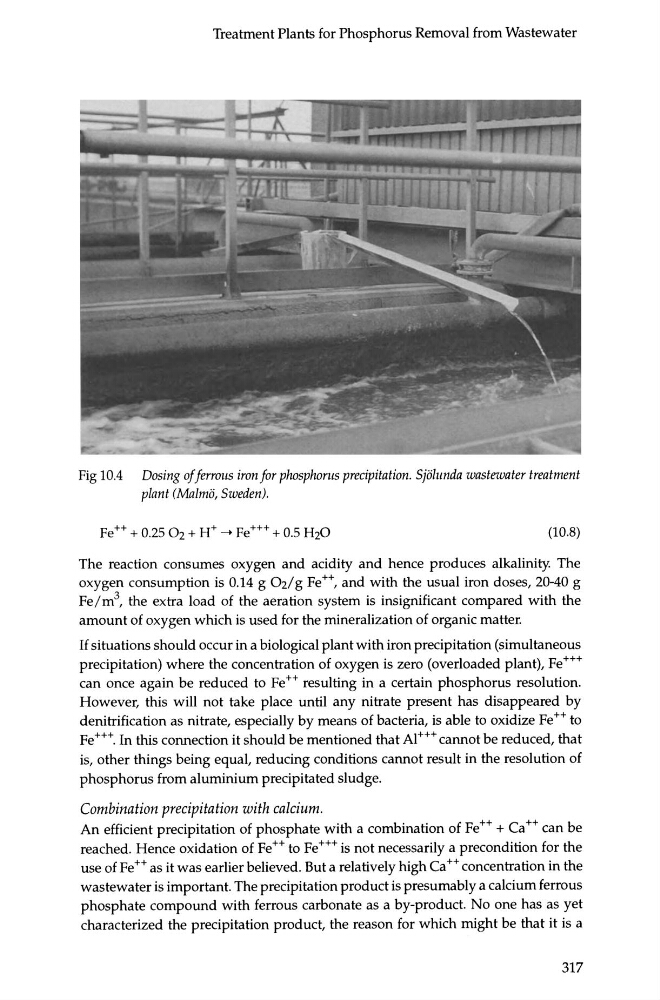
Fig 10.4 Dosing of ferrous iron for phosphonts precipitation. Sjolunda wastewater treatment
plant (Malmo, Sweden).
(10.8)
The reaction consumes oxygen and acidity and hence produces alkalinity. The
oxygen consumption is 0.14 g 02/g Fe++, and with the usual iron doses, 20-40 g
Fe/m 3 , the extra load of the aeration system is insignificant compared with the
amount of oxygen which is used for the mineralization of organic matter.
If situations should occur in a biological plant with iron precipitation (simultaneous
precipitation) where the concentration of oxygen is zero (overloaded plant), Fe+++
can once again be reduced to Fe++ resulting in a certain phosphorus resolution.
However, this will not take place until any nitrate present has disappeared by
denitrification as nitrate, especially by means of bacteria, is able to oxidize Fe++ to
Fe+++. In this connection it should be mentioned that Al+++ cannot be reduced, that
is, other things being equal, reducing conditions cannot result in the resolution of
phosphorus from aluminium precipitated sludge.
Combination precipitation with calcium.
An efficient precipitation of phosphate with a combination of Fe++ + Ca ++ can be
reached. Hence oxidation of Fe++ to Fe+++ is not necessarily a precondition for the
use of Fe++ as it was earlier believed. But a relatively high Ca ++concentration in the
wastewater is important. The precipitation product is presumably a calcium ferrous
phosphate compound with ferrous carbonate as a by-product. No one has as yet
characterized the precipitation product, the reason for which might be that it is a
317
Fig 10.4 Dosing of ferrous iron for phosphonts precipitation. Sjolunda wastewater treatment
plant (Malmo, Sweden).
(10.8)
The reaction consumes oxygen and acidity and hence produces alkalinity. The
oxygen consumption is 0.14 g 02/g Fe++, and with the usual iron doses, 20-40 g
Fe/m 3 , the extra load of the aeration system is insignificant compared with the
amount of oxygen which is used for the mineralization of organic matter.
If situations should occur in a biological plant with iron precipitation (simultaneous
precipitation) where the concentration of oxygen is zero (overloaded plant), Fe+++
can once again be reduced to Fe++ resulting in a certain phosphorus resolution.
However, this will not take place until any nitrate present has disappeared by
denitrification as nitrate, especially by means of bacteria, is able to oxidize Fe++ to
Fe+++. In this connection it should be mentioned that Al+++ cannot be reduced, that
is, other things being equal, reducing conditions cannot result in the resolution of
phosphorus from aluminium precipitated sludge.
Combination precipitation with calcium.
An efficient precipitation of phosphate with a combination of Fe++ + Ca ++ can be
reached. Hence oxidation of Fe++ to Fe+++ is not necessarily a precondition for the
use of Fe++ as it was earlier believed. But a relatively high Ca ++concentration in the
wastewater is important. The precipitation product is presumably a calcium ferrous
phosphate compound with ferrous carbonate as a by-product. No one has as yet
characterized the precipitation product, the reason for which might be that it is a
317