

Biofilters
Influent
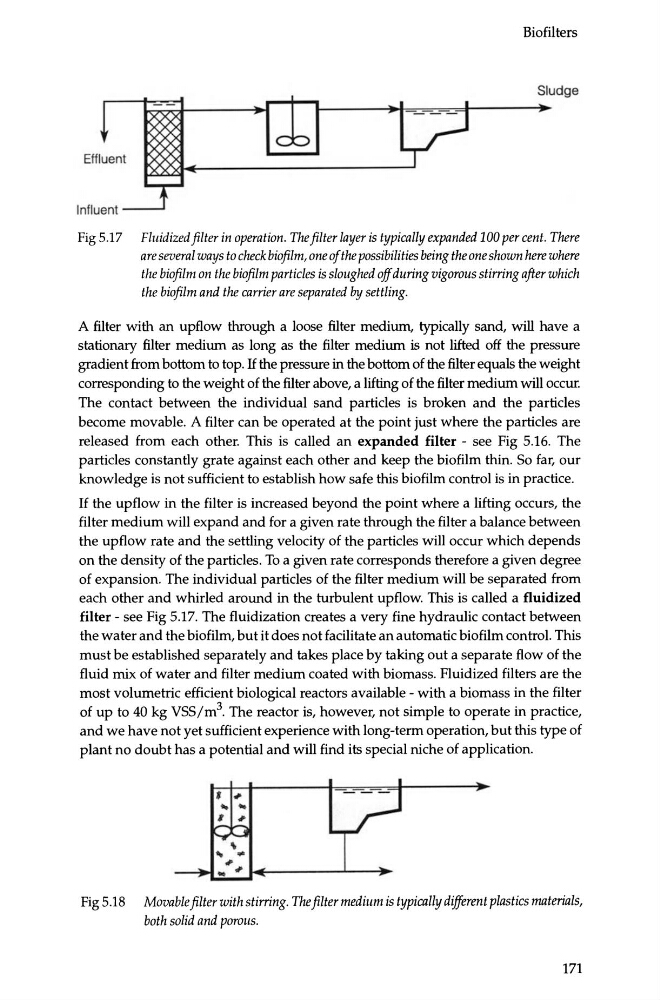
Fig 5.17 Fluidized filter in operation. The filter layer is typically expanded 100 per cent. There
are several ways to check biofilm, one of the possibilities being the one shown here where
the biofilm on the biofilm particles is sloughed off during vigorous stirring after which
the biofilm and the carrier are separated by settling.
A filter with an upflow through a loose filter medium, typically sand, will have a
stationary filter medium as long as the filter medium is not lifted off the pressure
gradient from bottom to top. If the pressure in the bottom of the filter equals the weight
corresponding to the weight of the filter above, a lifting of the filter medium will occur.
The contact between the individual sand particles is broken and the particles
become movable. A filter can be operated at the point just where the particles are
released from each other. This is called an expanded filter - see Fig 5.16. The
particles constantly grate against each other and keep the biofilm thin. So far, our
knowledge is not sufficient to establish how safe this biofilm control is in practice.
If the upflow in the filter is increased beyond the point where a lifting occurs, the
filter medium will expand and for a given rate through the filter a balance between
the upflow rate and the settling velocity of the particles will occur which depends
on the density of the particles. To a given rate corresponds therefore a given degree
of expansion. The individual particles of the filter medium will be separated from
each other and whirled around in the turbulent upflow. This is called a fluidized
filter- see Fig 5.17. The fluidization creates a very fine hydraulic contact between
the water and the biofilm, but it does not facilitate an automatic biofilm control. This
must be established separately and takes place by taking out a separate flow of the
fluid mix of water and filter medium coated with biomass. Fluidized filters are the
most volumetric efficient biological reactors available- with a biomass in the filter
of up to 40 kg VSS/m 3 . The reactor is, however, not simple to operate in practice,
and we have not yet sufficient experience with long-term operation, but this type of
plant no doubt has a potential and will find its special niche of application.
' ,
... ...
I
"
Fig 5.18 Movable filter with stirring. The filter medium is typically different plastics materials,
both solid and porous.
171
Influent
Fig 5.17 Fluidized filter in operation. The filter layer is typically expanded 100 per cent. There
are several ways to check biofilm, one of the possibilities being the one shown here where
the biofilm on the biofilm particles is sloughed off during vigorous stirring after which
the biofilm and the carrier are separated by settling.
A filter with an upflow through a loose filter medium, typically sand, will have a
stationary filter medium as long as the filter medium is not lifted off the pressure
gradient from bottom to top. If the pressure in the bottom of the filter equals the weight
corresponding to the weight of the filter above, a lifting of the filter medium will occur.
The contact between the individual sand particles is broken and the particles
become movable. A filter can be operated at the point just where the particles are
released from each other. This is called an expanded filter - see Fig 5.16. The
particles constantly grate against each other and keep the biofilm thin. So far, our
knowledge is not sufficient to establish how safe this biofilm control is in practice.
If the upflow in the filter is increased beyond the point where a lifting occurs, the
filter medium will expand and for a given rate through the filter a balance between
the upflow rate and the settling velocity of the particles will occur which depends
on the density of the particles. To a given rate corresponds therefore a given degree
of expansion. The individual particles of the filter medium will be separated from
each other and whirled around in the turbulent upflow. This is called a fluidized
filter- see Fig 5.17. The fluidization creates a very fine hydraulic contact between
the water and the biofilm, but it does not facilitate an automatic biofilm control. This
must be established separately and takes place by taking out a separate flow of the
fluid mix of water and filter medium coated with biomass. Fluidized filters are the
most volumetric efficient biological reactors available- with a biomass in the filter
of up to 40 kg VSS/m 3 . The reactor is, however, not simple to operate in practice,
and we have not yet sufficient experience with long-term operation, but this type of
plant no doubt has a potential and will find its special niche of application.
' ,
... ...
I
"
Fig 5.18 Movable filter with stirring. The filter medium is typically different plastics materials,
both solid and porous.
171