

Aquatic vegetation present in the Lake Taihu was classified into four macroclasses: (1) emergent macrophytes, (2) floating macrophytes (including floatingleaved plants), (3) submerged macrophytes, and (4) algal bloom, to which an open
water class was finally added. The approach adopted was a binary cascade decision
tree with expert-based threshold and input features using multispectral satellite data
described below:
• NDAVI—Normalized Difference Aquatic Vegetation Index: aquatic vegetation
greenness and vigor spectral index [37]
• SVI—Soil and Vegetation Index: terrain land cover perviousness index [38]
• NDWI—Normalized Difference Water Index: vegetation water content index
[39]
• Chl-a: concentration value according to the algorithm derived from the work of
Ma and Dai [40], calibrated using in situ data of two monitoring stations
The results indicate dramatic changes in the spatial distribution and abundance
of macrophytes during the decade, especially in eastern Taihu Lake (Fig. 9). Some
of these changes were associated to the increased activities of aquaculture and fish
farming in this region of the lake since 2000. Significant changes in the areal
January
February
March
April
May
June
July
August
September
October
November
December
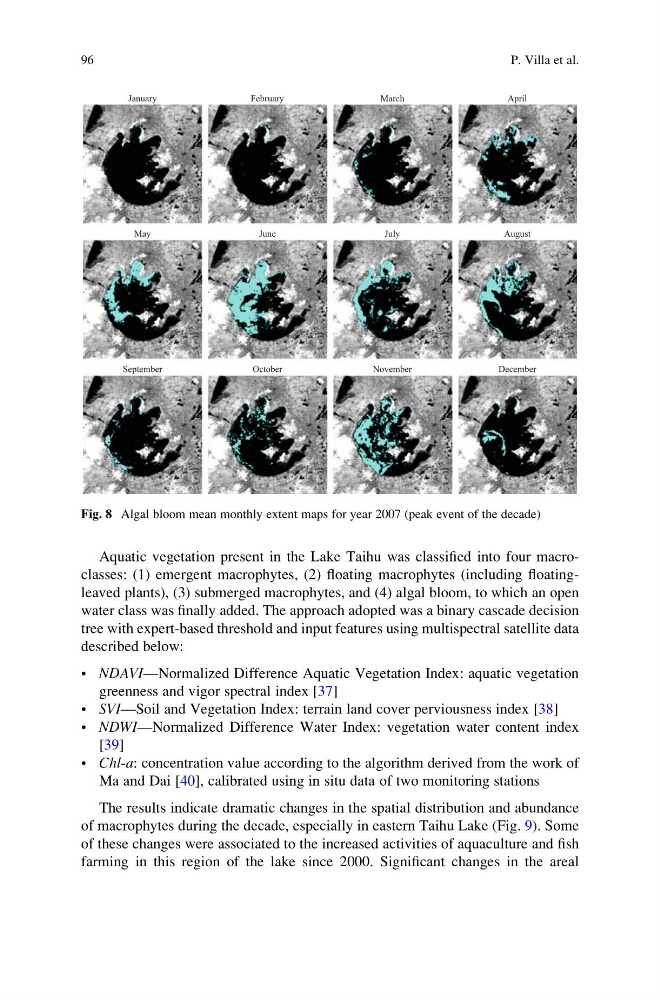
Fig. 8 Algal bloom mean monthly extent maps for year 2007 (peak event of the decade)
96
P. Villa et al.
water class was finally added. The approach adopted was a binary cascade decision
tree with expert-based threshold and input features using multispectral satellite data
described below:
• NDAVI—Normalized Difference Aquatic Vegetation Index: aquatic vegetation
greenness and vigor spectral index [37]
• SVI—Soil and Vegetation Index: terrain land cover perviousness index [38]
• NDWI—Normalized Difference Water Index: vegetation water content index
[39]
• Chl-a: concentration value according to the algorithm derived from the work of
Ma and Dai [40], calibrated using in situ data of two monitoring stations
The results indicate dramatic changes in the spatial distribution and abundance
of macrophytes during the decade, especially in eastern Taihu Lake (Fig. 9). Some
of these changes were associated to the increased activities of aquaculture and fish
farming in this region of the lake since 2000. Significant changes in the areal
January
February
March
April
May
June
July
August
September
October
November
December
Fig. 8 Algal bloom mean monthly extent maps for year 2007 (peak event of the decade)
96
P. Villa et al.