

89
for hydroelectric power and for navigation (Fitzmaurice 1996), construction of navigational canals (e.g., the Rhine-Main-Danube Canal completed in 1992; Lóczy
2007), and water pollution. Because the drainage basin includes portions of the territories of 18 nations, coordinating river management has been a challenging international undertaking (Nachtnebel 2000; Bloesch and Sieber 2003). Among the
primary issues in the Danube drainage today are channelization, flow regulation,
and pollution.
Channelization begins in alpine headwater tributaries that are ‘trained’ to confine
braided planforms to a single channel and to limit bank erosion and bed incision
(Fig. 3.18a). Channelization continues throughout the Danube drainage basin to the
delta, where one of the three main distributary channels has been dredged and channelized for shipping since 1857 (Wohl 2011). Part of the river training in mountainous portions of the drainage basin includes check dams and sediment detention
basins designed to limit downstream transmission of sediment during debris flows
and floods (Fig. 3.18b). This sediment retention, along with stabilized banks in
downstream portions of the river network, creates sediment deficits that exacerbate
bed and bank erosion, leading to additional stabilization of the channel boundaries.
Most of the portions of the Danube and its tributaries flowing across alluvial basins
are now highly channelized (Fig. 3.18c) and flow in these river segments and in the
confined canyons between alluvial basins is fully regulated by dozens of dams.
Most of the dams within the Danube drainage basin are designed for hydropower, navigation, and flood control, rather than for water storage. Consequently,
many of the dams are relatively small, although they are extremely numerous
(Fig. 3.19). A key concern with these dams is that they limit flood magnitude and
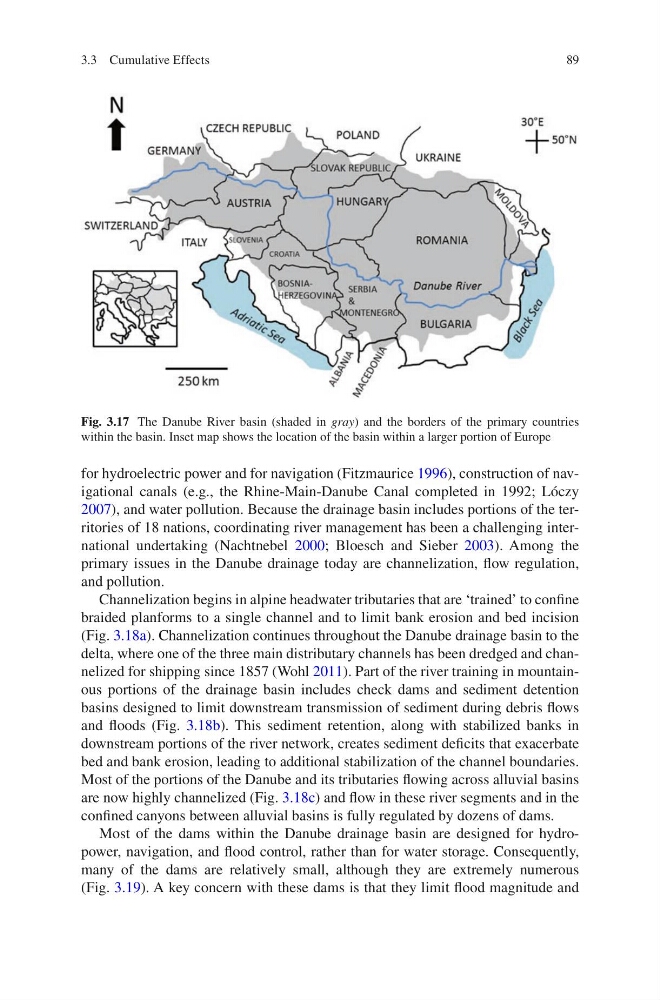
Fig. 3.17 The Danube River basin (shaded in gray) and the borders of the primary countries
within the basin. Inset map shows the location of the basin within a larger portion of Europe
3.3 Cumulative Effects
for hydroelectric power and for navigation (Fitzmaurice 1996), construction of navigational canals (e.g., the Rhine-Main-Danube Canal completed in 1992; Lóczy
2007), and water pollution. Because the drainage basin includes portions of the territories of 18 nations, coordinating river management has been a challenging international undertaking (Nachtnebel 2000; Bloesch and Sieber 2003). Among the
primary issues in the Danube drainage today are channelization, flow regulation,
and pollution.
Channelization begins in alpine headwater tributaries that are ‘trained’ to confine
braided planforms to a single channel and to limit bank erosion and bed incision
(Fig. 3.18a). Channelization continues throughout the Danube drainage basin to the
delta, where one of the three main distributary channels has been dredged and channelized for shipping since 1857 (Wohl 2011). Part of the river training in mountainous portions of the drainage basin includes check dams and sediment detention
basins designed to limit downstream transmission of sediment during debris flows
and floods (Fig. 3.18b). This sediment retention, along with stabilized banks in
downstream portions of the river network, creates sediment deficits that exacerbate
bed and bank erosion, leading to additional stabilization of the channel boundaries.
Most of the portions of the Danube and its tributaries flowing across alluvial basins
are now highly channelized (Fig. 3.18c) and flow in these river segments and in the
confined canyons between alluvial basins is fully regulated by dozens of dams.
Most of the dams within the Danube drainage basin are designed for hydropower, navigation, and flood control, rather than for water storage. Consequently,
many of the dams are relatively small, although they are extremely numerous
(Fig. 3.19). A key concern with these dams is that they limit flood magnitude and
Fig. 3.17 The Danube River basin (shaded in gray) and the borders of the primary countries
within the basin. Inset map shows the location of the basin within a larger portion of Europe
3.3 Cumulative Effects