

129
experimental flow releases received intense scrutiny with respect to physical and
biological effects in the Colorado River ecosystem downstream from the dam (e.g.,
Melis 2011). Insights gained from each flow experiment have been used to refine the
timing, magnitude, and duration of subsequent high-flow releases. The flow releases
are primarily designed to redistribute continuing sediment inputs from tributaries
entering the Colorado River downstream from Glen Canyon Dam in order to restore
sand bars and associated backwater habitats (Fig. 4.12) for endangered native fish
and other wildlife species. The planning, monitoring, and implementation processes
associated with these experimental high flows have been used as models for experimental flow releases on other dammed rivers.
The Lower Colorado River Multi-Species Conservation Program (http://www.
lcrmscp.gov/) focuses on river management and restoration below the Grand
Canyon and within the United States (i.e., before the river passes into Mexico). The
program includes a 50-year plan to conserve at least 26 species through implementation of a habitat conservation plan that returns physical complexity and connectivity to the river corridor, including managing flows to sustain these qualities (Bureau
of Reclamation 2016).
As with many of the world’s major river basins, the problems of the Colorado
River drainage are perhaps most apparent at its delta, where the river largely ceased
to flow to the ocean for a period of 16 years starting in 1998. Descriptions of the
Colorado River delta during the early twentieth century indicate a lush subtropical
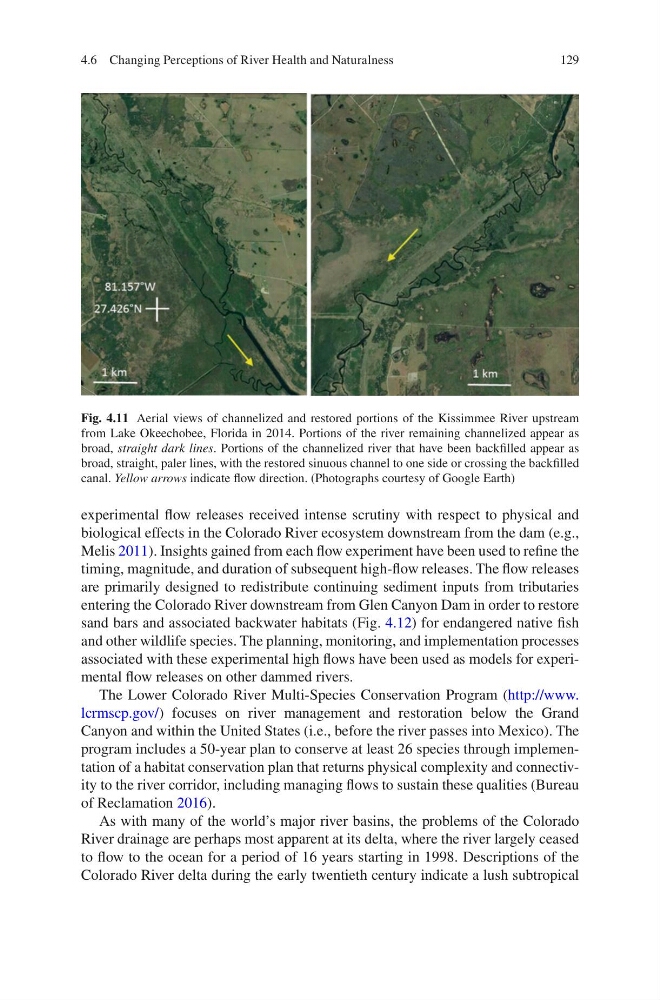
Fig. 4.11 Aerial views of channelized and restored portions of the Kissimmee River upstream
from Lake Okeechobee, Florida in 2014. Portions of the river remaining channelized appear as
broad, straight dark lines. Portions of the channelized river that have been backfilled appear as
broad, straight, paler lines, with the restored sinuous channel to one side or crossing the backfilled
canal. Yellow arrows indicate flow direction. (Photographs courtesy of Google Earth)
4.6 Changing Perceptions of River Health and Naturalness
experimental flow releases received intense scrutiny with respect to physical and
biological effects in the Colorado River ecosystem downstream from the dam (e.g.,
Melis 2011). Insights gained from each flow experiment have been used to refine the
timing, magnitude, and duration of subsequent high-flow releases. The flow releases
are primarily designed to redistribute continuing sediment inputs from tributaries
entering the Colorado River downstream from Glen Canyon Dam in order to restore
sand bars and associated backwater habitats (Fig. 4.12) for endangered native fish
and other wildlife species. The planning, monitoring, and implementation processes
associated with these experimental high flows have been used as models for experimental flow releases on other dammed rivers.
The Lower Colorado River Multi-Species Conservation Program (http://www.
lcrmscp.gov/) focuses on river management and restoration below the Grand
Canyon and within the United States (i.e., before the river passes into Mexico). The
program includes a 50-year plan to conserve at least 26 species through implementation of a habitat conservation plan that returns physical complexity and connectivity to the river corridor, including managing flows to sustain these qualities (Bureau
of Reclamation 2016).
As with many of the world’s major river basins, the problems of the Colorado
River drainage are perhaps most apparent at its delta, where the river largely ceased
to flow to the ocean for a period of 16 years starting in 1998. Descriptions of the
Colorado River delta during the early twentieth century indicate a lush subtropical
Fig. 4.11 Aerial views of channelized and restored portions of the Kissimmee River upstream
from Lake Okeechobee, Florida in 2014. Portions of the river remaining channelized appear as
broad, straight dark lines. Portions of the channelized river that have been backfilled appear as
broad, straight, paler lines, with the restored sinuous channel to one side or crossing the backfilled
canal. Yellow arrows indicate flow direction. (Photographs courtesy of Google Earth)
4.6 Changing Perceptions of River Health and Naturalness