

128
fish species that are endemic to the Colorado River basin. The program, which was
initiated in 1988, includes numerous stakeholder groups who have worked together
to create fish passages at migration barriers, as well as managing flows to provide
spawning and rearing habitat in floodplain areas. The program also includes removal
of nonnative fish species that compete with the endangered native species. Predation
and competition by nonnative fish species, many of which were deliberately stocked
in the river basin until the 1960s, now constitute the greatest threat to endangered
fish recovery in the Upper Colorado (Highlights 2016).
Environmental management within the Grand Canyon portion of the Colorado
River has received the most attention globally because it focuses on a famous US
national park and a UNESCO World Heritage site. The US Bureau of Reclamation,
which operates Glen Canyon Dam (completed in 1963), established an environmental studies program for the river in 1982 because of concern about downstream
effects from the dam on the Colorado River ecosystem in Grand Canyon. This was
followed by federal legislation designed to protect the river ecosystem in 1992. This
legislation mandated that adaptive management be used to monitor and assess the
effects of dam operation. An adaptive management program was established in
1997 and has thus far conducted multiple experimental high-flow releases from
Glen Canyon Dam in 1996, 2004, 2008, 2012, 2013, and 2016. Each of these
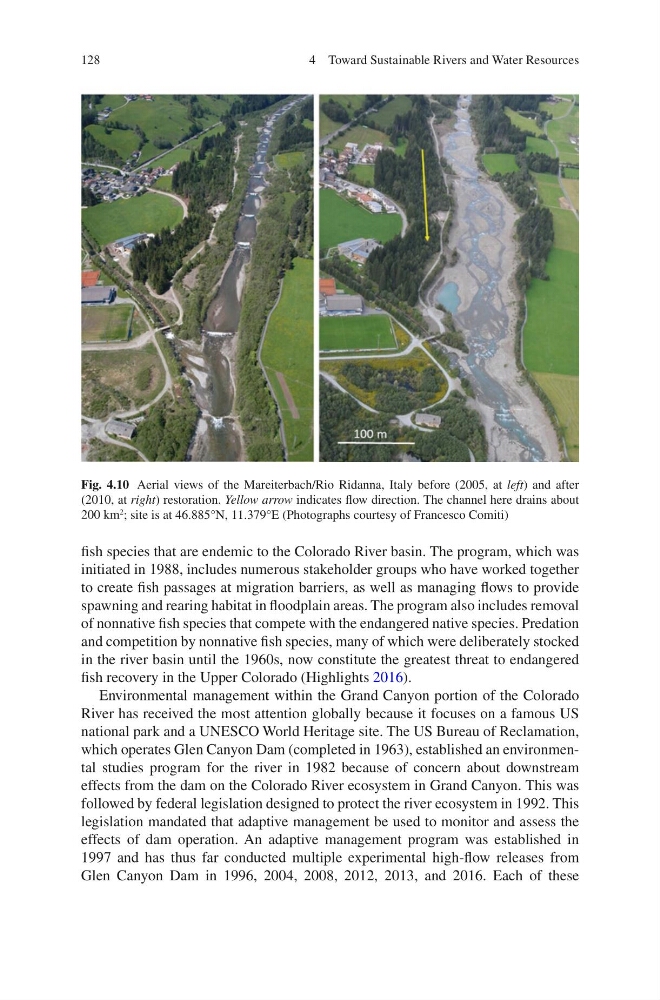
Fig. 4.10 Aerial views of the Mareiterbach/Rio Ridanna, Italy before (2005, at left) and after
(2010, at right) restoration. Yellow arrow indicates flow direction. The channel here drains about
200 km
2 ; site is at 46.885°N, 11.379°E (Photographs courtesy of Francesco Comiti)
4 Toward Sustainable Rivers and Water Resources
fish species that are endemic to the Colorado River basin. The program, which was
initiated in 1988, includes numerous stakeholder groups who have worked together
to create fish passages at migration barriers, as well as managing flows to provide
spawning and rearing habitat in floodplain areas. The program also includes removal
of nonnative fish species that compete with the endangered native species. Predation
and competition by nonnative fish species, many of which were deliberately stocked
in the river basin until the 1960s, now constitute the greatest threat to endangered
fish recovery in the Upper Colorado (Highlights 2016).
Environmental management within the Grand Canyon portion of the Colorado
River has received the most attention globally because it focuses on a famous US
national park and a UNESCO World Heritage site. The US Bureau of Reclamation,
which operates Glen Canyon Dam (completed in 1963), established an environmental studies program for the river in 1982 because of concern about downstream
effects from the dam on the Colorado River ecosystem in Grand Canyon. This was
followed by federal legislation designed to protect the river ecosystem in 1992. This
legislation mandated that adaptive management be used to monitor and assess the
effects of dam operation. An adaptive management program was established in
1997 and has thus far conducted multiple experimental high-flow releases from
Glen Canyon Dam in 1996, 2004, 2008, 2012, 2013, and 2016. Each of these
Fig. 4.10 Aerial views of the Mareiterbach/Rio Ridanna, Italy before (2005, at left) and after
(2010, at right) restoration. Yellow arrow indicates flow direction. The channel here drains about
200 km
2 ; site is at 46.885°N, 11.379°E (Photographs courtesy of Francesco Comiti)
4 Toward Sustainable Rivers and Water Resources