

Biological Nitrogen Removal Using Immobilized Bacteria
405
PV A-glycerol gel was selected as the better choice, since it provides more active
biomass able to erupt and then to maintain lower nitrifier SRT.
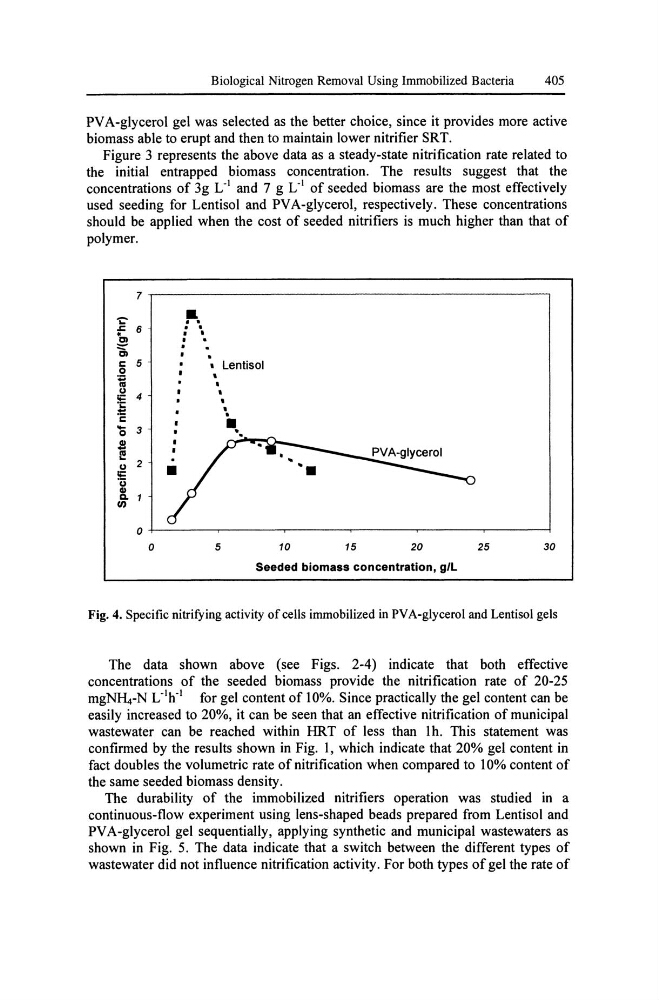
Figure 3 represents the above data as a steady-state nitrification rate related to
the initial entrapped biomass concentration. The results suggest that the
concentrations of 3g L- 1 and 7 g L- 1 of seeded biomass are the most effectively
used seeding for Lentisol and PV A-glycerol, respectively. These concentrations
should be applied when the cost of seeded nitrifiers is much higher than that of
polymer.
7 .-------------------------------------------------,
•
•
· .
· .
•
I
· .
·
•
I
Lentisol
• I
I
.
I
.
-. .
o +-------~------_r------~--------~------~----~
o
5
10
15
20
25
30
Seeded biomass concentration, gIL
Fig. 4. Specific nitrifYing activity of cells immobilized in PV A-glycerol and Lentisol gels
The data shown above (see Figs. 2-4) indicate that both effective
concentrations of the seeded biomass provide the nitrification rate of 20-25
mg~-N L-1h- 1 for gel content of 10%. Since practically the gel content can be
easily increased to 20%, it can be seen that an effective nitrification of municipal
wastewater can be reached within HRT of less than Ih. This statement was
confirmed by the results shown in Fig. 1, which indicate that 20% gel content in
fact doubles the volumetric rate of nitrification when compared to 10% content of
the same seeded biomass density.
The durability of the immobilized nitrifiers operation was studied in a
continuous-flow experiment using lens-shaped beads prepared from Lentisol and
PYA-glycerol gel sequentially, applying synthetic and municipal wastewaters as
shown in Fig. 5. The data indicate that a switch between the different types of
wastewater did not influence nitrification activity. For both types of gel the rate of
405
PV A-glycerol gel was selected as the better choice, since it provides more active
biomass able to erupt and then to maintain lower nitrifier SRT.
Figure 3 represents the above data as a steady-state nitrification rate related to
the initial entrapped biomass concentration. The results suggest that the
concentrations of 3g L- 1 and 7 g L- 1 of seeded biomass are the most effectively
used seeding for Lentisol and PV A-glycerol, respectively. These concentrations
should be applied when the cost of seeded nitrifiers is much higher than that of
polymer.
7 .-------------------------------------------------,
•
•
· .
· .
•
I
· .
·
•
I
Lentisol
• I
I
.
I
.
-. .
o +-------~------_r------~--------~------~----~
o
5
10
15
20
25
30
Seeded biomass concentration, gIL
Fig. 4. Specific nitrifYing activity of cells immobilized in PV A-glycerol and Lentisol gels
The data shown above (see Figs. 2-4) indicate that both effective
concentrations of the seeded biomass provide the nitrification rate of 20-25
mg~-N L-1h- 1 for gel content of 10%. Since practically the gel content can be
easily increased to 20%, it can be seen that an effective nitrification of municipal
wastewater can be reached within HRT of less than Ih. This statement was
confirmed by the results shown in Fig. 1, which indicate that 20% gel content in
fact doubles the volumetric rate of nitrification when compared to 10% content of
the same seeded biomass density.
The durability of the immobilized nitrifiers operation was studied in a
continuous-flow experiment using lens-shaped beads prepared from Lentisol and
PYA-glycerol gel sequentially, applying synthetic and municipal wastewaters as
shown in Fig. 5. The data indicate that a switch between the different types of
wastewater did not influence nitrification activity. For both types of gel the rate of