

The Application of Electrodialysis for Drinking Water Treatment
317
The degree of desalination is determined by:
• The ion content of the raw water
• The applied electric field resulting in current density
• The residence time on the membrane
• The geometry of the cell compartments
• The cross-flow velocity
• The type of membranes
The respective ion content in the raw water and the diluate determine the
electric conductivity in the diluate compartments. The maximum applicable
current density is mainly influenced by the conductivity in the diluate
compartments. Where no salt ions are available on the membrane, the electric
current is maintained by H+ and OH" ions and hence dissociation of water takes
place. The corresponding current at this point is called the limiting current.
Usually, this point of operation should be avoided because of the precipitation of
hydroxides such as Ca(OH)2 in the concentrate compartments.
The applied electric current results in ion penetration through the membrane.
The integration of this ionic current over the membrane length yields the required
desalination.
Desalination [eq /m' l
5,00
4,00
O S04
3,00
D1I HC03
D CI
2,00
•
0 3
1,00
0,00
Standard
Selective
membranes
membrane
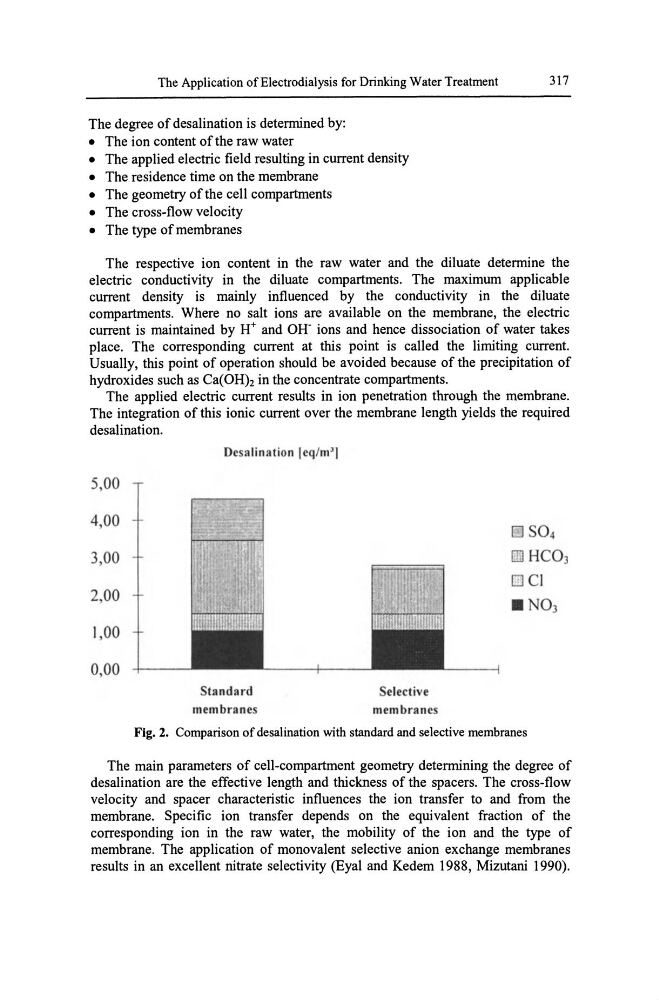
Fig. 2. Comparison of desalination with standard and selective membranes
The main parameters of cell-compartment geometry determining the degree of
desalination are the effective length and thickness of the spacers. The cross-flow
velocity and spacer characteristic influences the ion transfer to and from the
membrane. Specific ion transfer depends on the equivalent fraction of the
corresponding ion in the raw water, the mobility of the ion and the type of
membrane. The application of monovalent selective anion exchange membranes
results in an excellent nitrate selectivity (Eyal and Kedem 1988, Mizutani 1990).
317
The degree of desalination is determined by:
• The ion content of the raw water
• The applied electric field resulting in current density
• The residence time on the membrane
• The geometry of the cell compartments
• The cross-flow velocity
• The type of membranes
The respective ion content in the raw water and the diluate determine the
electric conductivity in the diluate compartments. The maximum applicable
current density is mainly influenced by the conductivity in the diluate
compartments. Where no salt ions are available on the membrane, the electric
current is maintained by H+ and OH" ions and hence dissociation of water takes
place. The corresponding current at this point is called the limiting current.
Usually, this point of operation should be avoided because of the precipitation of
hydroxides such as Ca(OH)2 in the concentrate compartments.
The applied electric current results in ion penetration through the membrane.
The integration of this ionic current over the membrane length yields the required
desalination.
Desalination [eq /m' l
5,00
4,00
O S04
3,00
D1I HC03
D CI
2,00
•
0 3
1,00
0,00
Standard
Selective
membranes
membrane
Fig. 2. Comparison of desalination with standard and selective membranes
The main parameters of cell-compartment geometry determining the degree of
desalination are the effective length and thickness of the spacers. The cross-flow
velocity and spacer characteristic influences the ion transfer to and from the
membrane. Specific ion transfer depends on the equivalent fraction of the
corresponding ion in the raw water, the mobility of the ion and the type of
membrane. The application of monovalent selective anion exchange membranes
results in an excellent nitrate selectivity (Eyal and Kedem 1988, Mizutani 1990).