

114
T. Gremm et al.
The concentrations of heavy metals in both rivers are in general relatively low
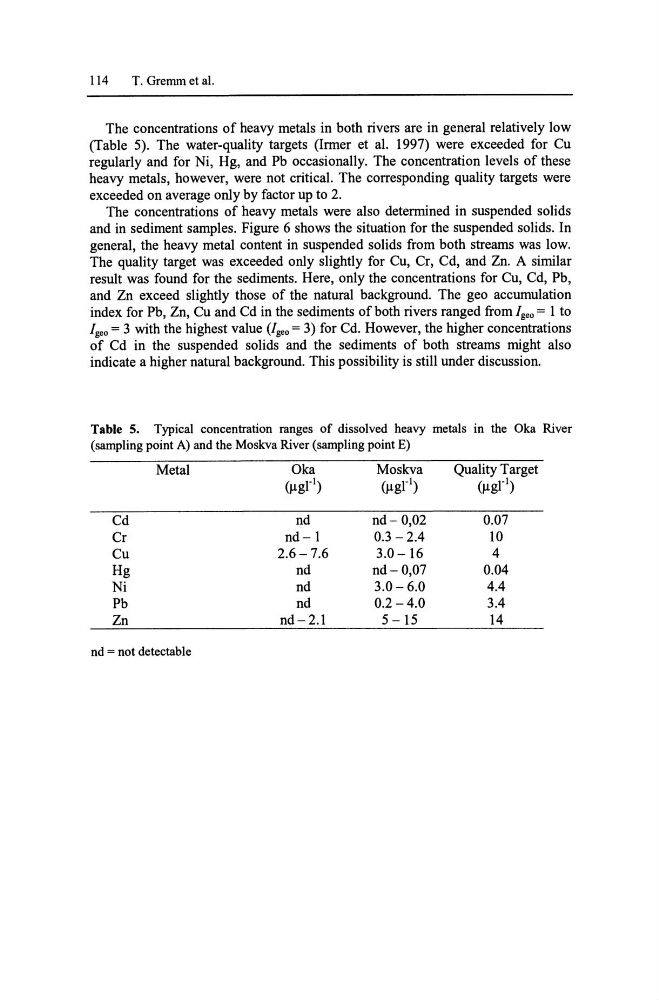
(Table 5). The water-quality targets (Irmer et al. 1997) were exceeded for Cu
regularly and for Ni, Hg, and Pb occasionally. The concentration levels of these
heavy metals, however, were not critical. The corresponding quality targets were
exceeded on average only by factor up to 2.
The concentrations of heavy metals were also determined in suspended solids
and in sediment samples. Figure 6 shows the situation for the suspended solids. In
general, the heavy metal content in suspended solids from both streams was low.
The quality target was exceeded only slightly for Cu, Cr, Cd, and Zn. A similar
result was found for the sediments. Here, only the concentrations for Cu, Cd, Pb,
and Zn exceed slightly those of the natural background. The geo accumulation
index for Pb, Zn, Cu and Cd in the sediments of both rivers ranged from Igeo = 1 to
Igeo = 3 with the highest value (Igeo = 3) for Cd. However, the higher concentrations
of Cd in the suspended solids and the sediments of both streams might also
indicate a higher natural background. This possibility is still under discussion.
Table 5. Typical concentration ranges of dissolved heavy metals in the Oka River
(sampling point A) and the Moskva River (sampling point E)
Metal
Oka
Moskva
Quality Target
(Jlgr 1 )
(Jlgr 1 )
(Jlgr 1 )
Cd
nd
nd- 0,02
0.07
Cr
nd-l
0.3 - 2.4
10
Cu
2.6-7.6
3.0 - 16
4
Hg
nd
nd-O,07
0.04
Ni
nd
3.0- 6.0
4.4
Pb
nd
0.2 -4.0
3.4
Zn
nd-2.1
5 -15
14
nd = not detectable
T. Gremm et al.
The concentrations of heavy metals in both rivers are in general relatively low
(Table 5). The water-quality targets (Irmer et al. 1997) were exceeded for Cu
regularly and for Ni, Hg, and Pb occasionally. The concentration levels of these
heavy metals, however, were not critical. The corresponding quality targets were
exceeded on average only by factor up to 2.
The concentrations of heavy metals were also determined in suspended solids
and in sediment samples. Figure 6 shows the situation for the suspended solids. In
general, the heavy metal content in suspended solids from both streams was low.
The quality target was exceeded only slightly for Cu, Cr, Cd, and Zn. A similar
result was found for the sediments. Here, only the concentrations for Cu, Cd, Pb,
and Zn exceed slightly those of the natural background. The geo accumulation
index for Pb, Zn, Cu and Cd in the sediments of both rivers ranged from Igeo = 1 to
Igeo = 3 with the highest value (Igeo = 3) for Cd. However, the higher concentrations
of Cd in the suspended solids and the sediments of both streams might also
indicate a higher natural background. This possibility is still under discussion.
Table 5. Typical concentration ranges of dissolved heavy metals in the Oka River
(sampling point A) and the Moskva River (sampling point E)
Metal
Oka
Moskva
Quality Target
(Jlgr 1 )
(Jlgr 1 )
(Jlgr 1 )
Cd
nd
nd- 0,02
0.07
Cr
nd-l
0.3 - 2.4
10
Cu
2.6-7.6
3.0 - 16
4
Hg
nd
nd-O,07
0.04
Ni
nd
3.0- 6.0
4.4
Pb
nd
0.2 -4.0
3.4
Zn
nd-2.1
5 -15
14
nd = not detectable