

Water Quality Monitoring in Russian Rivers
115
-,
L-~I
I ~ Oka
o Moskva
Hg
Zn
Pb
I
Ni
I
I
"
I
I
III
I
I
Cu
Cr
8
c.
./
- ./
:/
~ -
Cd
o
100
200
300
Percentage of quality target
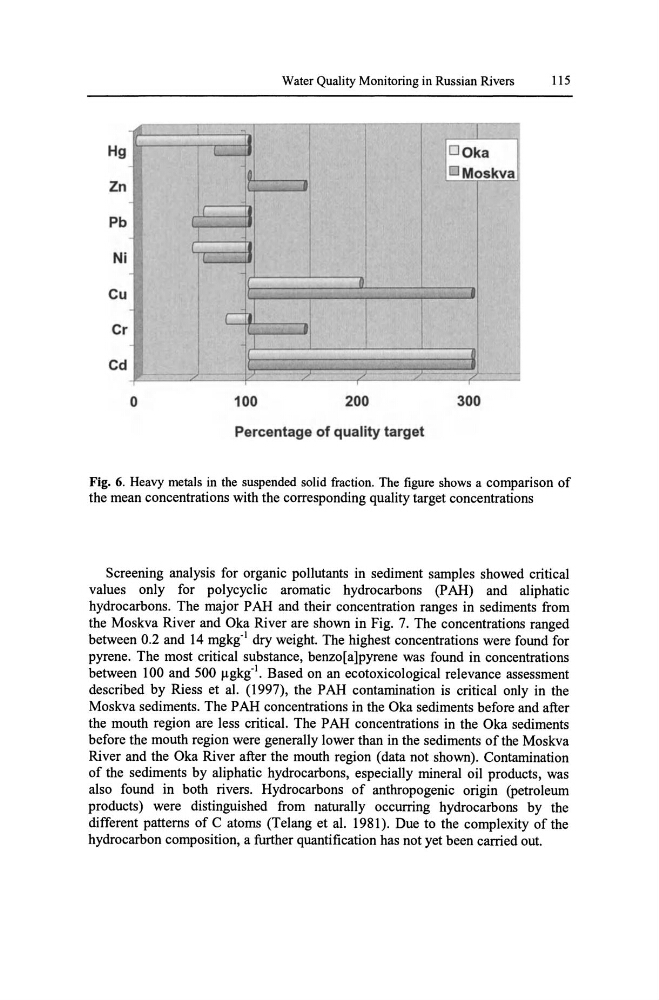
Fig. 6. Heavy metals in the suspended solid fraction. The figure shows a comparison of
the mean concentrations with the corresponding quality target concentrations
Screening analysis for organic pollutants in sediment samples showed critical
values only for polycyclic aromatic hydrocarbons (P AH) and aliphatic
hydrocarbons. The major P AH and their concentration ranges in sediments from
the Moskva River and Oka River are shown in Fig. 7. The concentrations ranged
between 0.2 and 14 mgkg,l dry weight. The highest concentrations were found for
pyrene. The most critical substance, benzo[a]pyrene was found in concentrations
between 100 and 500 flgkg't. Based on an ecotoxicological relevance assessment
described by Riess et al. (1997), the P AH contamination is critical only in the
Moskva sediments. The P AH concentrations in the Oka sediments before and after
the mouth region are less critical. The P AH concentrations in the Oka sediments
before the mouth region were generally lower than in the sediments of the Moskva
River and the Oka River after the mouth region (data not shown). Contamination
of the sediments by aliphatic hydrocarbons, especially mineral oil products, was
also found in both rivers. Hydrocarbons of anthropogenic origin (petroleum
products) were distinguished from naturally occurring hydrocarbons by the
different patterns ofC atoms (Telang et al. 1981). Due to the complexity of the
hydrocarbon composition, a further quantification has not yet been carried out.
115
-,
L-~I
I ~ Oka
o Moskva
Hg
Zn
Pb
I
Ni
I
I
"
I
I
III
I
I
Cu
Cr
8
c.
./
- ./
:/
~ -
Cd
o
100
200
300
Percentage of quality target
Fig. 6. Heavy metals in the suspended solid fraction. The figure shows a comparison of
the mean concentrations with the corresponding quality target concentrations
Screening analysis for organic pollutants in sediment samples showed critical
values only for polycyclic aromatic hydrocarbons (P AH) and aliphatic
hydrocarbons. The major P AH and their concentration ranges in sediments from
the Moskva River and Oka River are shown in Fig. 7. The concentrations ranged
between 0.2 and 14 mgkg,l dry weight. The highest concentrations were found for
pyrene. The most critical substance, benzo[a]pyrene was found in concentrations
between 100 and 500 flgkg't. Based on an ecotoxicological relevance assessment
described by Riess et al. (1997), the P AH contamination is critical only in the
Moskva sediments. The P AH concentrations in the Oka sediments before and after
the mouth region are less critical. The P AH concentrations in the Oka sediments
before the mouth region were generally lower than in the sediments of the Moskva
River and the Oka River after the mouth region (data not shown). Contamination
of the sediments by aliphatic hydrocarbons, especially mineral oil products, was
also found in both rivers. Hydrocarbons of anthropogenic origin (petroleum
products) were distinguished from naturally occurring hydrocarbons by the
different patterns ofC atoms (Telang et al. 1981). Due to the complexity of the
hydrocarbon composition, a further quantification has not yet been carried out.