

284
Ecotoxicological Issues
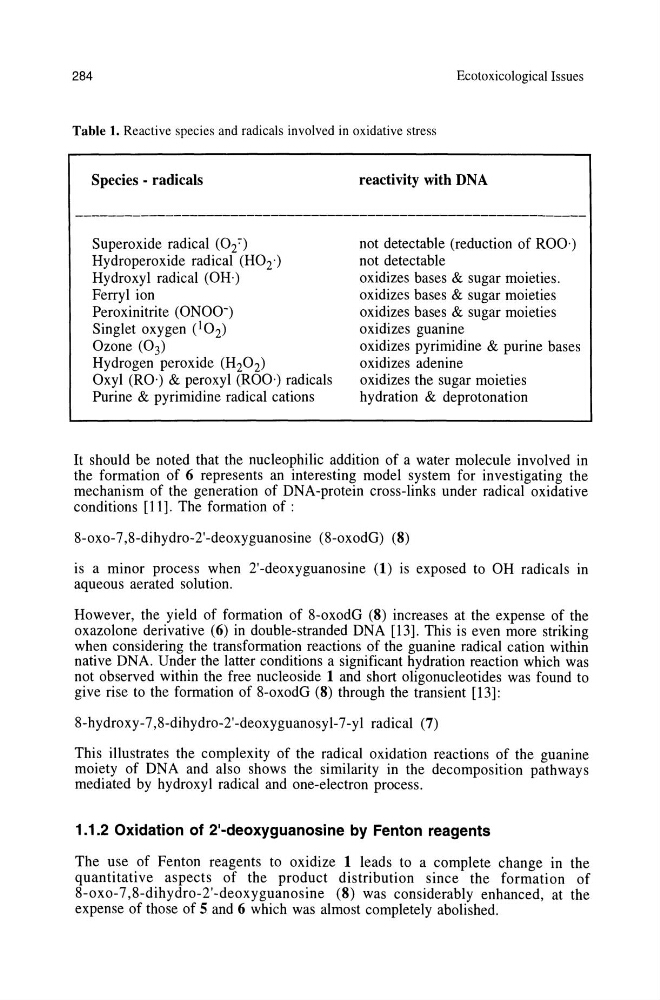
Table 1. Reactive species and radicals involved in oxidative stress
Species - radicals
Superoxide radical (02;)
Hydroperoxide radical (H0 2 ·)
Hydroxyl radical (OH·)
Ferryl ion
Peroxinitrite (ONOO-)
Singlet oxygen (10 2 )
Ozone (03)
Hydrogen peroxide (H 2 0 2 )
Oxyl (RO') & peroxyl (ROO,) radicals
Purine & pyrimidine radical cations
reactivity with DNA
not detectable (reduction of ROO,)
not detectable
oxidizes bases & sugar moieties.
oxidizes bases & sugar moieties
oxidizes bases & sugar moieties
oxidizes guanine
oxidizes pyrimidine & purine bases
oxidizes adenine
oxidizes the sugar moieties
hydration & deprotonation
It should be noted that the nucleophilic addition of a water molecule involved in
the formation of 6 represents an interesting model system for investigating the
mechanism of the generation of DNA-protein cross-links under radical oxidative
conditions [11]. The formation of :
8-oxo-7,8-dihydro-2'-deoxyguanosine (8-oxodG) (8)
is a minor process when 2'-deoxyguanosine (1) is exposed to OH radicals in
aqueous aerated solution.
However, the yield of formation of 8-oxodG (8) increases at the expense of the
oxazolone derivative (6) in double-stranded DNA [13]. This is even more striking
when considering the transformation reactions of the guanine radical cation within
native DNA. Under the latter conditions a significant hydration reaction which was
not observed within the free nucleoside 1 and short oligonucleotides was found to
give rise to the formation of 8-oxodG (8) through the transient [13]:
8-hydroxy-7,8-dihydro-2'-deoxyguanosyl-7-yl radical (7)
This illustrates the complexity of the radical oxidation reactions of the guanine
moiety of DNA and also shows the similarity in the decomposition pathways
mediated by hydroxyl radical and one-electron process.
1.1.2 Oxidation of 2'-deoxyguanosine by Fenton reagents
The use of Fenton reagents to oxidize 1 leads to a complete change in the
quantitative aspects of the product distribution since the formation of
8-oxo-7,8-dihydro-2'-deoxyguanosine (8) was considerably enhanced, at the
expense of those of 5 and 6 which was almost completely abolished.
Ecotoxicological Issues
Table 1. Reactive species and radicals involved in oxidative stress
Species - radicals
Superoxide radical (02;)
Hydroperoxide radical (H0 2 ·)
Hydroxyl radical (OH·)
Ferryl ion
Peroxinitrite (ONOO-)
Singlet oxygen (10 2 )
Ozone (03)
Hydrogen peroxide (H 2 0 2 )
Oxyl (RO') & peroxyl (ROO,) radicals
Purine & pyrimidine radical cations
reactivity with DNA
not detectable (reduction of ROO,)
not detectable
oxidizes bases & sugar moieties.
oxidizes bases & sugar moieties
oxidizes bases & sugar moieties
oxidizes guanine
oxidizes pyrimidine & purine bases
oxidizes adenine
oxidizes the sugar moieties
hydration & deprotonation
It should be noted that the nucleophilic addition of a water molecule involved in
the formation of 6 represents an interesting model system for investigating the
mechanism of the generation of DNA-protein cross-links under radical oxidative
conditions [11]. The formation of :
8-oxo-7,8-dihydro-2'-deoxyguanosine (8-oxodG) (8)
is a minor process when 2'-deoxyguanosine (1) is exposed to OH radicals in
aqueous aerated solution.
However, the yield of formation of 8-oxodG (8) increases at the expense of the
oxazolone derivative (6) in double-stranded DNA [13]. This is even more striking
when considering the transformation reactions of the guanine radical cation within
native DNA. Under the latter conditions a significant hydration reaction which was
not observed within the free nucleoside 1 and short oligonucleotides was found to
give rise to the formation of 8-oxodG (8) through the transient [13]:
8-hydroxy-7,8-dihydro-2'-deoxyguanosyl-7-yl radical (7)
This illustrates the complexity of the radical oxidation reactions of the guanine
moiety of DNA and also shows the similarity in the decomposition pathways
mediated by hydroxyl radical and one-electron process.
1.1.2 Oxidation of 2'-deoxyguanosine by Fenton reagents
The use of Fenton reagents to oxidize 1 leads to a complete change in the
quantitative aspects of the product distribution since the formation of
8-oxo-7,8-dihydro-2'-deoxyguanosine (8) was considerably enhanced, at the
expense of those of 5 and 6 which was almost completely abolished.