

10. Acoustic Models of Sound Production
447
a. monopole radiator
rigid tube
flexible membrane
water
b. dipole radiator
---- ..... , , ,
\
,
: flexible membrane
I
I
"
-flexible membrane
water
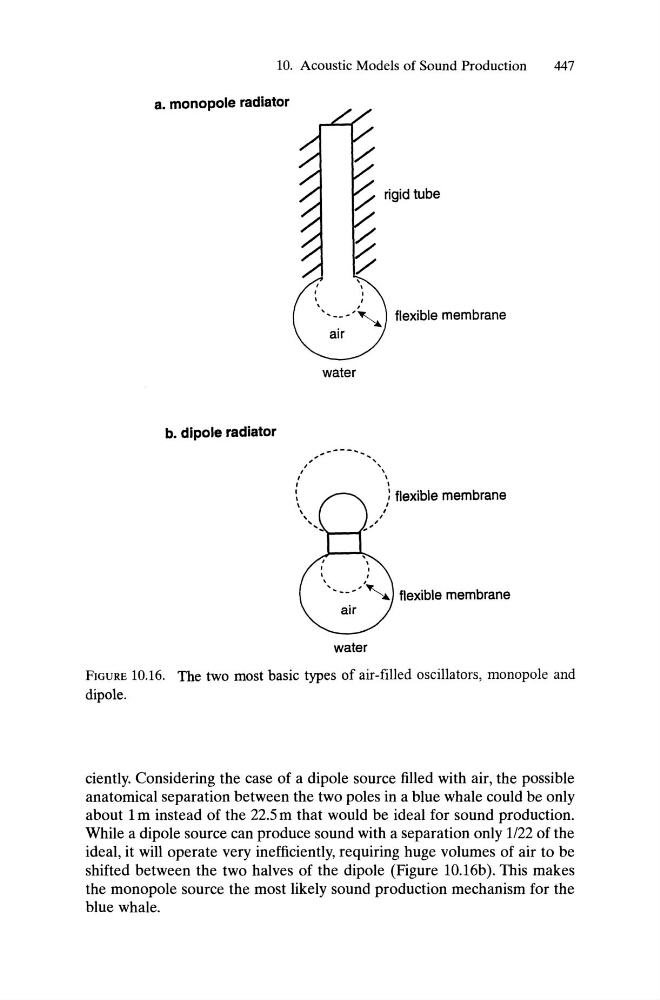
FIGURE 10.16. The two most basic types of air-filled oscillators, monopole and
dipole.
ciently. Considering the case of a dipole source filled with air, the possible
anatomical separation between the two poles in a blue whale could be only
about 1m instead of the 22.5 m that would be ideal for sound production.
While a dipole source can produce sound with a separation only 1/22 of the
ideal, it will operate very inefficiently, requiring huge volumes of air to be
shifted between the two halves of the dipole (Figure 1O.16b). This makes
the monopole source the most likely sound production mechanism for the
blue whale.
447
a. monopole radiator
rigid tube
flexible membrane
water
b. dipole radiator
---- ..... , , ,
\
,
: flexible membrane
I
I
"
-flexible membrane
water
FIGURE 10.16. The two most basic types of air-filled oscillators, monopole and
dipole.
ciently. Considering the case of a dipole source filled with air, the possible
anatomical separation between the two poles in a blue whale could be only
about 1m instead of the 22.5 m that would be ideal for sound production.
While a dipole source can produce sound with a separation only 1/22 of the
ideal, it will operate very inefficiently, requiring huge volumes of air to be
shifted between the two halves of the dipole (Figure 1O.16b). This makes
the monopole source the most likely sound production mechanism for the
blue whale.