

446
J.L. Aroyan et al.
2000
2
.
190 dB rms IlPa 1Hz re 1 uPa
1800
1600
.....
_ 1400
(J)
.....
Q)
180 dB
§.. 1200
Q)
E
:J 1000
(5
>
~ 800
~
(ij
175 dB
£ 600
400
200
0
10
15
20
25
call frequency (Hz)
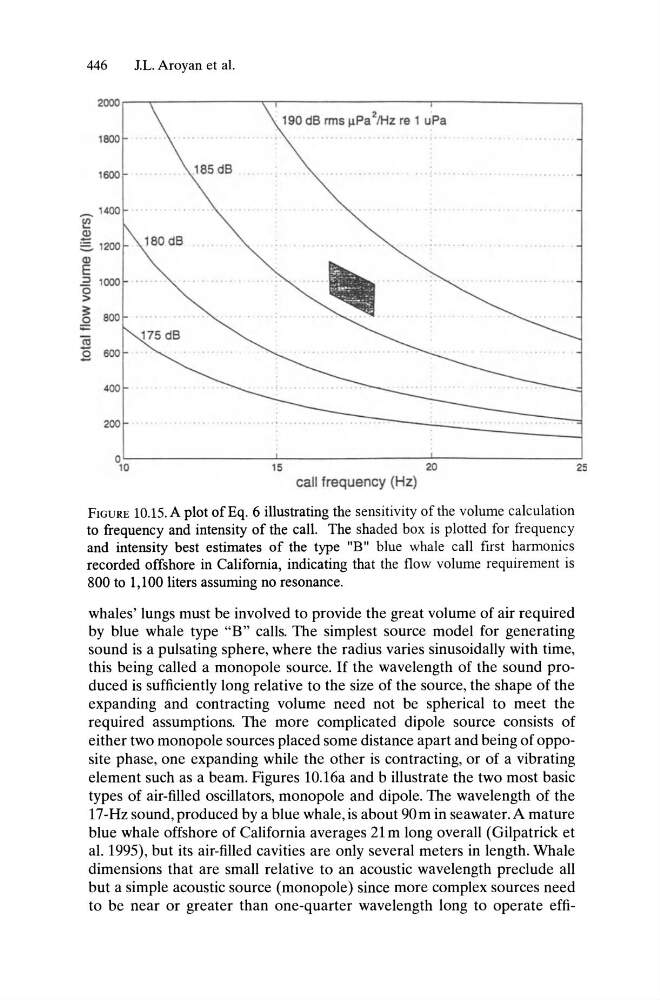
FIGURE 10.15. A plot of Eq. 6 illustrating the sensitivity of the volume calculation
to frequency and intensity of the call. The shaded box is plotted for frequency
and intensity best estimates of the type "B" blue whale call first harmonics
recorded offshore in California, indicating that the flow volume requirement is
800 to 1,100 liters assuming no resonance.
whales' lungs must be involved to provide the great volume of air required
by blue whale type "B" calls. The simplest source model for generating
sound is a pulsating sphere, where the radius varies sinusoidally with time,
this being called a monopole source. If the wavelength of the sound produced is sufficiently long relative to the size of the source, the shape of the
expanding and contracting volume need not be spherical to meet the
required assumptions. The more complicated dipole source consists of
either two monopole sources placed some distance apart and being of opposite phase, one expanding while the other is contracting, or of a vibrating
element such as a beam. Figures 1O.16a and b illustrate the two most basic
types of air-filled oscillators, monopole and dipole. The wavelength of the
17-Hz sound, produced by a blue whale, is about 90 m in seawater. A mature
blue whale offshore of California averages 21 m long overall (Gilpatrick et
al. 1995), but its air-filled cavities are only several meters in length. Whale
dimensions that are small relative to an acoustic wavelength preclude all
but a simple acoustic source (monopole) since more complex sources need
to be near or greater than one-quarter wavelength long to operate effi-
J.L. Aroyan et al.
2000
2
.
190 dB rms IlPa 1Hz re 1 uPa
1800
1600
.....
_ 1400
(J)
.....
Q)
180 dB
§.. 1200
Q)
E
:J 1000
(5
>
~ 800
~
(ij
175 dB
£ 600
400
200
0
10
15
20
25
call frequency (Hz)
FIGURE 10.15. A plot of Eq. 6 illustrating the sensitivity of the volume calculation
to frequency and intensity of the call. The shaded box is plotted for frequency
and intensity best estimates of the type "B" blue whale call first harmonics
recorded offshore in California, indicating that the flow volume requirement is
800 to 1,100 liters assuming no resonance.
whales' lungs must be involved to provide the great volume of air required
by blue whale type "B" calls. The simplest source model for generating
sound is a pulsating sphere, where the radius varies sinusoidally with time,
this being called a monopole source. If the wavelength of the sound produced is sufficiently long relative to the size of the source, the shape of the
expanding and contracting volume need not be spherical to meet the
required assumptions. The more complicated dipole source consists of
either two monopole sources placed some distance apart and being of opposite phase, one expanding while the other is contracting, or of a vibrating
element such as a beam. Figures 1O.16a and b illustrate the two most basic
types of air-filled oscillators, monopole and dipole. The wavelength of the
17-Hz sound, produced by a blue whale, is about 90 m in seawater. A mature
blue whale offshore of California averages 21 m long overall (Gilpatrick et
al. 1995), but its air-filled cavities are only several meters in length. Whale
dimensions that are small relative to an acoustic wavelength preclude all
but a simple acoustic source (monopole) since more complex sources need
to be near or greater than one-quarter wavelength long to operate effi-