

9. Echolocation in Dolphins
389
TURSIOPS. #1
TURSIOPS. #2
LAGENORHYNCHUS
100
-e-,-r e
JrrJ
~I-rrl
Iz
80
w
U
a:
w
I
-
0W
U
60
-
z
c(
:!
-
a:
0
u.
a: 40
-
W
IU
W
a:
I
I
a: 20
COMPARED TO STANDARD TARGET.
0
u
0.22 CM THICK COPPER DISC
0
I
I
I I I I I I I II I I I
C
on
"
on
C C
on
"
on
- - - on "
on
C
C
on U
on
C
on U
on
c c c on U on
::i ::i ::i c
c
::i ::i ::i c ::i
c
::i ::i ::i c
c
a: ::i a:
a:
a:
a: ::i a:
u u
U
III
U
III
U
U
U
III
U
III
U
U
U
III U
III
'"
... ... ::i .... ::i
'"
... ... ::i .... ::i
.... ... ... ::i .... ::i
.., "! ...
... ...
.., OIl ...
ci
0 u .., u
.., d 0 u .., u
ci
ci
u ., u
0
0
ci
0
0
0
...
'"
...
'"
... '"
...
..,
... ..,
"!
d
d
0
ci
0
.,
0
THICKNESS OF 30 CM DIAMETER METAL DISC
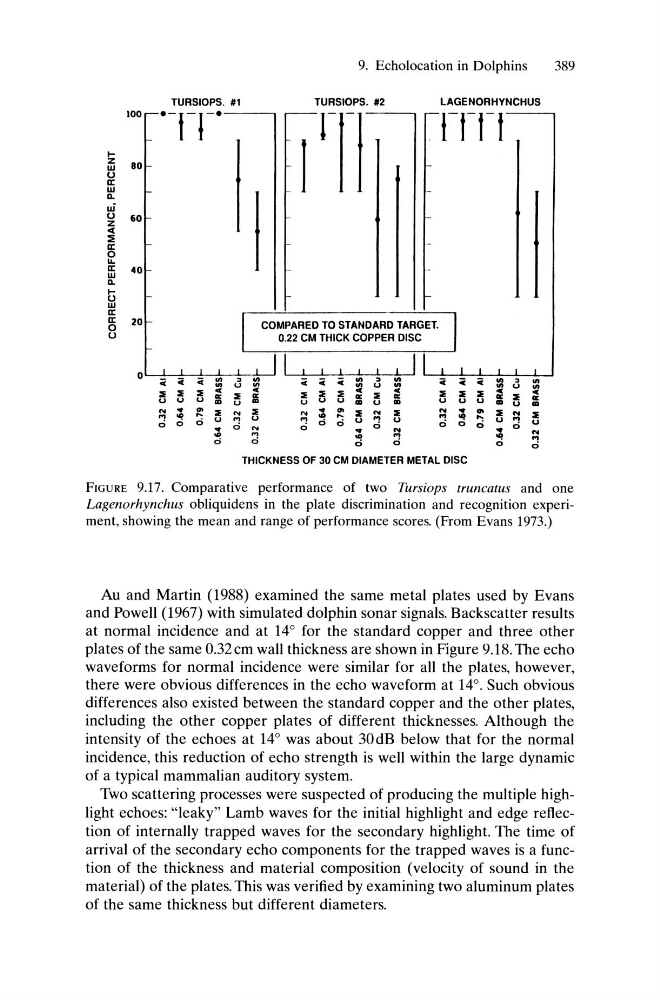
FIGURE 9.17. Comparative performance of two Tursiops truncatus and one
Lagenorhynchus obliquidens in the plate discrimination and recognition experiment, showing the mean and range of performance scores. (From Evans 1973.)
Au and Martin (1988) examined the same metal plates used by Evans
and Powell (1967) with simulated dolphin sonar signals. Backscatter results
at normal incidence and at 14° for the standard copper and three other
plates of the same 0.32 cm wall thickness are shown in Figure 9.18. The echo
waveforms for normal incidence were similar for all the plates, however,
there were obvious differences in the echo waveform at 14°. Such obvious
differences also existed between the standard copper and the other plates,
including the other copper plates of different thicknesses. Although the
intensity of the echoes at 14° was about 30dB below that for the normal
incidence, this reduction of echo strength is well within the large dynamic
of a typical mammalian auditory system.
Two scattering processes were suspected of producing the multiple highlight echoes: "leaky" Lamb waves for the initial highlight and edge reflection of internally trapped waves for the secondary highlight. The time of
arrival of the secondary echo components for the trapped waves is a function of the thickness and material composition (velocity of sound in the
material) of the plates. This was verified by examining two aluminum plates
of the same thickness but different diameters.
389
TURSIOPS. #1
TURSIOPS. #2
LAGENORHYNCHUS
100
-e-,-r e
JrrJ
~I-rrl
Iz
80
w
U
a:
w
I
-
0W
U
60
-
z
c(
:!
-
a:
0
u.
a: 40
-
W
IU
W
a:
I
I
a: 20
COMPARED TO STANDARD TARGET.
0
u
0.22 CM THICK COPPER DISC
0
I
I
I I I I I I I II I I I
C
on
"
on
C C
on
"
on
- - - on "
on
C
C
on U
on
C
on U
on
c c c on U on
::i ::i ::i c
c
::i ::i ::i c ::i
c
::i ::i ::i c
c
a: ::i a:
a:
a:
a: ::i a:
u u
U
III
U
III
U
U
U
III
U
III
U
U
U
III U
III
'"
... ... ::i .... ::i
'"
... ... ::i .... ::i
.... ... ... ::i .... ::i
.., "! ...
... ...
.., OIl ...
ci
0 u .., u
.., d 0 u .., u
ci
ci
u ., u
0
0
ci
0
0
0
...
'"
...
'"
... '"
...
..,
... ..,
"!
d
d
0
ci
0
.,
0
THICKNESS OF 30 CM DIAMETER METAL DISC
FIGURE 9.17. Comparative performance of two Tursiops truncatus and one
Lagenorhynchus obliquidens in the plate discrimination and recognition experiment, showing the mean and range of performance scores. (From Evans 1973.)
Au and Martin (1988) examined the same metal plates used by Evans
and Powell (1967) with simulated dolphin sonar signals. Backscatter results
at normal incidence and at 14° for the standard copper and three other
plates of the same 0.32 cm wall thickness are shown in Figure 9.18. The echo
waveforms for normal incidence were similar for all the plates, however,
there were obvious differences in the echo waveform at 14°. Such obvious
differences also existed between the standard copper and the other plates,
including the other copper plates of different thicknesses. Although the
intensity of the echoes at 14° was about 30dB below that for the normal
incidence, this reduction of echo strength is well within the large dynamic
of a typical mammalian auditory system.
Two scattering processes were suspected of producing the multiple highlight echoes: "leaky" Lamb waves for the initial highlight and edge reflection of internally trapped waves for the secondary highlight. The time of
arrival of the secondary echo components for the trapped waves is a function of the thickness and material composition (velocity of sound in the
material) of the plates. This was verified by examining two aluminum plates
of the same thickness but different diameters.