

CU - .22 em
STANDARD
390
w.w.L. Au
o
~o
TIME (/lSEC)
CU-.32em
AL-.32em
BR-.32em
-~-I
I
o
TIME (/lSEC)
100
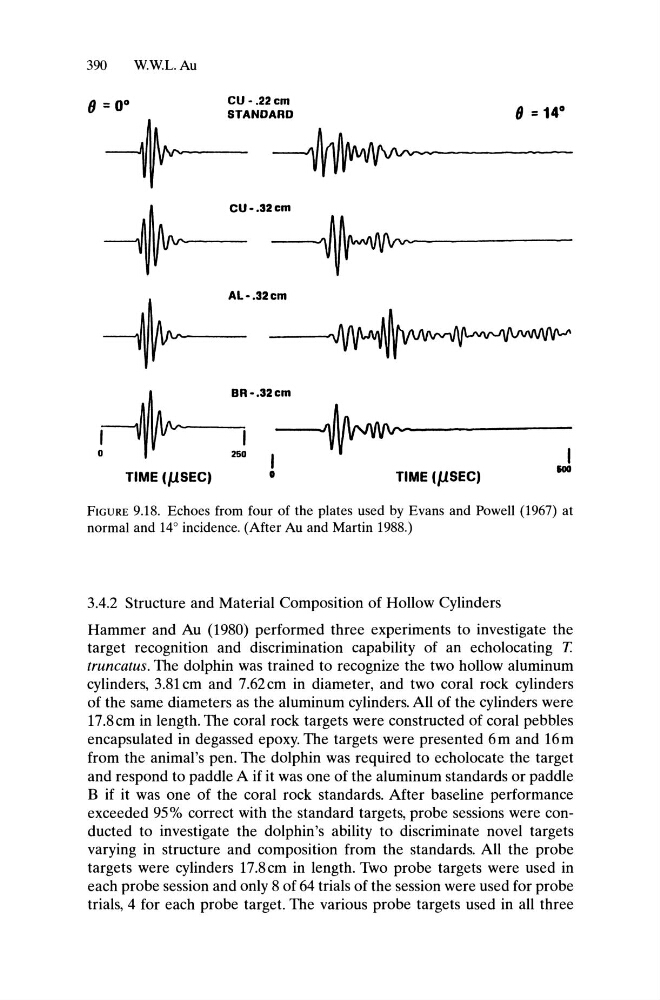
FIGURE 9.18. Echoes from four of the plates used by Evans and Powell (1967) at
normal and 14° incidence. (After Au and Martin 1988.)
3.4.2 Structure and Material Composition of Hollow Cylinders
Hammer and Au (1980) performed three experiments to investigate the
target recognition and discrimination capability of an echolocating T
truncatus. The dolphin was trained to recognize the two hollow aluminum
cylinders, 3.81 cm and 7.62 cm in diameter, and two coral rock cylinders
of the same diameters as the aluminum cylinders. All of the cylinders were
17.8cm in length. The coral rock targets were constructed of coral pebbles
encapsulated in degassed epoxy. The targets were presented 6m and 16m
from the animal's pen. The dolphin was required to echolocate the target
and respond to paddle A if it was one of the aluminum standards or paddle
B if it was one of the coral rock standards. After baseline performance
exceeded 95% correct with the standard targets, probe sessions were conducted to investigate the dolphin's ability to discriminate novel targets
varying in structure and composition from the standards. All the probe
targets were cylinders 17.8 cm in length. Two probe targets were used in
each probe session and only 8 of 64 trials of the session were used for probe
trials, 4 for each probe target. The various probe targets used in all three
STANDARD
390
w.w.L. Au
o
~o
TIME (/lSEC)
CU-.32em
AL-.32em
BR-.32em
-~-I
I
o
TIME (/lSEC)
100
FIGURE 9.18. Echoes from four of the plates used by Evans and Powell (1967) at
normal and 14° incidence. (After Au and Martin 1988.)
3.4.2 Structure and Material Composition of Hollow Cylinders
Hammer and Au (1980) performed three experiments to investigate the
target recognition and discrimination capability of an echolocating T
truncatus. The dolphin was trained to recognize the two hollow aluminum
cylinders, 3.81 cm and 7.62 cm in diameter, and two coral rock cylinders
of the same diameters as the aluminum cylinders. All of the cylinders were
17.8cm in length. The coral rock targets were constructed of coral pebbles
encapsulated in degassed epoxy. The targets were presented 6m and 16m
from the animal's pen. The dolphin was required to echolocate the target
and respond to paddle A if it was one of the aluminum standards or paddle
B if it was one of the coral rock standards. After baseline performance
exceeded 95% correct with the standard targets, probe sessions were conducted to investigate the dolphin's ability to discriminate novel targets
varying in structure and composition from the standards. All the probe
targets were cylinders 17.8 cm in length. Two probe targets were used in
each probe session and only 8 of 64 trials of the session were used for probe
trials, 4 for each probe target. The various probe targets used in all three