

145
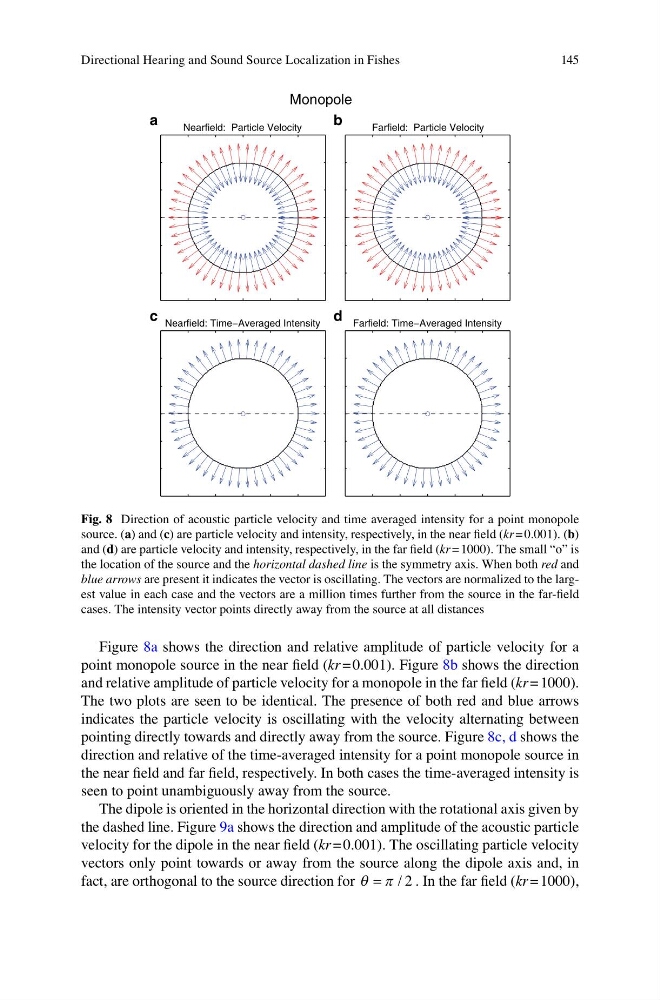
Figure 8a shows the direction and relative amplitude of particle velocity for a
point monopole source in the near field (kr = 0.001). Figure 8b shows the direction
and relative amplitude of particle velocity for a monopole in the far field (kr = 1000).
The two plots are seen to be identical. The presence of both red and blue arrows
indicates the particle velocity is oscillating with the velocity alternating between
pointing directly towards and directly away from the source. Figure 8c, d shows the
direction and relative of the time-averaged intensity for a point monopole source in
the near field and far field, respectively. In both cases the time-averaged intensity is
seen to point unambiguously away from the source.
The dipole is oriented in the horizontal direction with the rotational axis given by
the dashed line. Figure 9a shows the direction and amplitude of the acoustic particle
velocity for the dipole in the near field (kr = 0.001). The oscillating particle velocity
vectors only point towards or away from the source along the dipole axis and, in
fact, are orthogonal to the source direction for q p
= / 2 . In the far field (kr = 1000),
a
Nearfield: Particle Velocity
Monopole
Nearfield: Time−Averaged Intensity
c
b
Farfield: Particle Velocity
Farfield: Time−Averaged Intensity
d
Fig. 8 Direction of acoustic particle velocity and time averaged intensity for a point monopole
source. (a) and (c) are particle velocity and intensity, respectively, in the near field (kr = 0.001). (b)
and (d) are particle velocity and intensity, respectively, in the far field (kr = 1000). The small “o” is
the location of the source and the horizontal dashed line is the symmetry axis. When both red and
blue arrows are present it indicates the vector is oscillating. The vectors are normalized to the largest value in each case and the vectors are a million times further from the source in the far-field
cases. The intensity vector points directly away from the source at all distances
Directional Hearing and Sound Source Localization in Fishes
Figure 8a shows the direction and relative amplitude of particle velocity for a
point monopole source in the near field (kr = 0.001). Figure 8b shows the direction
and relative amplitude of particle velocity for a monopole in the far field (kr = 1000).
The two plots are seen to be identical. The presence of both red and blue arrows
indicates the particle velocity is oscillating with the velocity alternating between
pointing directly towards and directly away from the source. Figure 8c, d shows the
direction and relative of the time-averaged intensity for a point monopole source in
the near field and far field, respectively. In both cases the time-averaged intensity is
seen to point unambiguously away from the source.
The dipole is oriented in the horizontal direction with the rotational axis given by
the dashed line. Figure 9a shows the direction and amplitude of the acoustic particle
velocity for the dipole in the near field (kr = 0.001). The oscillating particle velocity
vectors only point towards or away from the source along the dipole axis and, in
fact, are orthogonal to the source direction for q p
= / 2 . In the far field (kr = 1000),
a
Nearfield: Particle Velocity
Monopole
Nearfield: Time−Averaged Intensity
c
b
Farfield: Particle Velocity
Farfield: Time−Averaged Intensity
d
Fig. 8 Direction of acoustic particle velocity and time averaged intensity for a point monopole
source. (a) and (c) are particle velocity and intensity, respectively, in the near field (kr = 0.001). (b)
and (d) are particle velocity and intensity, respectively, in the far field (kr = 1000). The small “o” is
the location of the source and the horizontal dashed line is the symmetry axis. When both red and
blue arrows are present it indicates the vector is oscillating. The vectors are normalized to the largest value in each case and the vectors are a million times further from the source in the far-field
cases. The intensity vector points directly away from the source at all distances
Directional Hearing and Sound Source Localization in Fishes