

496
calves or fetuses (less than 80 cm in length) (Cremer et al. 2013). There is no evidence of intentional capture of dolphins inside Babitonga Bay, or any other location
along the southern and southeastern Brazilian coast. However, local fishermen are
reluctant to report dead animals due to fear of reprisal. Reports indicate that these
uncounted carcasses typically sink, reducing the reliability of mortality estimates
(Simões-Lopes and Paula 1997). Accidental entangling in fishing nets is the major
cause of dolphin mortality worldwide (Currey et al. 1990; Siciliano 1994; Rosas
et al. 2002; Reeves et al. 2003).
17.8.2 Noise Disturbance
Underwater noise stems from numerous sources and varies both temporally and
spatially. The increase in anthropogenic underwater noise over the past few decades
coincides with intensified human activity in association with the aquatic environment (Weilgart 2007; Wright et al. 2007; Hildebrand 2009). According to Hatch and
Wright (2007), low-level frequency noise has increased by 10–15 dB over the past
50 years due to boat traffic. High levels of underwater noise can inhibit vital activities for species that use sound as a means of communication and environmental
recognition (Richardson et al. 1995; Janik and Slater 1998; Weilgart 2007).
Underwater noise in Babitonga Bay is mainly due to harbor activities and maritime traffic (Holz 2014), as is the case in other coastal areas around the world
(Richardson et al. 1995, McQuinn et al. 2011; Cruz 2012; Bittencourt et al. 2014).
Predictive maps of sound energy show that the innermost region of Babitonga Bay
has lower noise intensity (Fig. 17.18), and that noise intensity increases towards the
mouth of the bay with increasing proximity to the two harbors. High underwater
noise levels can cause a range of problems for cetaceans. One example is behavioral
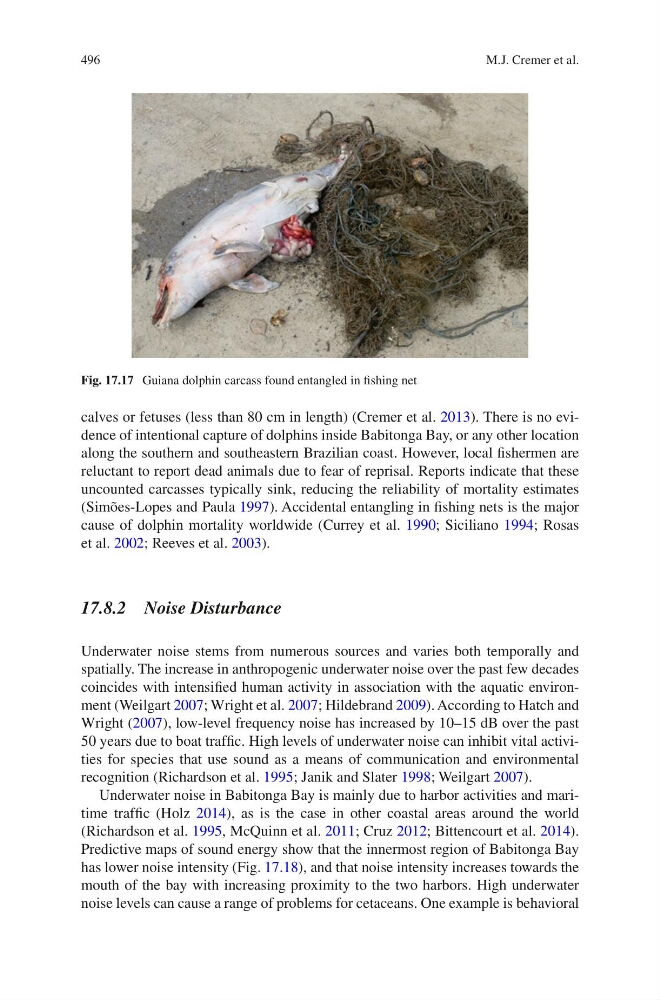
Fig. 17.17 Guiana dolphin carcass found entangled in fishing net
M.J. Cremer et al.
calves or fetuses (less than 80 cm in length) (Cremer et al. 2013). There is no evidence of intentional capture of dolphins inside Babitonga Bay, or any other location
along the southern and southeastern Brazilian coast. However, local fishermen are
reluctant to report dead animals due to fear of reprisal. Reports indicate that these
uncounted carcasses typically sink, reducing the reliability of mortality estimates
(Simões-Lopes and Paula 1997). Accidental entangling in fishing nets is the major
cause of dolphin mortality worldwide (Currey et al. 1990; Siciliano 1994; Rosas
et al. 2002; Reeves et al. 2003).
17.8.2 Noise Disturbance
Underwater noise stems from numerous sources and varies both temporally and
spatially. The increase in anthropogenic underwater noise over the past few decades
coincides with intensified human activity in association with the aquatic environment (Weilgart 2007; Wright et al. 2007; Hildebrand 2009). According to Hatch and
Wright (2007), low-level frequency noise has increased by 10–15 dB over the past
50 years due to boat traffic. High levels of underwater noise can inhibit vital activities for species that use sound as a means of communication and environmental
recognition (Richardson et al. 1995; Janik and Slater 1998; Weilgart 2007).
Underwater noise in Babitonga Bay is mainly due to harbor activities and maritime traffic (Holz 2014), as is the case in other coastal areas around the world
(Richardson et al. 1995, McQuinn et al. 2011; Cruz 2012; Bittencourt et al. 2014).
Predictive maps of sound energy show that the innermost region of Babitonga Bay
has lower noise intensity (Fig. 17.18), and that noise intensity increases towards the
mouth of the bay with increasing proximity to the two harbors. High underwater
noise levels can cause a range of problems for cetaceans. One example is behavioral
Fig. 17.17 Guiana dolphin carcass found entangled in fishing net
M.J. Cremer et al.