

497
and vocal changes due to noise from ships. Holz et al. (2010) found that the Guiana
dolphin increased the frequency and reduced the duration of whistles during the
passing of small boats in Babitonga Bay. Studies of P. blainvillei distribution patterns in Babitonga Bay for over 10 years show that this species does not approach
the harbors (Cremer and Simões-Lopes 2008), which may be partially due to high
noise levels in these areas. Data for S. guianensis indicate that in the past, this species intensively occupied the area near the Port of São Francisco do Sul (Cremer
et al. 2009). However, after the beginning of harbor extension project the species
abandoned the site, likely due to noise. The permanence of Guiana dolphins in areas
with intense noise, even for hunting purposes, is detrimental for the species due to
the potential for resulting physiological problems (Richardson et al. 1995) and
contamination.
17.8.3 Boat Traffic
Boat traffic can generate two specific threats: collision and noise disturbance. Boats
with erratic trajectories are one of the main culprits, and are associated mainly with
human leisure activities and water sports (Simões-Lopes and Paula 1997). Wells
and Scott (1997) highlighted cases of dead or injured cetaceans with cut wounds on
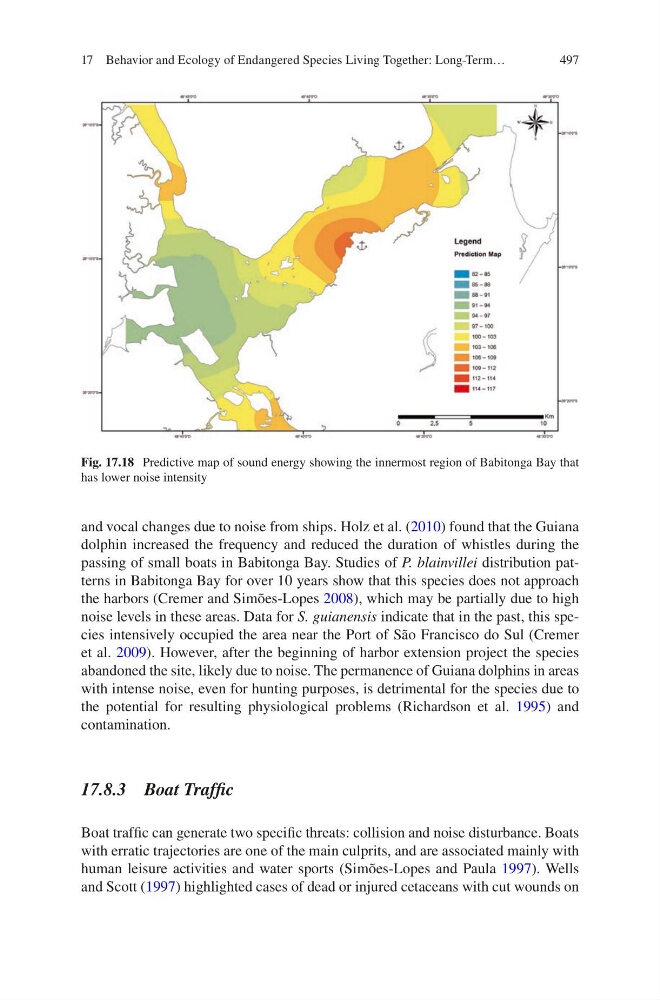
Fig. 17.18 Predictive map of sound energy showing the innermost region of Babitonga Bay that
has lower noise intensity
17 Behavior and Ecology of Endangered Species Living Together: Long-Term…
and vocal changes due to noise from ships. Holz et al. (2010) found that the Guiana
dolphin increased the frequency and reduced the duration of whistles during the
passing of small boats in Babitonga Bay. Studies of P. blainvillei distribution patterns in Babitonga Bay for over 10 years show that this species does not approach
the harbors (Cremer and Simões-Lopes 2008), which may be partially due to high
noise levels in these areas. Data for S. guianensis indicate that in the past, this species intensively occupied the area near the Port of São Francisco do Sul (Cremer
et al. 2009). However, after the beginning of harbor extension project the species
abandoned the site, likely due to noise. The permanence of Guiana dolphins in areas
with intense noise, even for hunting purposes, is detrimental for the species due to
the potential for resulting physiological problems (Richardson et al. 1995) and
contamination.
17.8.3 Boat Traffic
Boat traffic can generate two specific threats: collision and noise disturbance. Boats
with erratic trajectories are one of the main culprits, and are associated mainly with
human leisure activities and water sports (Simões-Lopes and Paula 1997). Wells
and Scott (1997) highlighted cases of dead or injured cetaceans with cut wounds on
Fig. 17.18 Predictive map of sound energy showing the innermost region of Babitonga Bay that
has lower noise intensity
17 Behavior and Ecology of Endangered Species Living Together: Long-Term…