

421
15.3.3 Behavioral Observations
Alone individuals (n = 21) are generally observed floating on the surface, with slow
movements and performing resting behavioral events related to diving, such as
tail- up and dorsum arching, with minor frequency of snaking (tail and peduncle
shaking before dive) and breaching, both noted only for three individuals. Couples
exhibited more active behaviors than alone animals, being observed breaching
(three individuals), tail slapping (two individuals), diving and resting (two
individuals).
Competitive groups including singer males were registered on four occasions,
exhibiting active behaviors. In Oct, 1, 2005, during 40 min of direct observation we
sighted four animals performing behaviors of consecutive tail-up for short dives,
dorsum arching, belly exposition, breaching and bubble exhalation on the sea surface.
In Jul, 31, 2008, three animals were sighted, during 41 min of direct observation,
showing head slapping, dorsum arching, rolling, breaching (n = 13), tail-up for
diving (n = 12) and tail slapping (n = 2). In this sighting, a whale-watching zodiac
boat was observed (about 9 m long with outboard engine of 250 Hp) near to the
humpback group.
Praia do Forte
Aracaju
Itacaré
200m
0
300
600 Km
2005
2006
2007
2008
2009
14°S
12°S
10°S
N
36°W
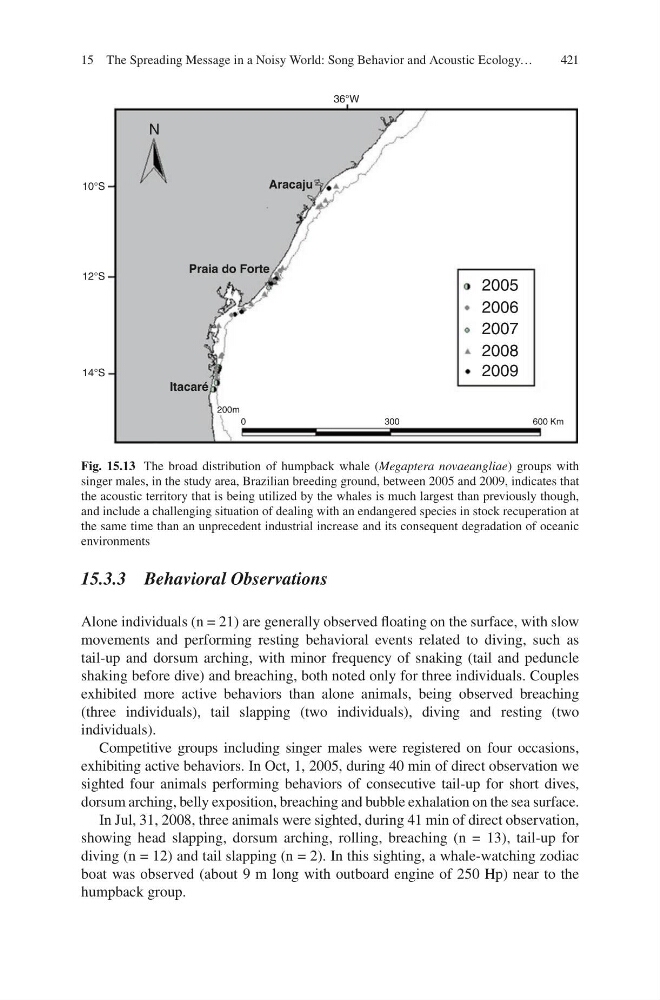
Fig. 15.13 The broad distribution of humpback whale (Megaptera novaeangliae) groups with
singer males, in the study area, Brazilian breeding ground, between 2005 and 2009, indicates that
the acoustic territory that is being utilized by the whales is much largest than previously though,
and include a challenging situation of dealing with an endangered species in stock recuperation at
the same time than an unprecedent industrial increase and its consequent degradation of oceanic
environments
15 The Spreading Message in a Noisy World: Song Behavior and Acoustic Ecology…
15.3.3 Behavioral Observations
Alone individuals (n = 21) are generally observed floating on the surface, with slow
movements and performing resting behavioral events related to diving, such as
tail- up and dorsum arching, with minor frequency of snaking (tail and peduncle
shaking before dive) and breaching, both noted only for three individuals. Couples
exhibited more active behaviors than alone animals, being observed breaching
(three individuals), tail slapping (two individuals), diving and resting (two
individuals).
Competitive groups including singer males were registered on four occasions,
exhibiting active behaviors. In Oct, 1, 2005, during 40 min of direct observation we
sighted four animals performing behaviors of consecutive tail-up for short dives,
dorsum arching, belly exposition, breaching and bubble exhalation on the sea surface.
In Jul, 31, 2008, three animals were sighted, during 41 min of direct observation,
showing head slapping, dorsum arching, rolling, breaching (n = 13), tail-up for
diving (n = 12) and tail slapping (n = 2). In this sighting, a whale-watching zodiac
boat was observed (about 9 m long with outboard engine of 250 Hp) near to the
humpback group.
Praia do Forte
Aracaju
Itacaré
200m
0
300
600 Km
2005
2006
2007
2008
2009
14°S
12°S
10°S
N
36°W
Fig. 15.13 The broad distribution of humpback whale (Megaptera novaeangliae) groups with
singer males, in the study area, Brazilian breeding ground, between 2005 and 2009, indicates that
the acoustic territory that is being utilized by the whales is much largest than previously though,
and include a challenging situation of dealing with an endangered species in stock recuperation at
the same time than an unprecedent industrial increase and its consequent degradation of oceanic
environments
15 The Spreading Message in a Noisy World: Song Behavior and Acoustic Ecology…