

329
activities, communication masking of coastal species and usually cause behavioral
changes in these animals (The Acoustic Ecology Institute 2008).
The noise of cavitation, a phenomenon that occurs in the engine propellers, is the
main source of medium and high frequencies emitted by vessels and it’s increased
according to the engine speed (Arveson and Vendittis 2000).
This noise ranges from medium to high frequencies, so has the potential to overlap the sound signals of various species of toothed whales (Bain and Dahlheim
1994) and is the major factor contributing to noise levels in coastal areas. A recent
study for a population of killer whale (Orcinus orca) pointed the boat’s navigation
speed as the most important cause in the production of noise (Houghton et al. 2015).
Other studies have shown that in the coastal acoustic environment, noise baseline
levels have increased 10–27 dB in intensity in the presence of smaller boats (Erbe
2002). Some species have to send their signals with intensities 20–40 dB above than
the environmental noise to have a successful communication (Holt 2008).
13.1.3.3 Whale Watching Activity
Whale and dolphin watching tourism, or only whale watching, represents a specific
boat traffic and demands special attention, because in addition to the potential
impact of the boat itself, there is also the risk related to the tourism activity, since
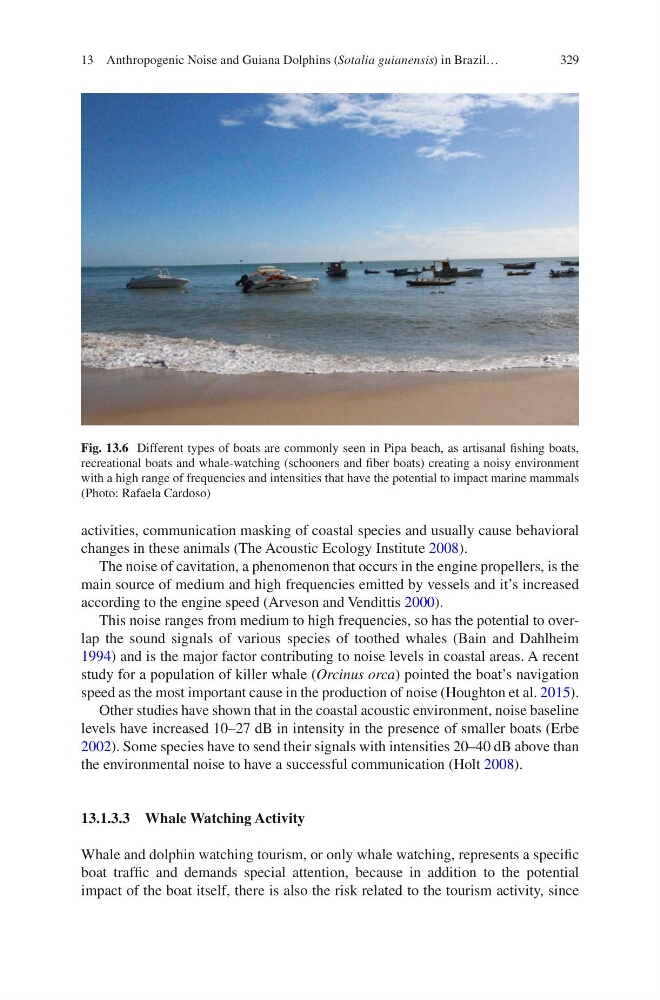
Fig. 13.6 Different types of boats are commonly seen in Pipa beach, as artisanal fishing boats,
recreational boats and whale-watching (schooners and fiber boats) creating a noisy environment
with a high range of frequencies and intensities that have the potential to impact marine mammals
(Photo: Rafaela Cardoso)
13 Anthropogenic Noise and Guiana Dolphins (Sotalia guianensis) in Brazil…
activities, communication masking of coastal species and usually cause behavioral
changes in these animals (The Acoustic Ecology Institute 2008).
The noise of cavitation, a phenomenon that occurs in the engine propellers, is the
main source of medium and high frequencies emitted by vessels and it’s increased
according to the engine speed (Arveson and Vendittis 2000).
This noise ranges from medium to high frequencies, so has the potential to overlap the sound signals of various species of toothed whales (Bain and Dahlheim
1994) and is the major factor contributing to noise levels in coastal areas. A recent
study for a population of killer whale (Orcinus orca) pointed the boat’s navigation
speed as the most important cause in the production of noise (Houghton et al. 2015).
Other studies have shown that in the coastal acoustic environment, noise baseline
levels have increased 10–27 dB in intensity in the presence of smaller boats (Erbe
2002). Some species have to send their signals with intensities 20–40 dB above than
the environmental noise to have a successful communication (Holt 2008).
13.1.3.3 Whale Watching Activity
Whale and dolphin watching tourism, or only whale watching, represents a specific
boat traffic and demands special attention, because in addition to the potential
impact of the boat itself, there is also the risk related to the tourism activity, since
Fig. 13.6 Different types of boats are commonly seen in Pipa beach, as artisanal fishing boats,
recreational boats and whale-watching (schooners and fiber boats) creating a noisy environment
with a high range of frequencies and intensities that have the potential to impact marine mammals
(Photo: Rafaela Cardoso)
13 Anthropogenic Noise and Guiana Dolphins (Sotalia guianensis) in Brazil…