

328
distances, as these ships primarily emit low frequencies sounds with high intensities
(Southall 2004; Hildebrand 2009; Erbe et al. 2016.)
According to a study of Hester et al. (2008) the ocean noise will intensify as the
increasing acidification of the oceans (due to various factors, including the increase
of CO 2 ), causing a reduction on the absorption of low and medium frequency sounds
(≤1 kHz to ~10 kHz), allowing it to travel 10–15% further.
The shipping noise is influenced by a combination of vessel size, type of engine,
quantity and operation speed (Holt 2008; Houghton et al. 2015.). Reine et al. (2014)
measured high levels of intensity produced by ships at the port of New York, the
highest value obtained was 188.9 dB re 1 μPa @ 1 m.
The low frequency sounds (below 200 Hz) are generated by the propulsion system (vibration of engine and hull) (Hildebrand 2009), while the majority of medium
and high frequencies (above about 2 kHz) are from cavitation, a phenomenon that
consists of the formation and explosion of air bubbles due to the accelerated movement of the engine propeller blades (Evans et al. 1992; Leaper et al. 2014).
13.1.3.2 Coastal Boat Traffic
While shipping traffic is the largest global source of noise into the oceans, at a
regional scale the fishing, recreational and whale watching boats are often the main
sources of impacts on coastal populations of aquatic mammals (The Acoustic
Ecology Institute 2008) (Fig. 13.6).
Noise generated by large vessels, composed mainly of lower frequencies, is
extensively studied for their influence on the communication of baleen whales (eg
Rossi-Santos 2015). Smaller boats usually have higher potential to stop feeding
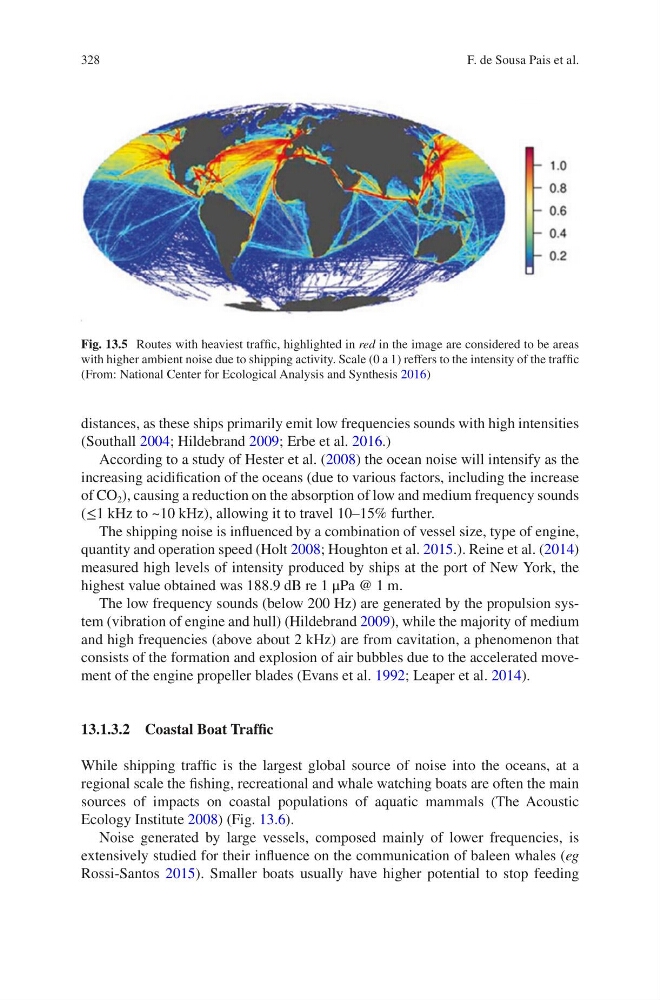
Fig. 13.5 Routes with heaviest traffic, highlighted in red in the image are considered to be areas
with higher ambient noise due to shipping activity. Scale (0 a 1) reffers to the intensity of the traffic
(From: National Center for Ecological Analysis and Synthesis 2016)
F. de Sousa Pais et al.
distances, as these ships primarily emit low frequencies sounds with high intensities
(Southall 2004; Hildebrand 2009; Erbe et al. 2016.)
According to a study of Hester et al. (2008) the ocean noise will intensify as the
increasing acidification of the oceans (due to various factors, including the increase
of CO 2 ), causing a reduction on the absorption of low and medium frequency sounds
(≤1 kHz to ~10 kHz), allowing it to travel 10–15% further.
The shipping noise is influenced by a combination of vessel size, type of engine,
quantity and operation speed (Holt 2008; Houghton et al. 2015.). Reine et al. (2014)
measured high levels of intensity produced by ships at the port of New York, the
highest value obtained was 188.9 dB re 1 μPa @ 1 m.
The low frequency sounds (below 200 Hz) are generated by the propulsion system (vibration of engine and hull) (Hildebrand 2009), while the majority of medium
and high frequencies (above about 2 kHz) are from cavitation, a phenomenon that
consists of the formation and explosion of air bubbles due to the accelerated movement of the engine propeller blades (Evans et al. 1992; Leaper et al. 2014).
13.1.3.2 Coastal Boat Traffic
While shipping traffic is the largest global source of noise into the oceans, at a
regional scale the fishing, recreational and whale watching boats are often the main
sources of impacts on coastal populations of aquatic mammals (The Acoustic
Ecology Institute 2008) (Fig. 13.6).
Noise generated by large vessels, composed mainly of lower frequencies, is
extensively studied for their influence on the communication of baleen whales (eg
Rossi-Santos 2015). Smaller boats usually have higher potential to stop feeding
Fig. 13.5 Routes with heaviest traffic, highlighted in red in the image are considered to be areas
with higher ambient noise due to shipping activity. Scale (0 a 1) reffers to the intensity of the traffic
(From: National Center for Ecological Analysis and Synthesis 2016)
F. de Sousa Pais et al.