

digestive tract and in loose connective tissues such as in the
gills. Bacteria can also be found at the back of the eye
(Fig. 6.10), with opacity followed by corneal lesions, ulceration
and avulsion of the orbital contents. Splenomegaly is common
and even rupture of the organ may occur, particularly in rainbow trout. Histologically, the anterior part of the digestive tract
may show vasodilatation and extensive necrosis of the mucosa
and muscularis. Necrosis and oedema of haematopoietic tissue
and spleen can also be found. A haemolytic anaemia occurs in
chronic cases with resulting deposition of haemosiderin in the
melanomacrophage centres of the splenic ellipsoids.
Listonella anguillarum is a halophilic with bipolar
staining, Gram negative, slightly curved, flagellated motile
rod. The bacterium grows well on standard medium at an
optimum temperature of 22
C and shows haemolytic
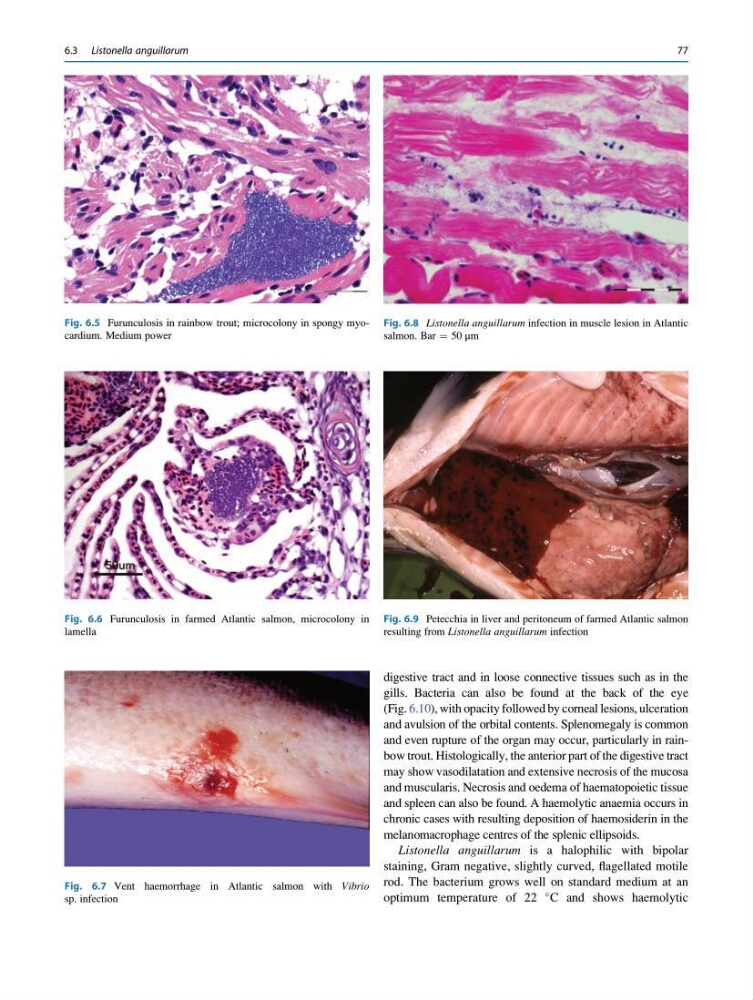
Fig. 6.5 Furunculosis in rainbow trout; microcolony in spongy myocardium. Medium power
Fig. 6.6 Furunculosis in farmed Atlantic salmon, microcolony in
lamella
Fig. 6.7 Vent haemorrhage in Atlantic salmon with Vibrio
sp. infection
Fig. 6.8 Listonella anguillarum infection in muscle lesion in Atlantic
salmon. Bar ¼ 50 μm
Fig. 6.9 Petecchia in liver and peritoneum of farmed Atlantic salmon
resulting from Listonella anguillarum infection
6.3 Listonella anguillarum
77
gills. Bacteria can also be found at the back of the eye
(Fig. 6.10), with opacity followed by corneal lesions, ulceration
and avulsion of the orbital contents. Splenomegaly is common
and even rupture of the organ may occur, particularly in rainbow trout. Histologically, the anterior part of the digestive tract
may show vasodilatation and extensive necrosis of the mucosa
and muscularis. Necrosis and oedema of haematopoietic tissue
and spleen can also be found. A haemolytic anaemia occurs in
chronic cases with resulting deposition of haemosiderin in the
melanomacrophage centres of the splenic ellipsoids.
Listonella anguillarum is a halophilic with bipolar
staining, Gram negative, slightly curved, flagellated motile
rod. The bacterium grows well on standard medium at an
optimum temperature of 22
C and shows haemolytic
Fig. 6.5 Furunculosis in rainbow trout; microcolony in spongy myocardium. Medium power
Fig. 6.6 Furunculosis in farmed Atlantic salmon, microcolony in
lamella
Fig. 6.7 Vent haemorrhage in Atlantic salmon with Vibrio
sp. infection
Fig. 6.8 Listonella anguillarum infection in muscle lesion in Atlantic
salmon. Bar ¼ 50 μm
Fig. 6.9 Petecchia in liver and peritoneum of farmed Atlantic salmon
resulting from Listonella anguillarum infection
6.3 Listonella anguillarum
77