

penetrates to the abdominal cavity. Healing wounds are
typically characterized by scale loss and melanization.
Wounds inflicted by mammals can be variable, but in surviving fish punctures or raking lesions may occur. Seals
often eat the head and/or anterior part of the abdomen
(including the liver) and leave the remaining portion
(Fig. 10.59).
A special type of lesion is caused by lampreys
(Cyclostomata); ectoparasitic primitive jawless fish. They
occur in both fresh- and sea water, the latter being anadromous. In particular, the sea lamprey may cause wellcircumscribed lesions on the flank through the action of
their circular suctorial mouth with horny teeth (Fig. 10.60).
Considerable efforts are being made to control the
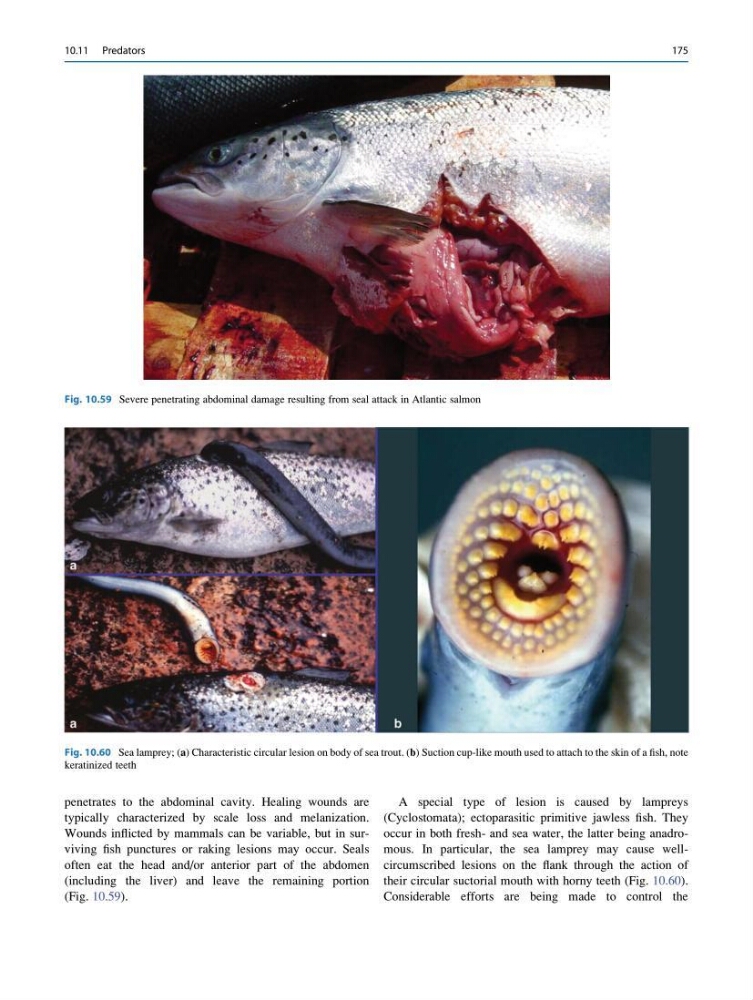
Fig. 10.59 Severe penetrating abdominal damage resulting from seal attack in Atlantic salmon
Fig. 10.60 Sea lamprey; (a) Characteristic circular lesion on body of sea trout. (b) Suction cup-like mouth used to attach to the skin of a fish, note
keratinized teeth
10.11 Predators
175
typically characterized by scale loss and melanization.
Wounds inflicted by mammals can be variable, but in surviving fish punctures or raking lesions may occur. Seals
often eat the head and/or anterior part of the abdomen
(including the liver) and leave the remaining portion
(Fig. 10.59).
A special type of lesion is caused by lampreys
(Cyclostomata); ectoparasitic primitive jawless fish. They
occur in both fresh- and sea water, the latter being anadromous. In particular, the sea lamprey may cause wellcircumscribed lesions on the flank through the action of
their circular suctorial mouth with horny teeth (Fig. 10.60).
Considerable efforts are being made to control the
Fig. 10.59 Severe penetrating abdominal damage resulting from seal attack in Atlantic salmon
Fig. 10.60 Sea lamprey; (a) Characteristic circular lesion on body of sea trout. (b) Suction cup-like mouth used to attach to the skin of a fish, note
keratinized teeth
10.11 Predators
175