

pyknosis and karyorrhexis, and sometimes haemorrhage. It
is generally accepted that these lesions are the consequence
of thiamine deficiency in the female. Salmonids are top
predators and some of their prey may include forage fish
with high levels of thiaminase, e.g. alewife in the Great
Lakes region and sprat and herring in the Baltic Sea. The
composition of the forage fish diet may be variable from
1 year to the other and individual fish may have different
feeding strategies explaining the female dependant factor.
High thiaminase levels results in low levels of thiamine in
eggs and progeny with resultant characteristic signs of
thiamine deficiency. These conditions can be prevented or
reversed by exposing eggs or fry to thiamine. Females can
also be injected with thiamine prior to stripping in order
to avoid the condition. White spot disease and blue-sac
disease are both differential diagnosis.
10.3.7 Mineral Deficiencies
In aquatic ecosystems zinc is an essential micronutrient as
well as a toxicant of considerable significance. Consequently, zinc deficiency leads to physiological perturbation
of growth, reproduction, vision and immunity. Cataracts
attributed to zinc deficiency are usually bilateral and
characterised by diffuse or focal opacity of the lens. Other
gross signs of this deficiency include a reduced growth rate
with skin and fin erosion. Histologically, lesions consist of
vacuolation, lysis of fibres and proliferation of capsular
cells. Keratitis and panophthalmitis may sometimes occur
concurrently. Cataracts occurring through zinc deficiency
are recognised by a diffuse or focal opacity of the lens and
the examination of stained sections. Diagnosis is based on
histological assessment of eye sections.
Magnesium deficiency in rainbow trout include evidence
of poor growth, loss of appetite, calcinosis of kidney and
muscle and a dramatic increase in the muscle extracellular
fluid volume. Histologically, there are degenerative changes
in kidney, ovary and liver as well as hyperplasia of the renal
haematopoietic tissue.
10.4 Diseases Associated with the Eye
A range of production related eye diseases are identified
ranging from sub-acute lesions include cataract, anterior
synechia and suppurative panophthalmitis (Figs. 10.25,
10.26, 10.27, 10.28 and 10.29). Lesions may be the result
of haematogenous (endogenous) spread of pathogens, physical or mechanical (e.g. handling) with subsequent infection,
chemical (e.g. medical treatments), thermal damage or
nutritional factors.
In farmed fish, numerous nutritional imbalances are
known to cause cataract, i.e. deficiency of zinc, vitamin A,
or the amino acids thiamine, riboflavin, methionine and
tryptophane. Cataracts are often bilateral and the result of
denatured proteins in the lens or the result from infection, e.
g. parasites (see Fig. 9.36). Posterior cortical, bilateral
cataracts were documented in the 1990s following the
removal of blood meal from diets and this was attributed to
Fig. 10.24 M74 in Baltic salmon fry. Note haemorrhage in gill area
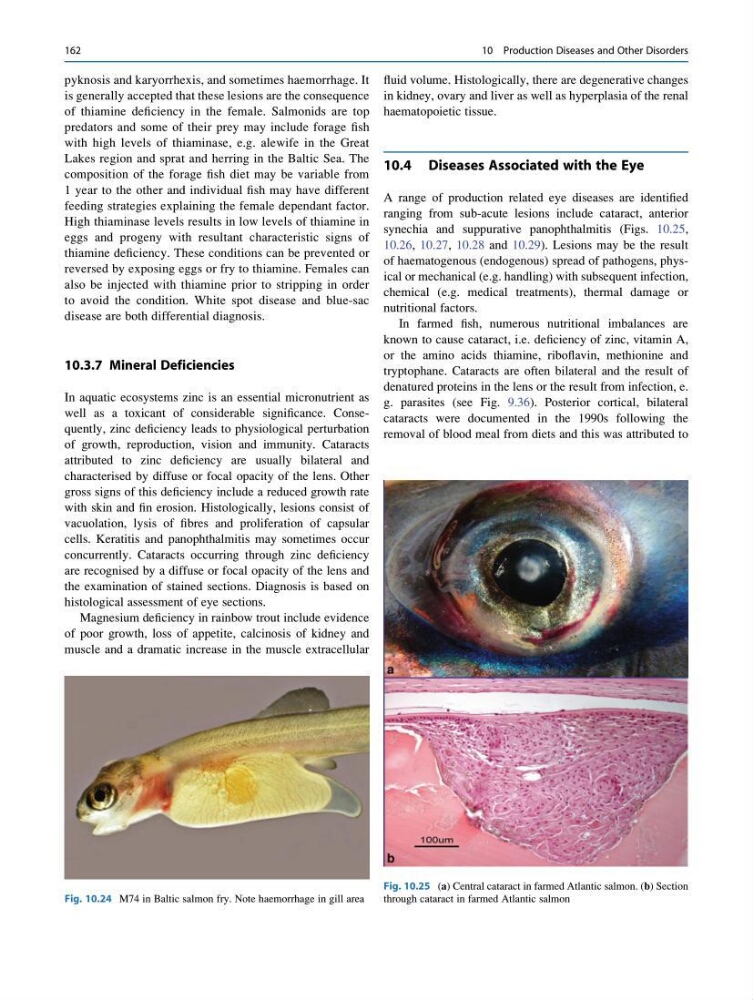
Fig. 10.25 (a) Central cataract in farmed Atlantic salmon. (b) Section
through cataract in farmed Atlantic salmon
162
10 Production Diseases and Other Disorders
is generally accepted that these lesions are the consequence
of thiamine deficiency in the female. Salmonids are top
predators and some of their prey may include forage fish
with high levels of thiaminase, e.g. alewife in the Great
Lakes region and sprat and herring in the Baltic Sea. The
composition of the forage fish diet may be variable from
1 year to the other and individual fish may have different
feeding strategies explaining the female dependant factor.
High thiaminase levels results in low levels of thiamine in
eggs and progeny with resultant characteristic signs of
thiamine deficiency. These conditions can be prevented or
reversed by exposing eggs or fry to thiamine. Females can
also be injected with thiamine prior to stripping in order
to avoid the condition. White spot disease and blue-sac
disease are both differential diagnosis.
10.3.7 Mineral Deficiencies
In aquatic ecosystems zinc is an essential micronutrient as
well as a toxicant of considerable significance. Consequently, zinc deficiency leads to physiological perturbation
of growth, reproduction, vision and immunity. Cataracts
attributed to zinc deficiency are usually bilateral and
characterised by diffuse or focal opacity of the lens. Other
gross signs of this deficiency include a reduced growth rate
with skin and fin erosion. Histologically, lesions consist of
vacuolation, lysis of fibres and proliferation of capsular
cells. Keratitis and panophthalmitis may sometimes occur
concurrently. Cataracts occurring through zinc deficiency
are recognised by a diffuse or focal opacity of the lens and
the examination of stained sections. Diagnosis is based on
histological assessment of eye sections.
Magnesium deficiency in rainbow trout include evidence
of poor growth, loss of appetite, calcinosis of kidney and
muscle and a dramatic increase in the muscle extracellular
fluid volume. Histologically, there are degenerative changes
in kidney, ovary and liver as well as hyperplasia of the renal
haematopoietic tissue.
10.4 Diseases Associated with the Eye
A range of production related eye diseases are identified
ranging from sub-acute lesions include cataract, anterior
synechia and suppurative panophthalmitis (Figs. 10.25,
10.26, 10.27, 10.28 and 10.29). Lesions may be the result
of haematogenous (endogenous) spread of pathogens, physical or mechanical (e.g. handling) with subsequent infection,
chemical (e.g. medical treatments), thermal damage or
nutritional factors.
In farmed fish, numerous nutritional imbalances are
known to cause cataract, i.e. deficiency of zinc, vitamin A,
or the amino acids thiamine, riboflavin, methionine and
tryptophane. Cataracts are often bilateral and the result of
denatured proteins in the lens or the result from infection, e.
g. parasites (see Fig. 9.36). Posterior cortical, bilateral
cataracts were documented in the 1990s following the
removal of blood meal from diets and this was attributed to
Fig. 10.24 M74 in Baltic salmon fry. Note haemorrhage in gill area
Fig. 10.25 (a) Central cataract in farmed Atlantic salmon. (b) Section
through cataract in farmed Atlantic salmon
162
10 Production Diseases and Other Disorders