

Serological or molecular techniques for differential diagnosis
are not currently available and diagnosis therefore determined
by morphological identification of adults.
9.4.2 Cryptocotyle lingua
Cryptocotyle lingua metacercaria infect several marine fish
including both wild and farmed salmonids during the sea
water phase. The condition is known as ‘black spot disease’
and has been diagnosed in salmon, sea-run brown and brook
trout, and sea-run Arctic char. These parasites may cause
mortality in heavily infected fish with a loss of condition
factor and an increased susceptibility to other diseases.
Metacercariae encapsulate in the skin, fins and gills
(Fig. 9.33), and evoke a melanomacrophage reaction generally visible macroscopically, but may also found elsewhere
such as the eyes causing exophthalmia and blindness. In the
heart, cercariae become surrounded by a focal myocarditis.
The presence of circular black spots (0.2 mm diameter) in
the skin (Fig. 9.34) and other organs, assists with diagnosis.
9.4.3 Diplostomum spathaceum
Diplostomum spathaceum cercariae cause diplostomiasis,
generally a seasonal disease of wild and farmed fresh water
fish. Under farming conditions, D. spathaceum is primarily a
problem with rainbow trout reared in earth ponds or cages in
shallow waters. Infected fish usually show cataract and
exophthalmia (Fig. 9.35), skin petechiae is particularly obvious on the ventral surface but can also be seen in the internal
organs where haemorrhage may also be observed. Reduced
growth and emaciation is reported for farmed fish. In
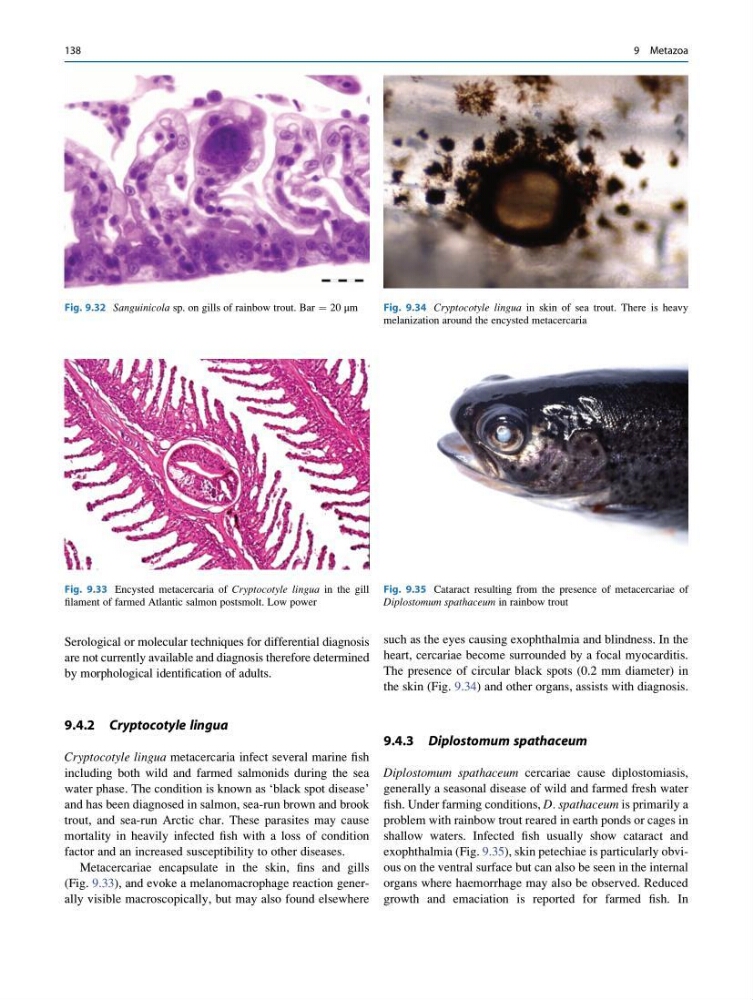
Fig. 9.32 Sanguinicola sp. on gills of rainbow trout. Bar ¼ 20 μm
Fig. 9.33 Encysted metacercaria of Cryptocotyle lingua in the gill
filament of farmed Atlantic salmon postsmolt. Low power
Fig. 9.34 Cryptocotyle lingua in skin of sea trout. There is heavy
melanization around the encysted metacercaria
Fig. 9.35 Cataract resulting from the presence of metacercariae of
Diplostomum spathaceum in rainbow trout
138
9 Metazoa
are not currently available and diagnosis therefore determined
by morphological identification of adults.
9.4.2 Cryptocotyle lingua
Cryptocotyle lingua metacercaria infect several marine fish
including both wild and farmed salmonids during the sea
water phase. The condition is known as ‘black spot disease’
and has been diagnosed in salmon, sea-run brown and brook
trout, and sea-run Arctic char. These parasites may cause
mortality in heavily infected fish with a loss of condition
factor and an increased susceptibility to other diseases.
Metacercariae encapsulate in the skin, fins and gills
(Fig. 9.33), and evoke a melanomacrophage reaction generally visible macroscopically, but may also found elsewhere
such as the eyes causing exophthalmia and blindness. In the
heart, cercariae become surrounded by a focal myocarditis.
The presence of circular black spots (0.2 mm diameter) in
the skin (Fig. 9.34) and other organs, assists with diagnosis.
9.4.3 Diplostomum spathaceum
Diplostomum spathaceum cercariae cause diplostomiasis,
generally a seasonal disease of wild and farmed fresh water
fish. Under farming conditions, D. spathaceum is primarily a
problem with rainbow trout reared in earth ponds or cages in
shallow waters. Infected fish usually show cataract and
exophthalmia (Fig. 9.35), skin petechiae is particularly obvious on the ventral surface but can also be seen in the internal
organs where haemorrhage may also be observed. Reduced
growth and emaciation is reported for farmed fish. In
Fig. 9.32 Sanguinicola sp. on gills of rainbow trout. Bar ¼ 20 μm
Fig. 9.33 Encysted metacercaria of Cryptocotyle lingua in the gill
filament of farmed Atlantic salmon postsmolt. Low power
Fig. 9.34 Cryptocotyle lingua in skin of sea trout. There is heavy
melanization around the encysted metacercaria
Fig. 9.35 Cataract resulting from the presence of metacercariae of
Diplostomum spathaceum in rainbow trout
138
9 Metazoa