

spontaneous recuperation without intervention. The condition has nevertheless a significant economic impact mainly
due to increased labour costs and product rejection or
downgrading at slaughter, lowering its market value.
RMS has shown to be transmissible, both experimentally
and by observed spreading in field cases through live fish
movement, supporting the condition has an infectious
aetiology. A rickettsia-like organism (RLO) has been reported
associated with RMS, however, conclusive evidence of the
agent being the responsible agent has not been provided.
RMS resembles many features of ‘strawberry disease’, a
condition described in the UK for rainbow trout at warmer
waters. Moreover, a disease with similar clinical signs
to RMS has was been reported concurrently in the USA
and named strawberry disease (SD-USA). Recently, a case
definition decided that SD-USA assimilates to RMS and
should be referred to as ‘cold water strawberry disease’,
while the former SD-UK is recognised as ‘warm water
strawberry disease’, thus differentiating the conditions
by the temperature window range and avoiding further
confusion. Currently RMS is diagnosed through light
microscopy.
Further Reading
Apablaza P, Løland AD, Brevik ØJ, Iiardi P, Battaglia J, Nylund A
(2013) Genetic variation among Flavobacterium psychrophilum
isolates from wild and farmed salmonids in Norway and Chile.
J Appl Microbiol. doi:10.1111/jam.12121
Barnes ME, Brown ML (2011) A review of Flavobacterium
psychrophilum biology, clinical signs, and bacterial cold water
disease prevention and treatment. Open Fish Sci J 4:40–48
Bernardet JF, Kerouault B (1989) Phenotypic and genomic studies of
Cytophaga psychrophila isolated from diseased rainbow trout
(Oncorhynchus mykiss) in France. Appl Environ Microbiol
55:1796–1800
Birbeck TH, Bordevik M, Frøystad MK, Baklien A ˚ (2007) Identification
of Francisella sp. from Atlantic salmon, Salmo salar L., in Chile. J
Fish Dis 30:505–507
Birkbeck TH, Laidler LA, Grant AN, Cox DI (2002) Pasteurella
skyensis sp. nov., isolated from Atlantic salmon (Salmo salar L.).
Int J Syst Evol Microbiol 52:699–704
Birrell J, Mitchell S, Bruno DW (2003) Piscirickettsia salmonis in
farmed Atlantic salmon Salmo salar in Scotland. Bull Eur Assoc
Fish Pathol 23:213–217
Bohle H, Tapia E, Martı ´nez A, Rozas M, Figueroa A, Bustos P (2009)
Francisella philomiragia, a bacteria associated with high
mortalities in Atlantic salmon (Salmo salar) cage-farmed in
Llanquihue lake. Arch de Med Vet 41:237–244
Bradley TM, Newcomer CE, Maxwell KO (1988) Epitheliocystis
associated with massive mortalities of cultured lake trout Salvelinus
namaycush. Dis Aquat Org 4:9–17
Bricknell IR, Bruno DW, Stone J (1996) Aeromonas salmonicida
infectivity studies in goldsinny wrasse, Ctenolabrus rupestris (L).
J Fish Dis 19:469–474
Bruno DW (1986a) Scottish experience with bacterial kidney disease in
farmed salmonids between 1976 and 1985. Aquac Fish Manag
17:185–190
Bruno DW (1986b) Histopathology of bacterial kidney disease in
laboratory infected rainbow trout, Salmo gairdneri, Richardson,
and Atlantic salmon, Salmo salar L. J Fish Dis 9:523–537
Bruno DW (1988) The relationship between auto-agglutination, cell
surface hydrophobicity and virulence of the fish pathogen
Renibacterium salmoninarum. FEMS Microbiol Lett 51:135–140
Bruno DW (1990) Presence of a saline extractable protein associated
with virulent strains of the fish pathogen, Renibacterium
salmoninarum. Bull Eur Assoc Fish Pathol 10:8–10
Bruno DW (2004) Prevalence and diagnosis of bacterial kidney disease
(BKD) in Scotland between 1990 and 2002. Dis Aquat Org
59:125–130
Bruno DW, Brown LL (1999) The occurrence of Renibacterium
salmoninarum within vaccine adhesion components from Atlantic
salmon, Salmo salar L. and Coho salmon, Oncorhynchus kisutch
Walbaum. Aquaculture 170:1–5
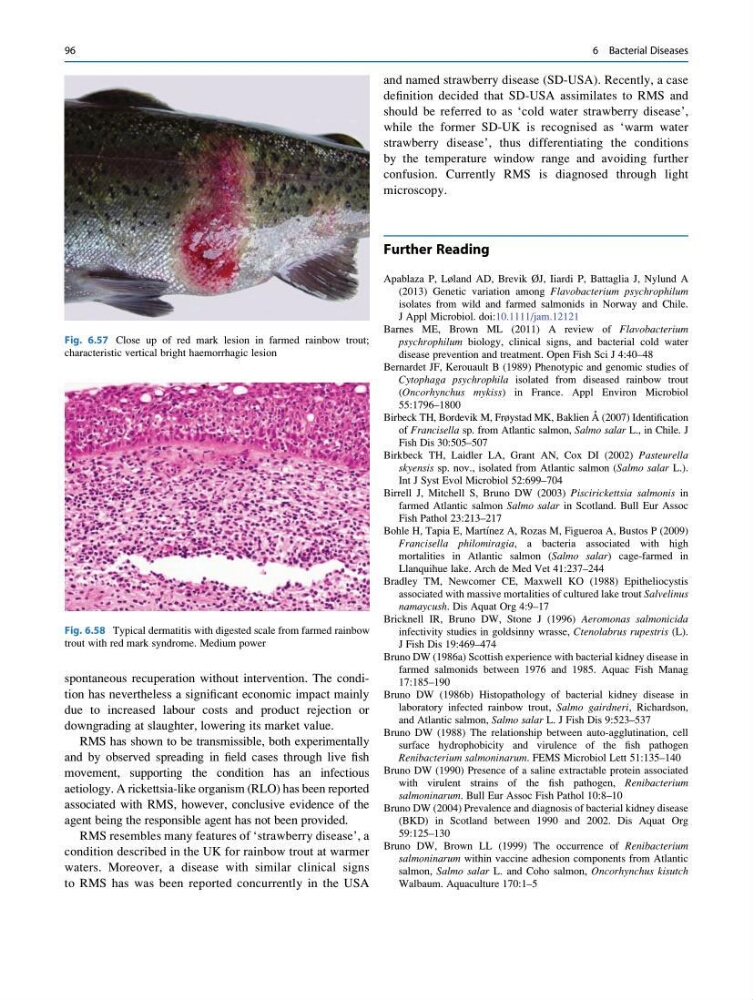
Fig. 6.57 Close up of red mark lesion in farmed rainbow trout;
characteristic vertical bright haemorrhagic lesion
Fig. 6.58 Typical dermatitis with digested scale from farmed rainbow
trout with red mark syndrome. Medium power
96
6 Bacterial Diseases
due to increased labour costs and product rejection or
downgrading at slaughter, lowering its market value.
RMS has shown to be transmissible, both experimentally
and by observed spreading in field cases through live fish
movement, supporting the condition has an infectious
aetiology. A rickettsia-like organism (RLO) has been reported
associated with RMS, however, conclusive evidence of the
agent being the responsible agent has not been provided.
RMS resembles many features of ‘strawberry disease’, a
condition described in the UK for rainbow trout at warmer
waters. Moreover, a disease with similar clinical signs
to RMS has was been reported concurrently in the USA
and named strawberry disease (SD-USA). Recently, a case
definition decided that SD-USA assimilates to RMS and
should be referred to as ‘cold water strawberry disease’,
while the former SD-UK is recognised as ‘warm water
strawberry disease’, thus differentiating the conditions
by the temperature window range and avoiding further
confusion. Currently RMS is diagnosed through light
microscopy.
Further Reading
Apablaza P, Løland AD, Brevik ØJ, Iiardi P, Battaglia J, Nylund A
(2013) Genetic variation among Flavobacterium psychrophilum
isolates from wild and farmed salmonids in Norway and Chile.
J Appl Microbiol. doi:10.1111/jam.12121
Barnes ME, Brown ML (2011) A review of Flavobacterium
psychrophilum biology, clinical signs, and bacterial cold water
disease prevention and treatment. Open Fish Sci J 4:40–48
Bernardet JF, Kerouault B (1989) Phenotypic and genomic studies of
Cytophaga psychrophila isolated from diseased rainbow trout
(Oncorhynchus mykiss) in France. Appl Environ Microbiol
55:1796–1800
Birbeck TH, Bordevik M, Frøystad MK, Baklien A ˚ (2007) Identification
of Francisella sp. from Atlantic salmon, Salmo salar L., in Chile. J
Fish Dis 30:505–507
Birkbeck TH, Laidler LA, Grant AN, Cox DI (2002) Pasteurella
skyensis sp. nov., isolated from Atlantic salmon (Salmo salar L.).
Int J Syst Evol Microbiol 52:699–704
Birrell J, Mitchell S, Bruno DW (2003) Piscirickettsia salmonis in
farmed Atlantic salmon Salmo salar in Scotland. Bull Eur Assoc
Fish Pathol 23:213–217
Bohle H, Tapia E, Martı ´nez A, Rozas M, Figueroa A, Bustos P (2009)
Francisella philomiragia, a bacteria associated with high
mortalities in Atlantic salmon (Salmo salar) cage-farmed in
Llanquihue lake. Arch de Med Vet 41:237–244
Bradley TM, Newcomer CE, Maxwell KO (1988) Epitheliocystis
associated with massive mortalities of cultured lake trout Salvelinus
namaycush. Dis Aquat Org 4:9–17
Bricknell IR, Bruno DW, Stone J (1996) Aeromonas salmonicida
infectivity studies in goldsinny wrasse, Ctenolabrus rupestris (L).
J Fish Dis 19:469–474
Bruno DW (1986a) Scottish experience with bacterial kidney disease in
farmed salmonids between 1976 and 1985. Aquac Fish Manag
17:185–190
Bruno DW (1986b) Histopathology of bacterial kidney disease in
laboratory infected rainbow trout, Salmo gairdneri, Richardson,
and Atlantic salmon, Salmo salar L. J Fish Dis 9:523–537
Bruno DW (1988) The relationship between auto-agglutination, cell
surface hydrophobicity and virulence of the fish pathogen
Renibacterium salmoninarum. FEMS Microbiol Lett 51:135–140
Bruno DW (1990) Presence of a saline extractable protein associated
with virulent strains of the fish pathogen, Renibacterium
salmoninarum. Bull Eur Assoc Fish Pathol 10:8–10
Bruno DW (2004) Prevalence and diagnosis of bacterial kidney disease
(BKD) in Scotland between 1990 and 2002. Dis Aquat Org
59:125–130
Bruno DW, Brown LL (1999) The occurrence of Renibacterium
salmoninarum within vaccine adhesion components from Atlantic
salmon, Salmo salar L. and Coho salmon, Oncorhynchus kisutch
Walbaum. Aquaculture 170:1–5
Fig. 6.57 Close up of red mark lesion in farmed rainbow trout;
characteristic vertical bright haemorrhagic lesion
Fig. 6.58 Typical dermatitis with digested scale from farmed rainbow
trout with red mark syndrome. Medium power
96
6 Bacterial Diseases