

Molecular Adaptation of Microtubules and Microtubule Motors from Antarctic Fish
141
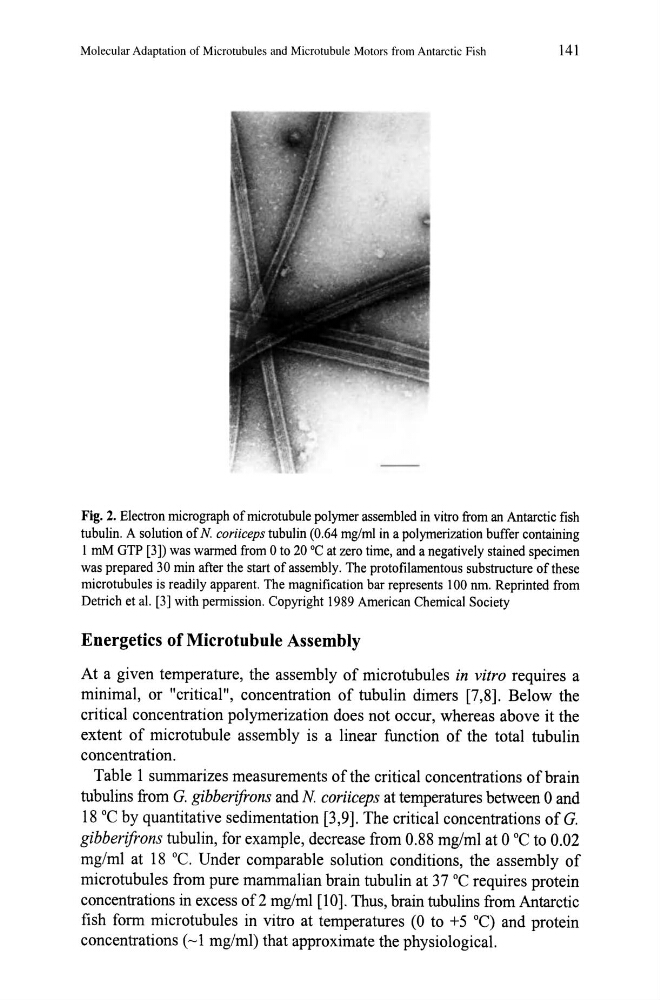
Fig. 2. Electron micrograph of microtubule polymer assembled in vitro from an Antarctic fish
tubulin. A solution of N. coriiceps tubulin (0.64 mg/ml in a polymerization buffer containing
1 mM GTP [3]) was warmed from 0 to 20°C at zero time, and a negatively stained specimen
was prepared 30 min after the start of assembly. The proto filamentous substructure of these
microtubules is readily apparent. The magnification bar represents 100 nm. Reprinted from
Detrich et al. [3] with permission. Copyright 1989 American Chemical Society
Energetics of Microtubule Assembly
At a given temperature, the assembly of microtubules in vitro requires a
minimal, or "critical", concentration of tubulin dimers [7,8]. Below the
critical concentration polymerization does not occur, whereas above it the
extent of microtubule assembly is a linear function of the total tubulin
concentration.
Table 1 summarizes measurements of the critical concentrations of brain
tubulins from G. gibberifrons and N coriiceps at temperatures between 0 and
18°C by quantitative sedimentation [3,9]. The critical concentrations of G.
gibberifrons tubulin, for example, decrease from 0.88 mg/ml at 0 °C to 0.02
mg/ml at 18°C. Under comparable solution conditions, the assembly of
microtubules from pure mammalian brain tubulin at 37°C requires protein
concentrations in excess of 2 mg/ml [10]. Thus, brain tubulins from Antarctic
fish form microtubules in vitro at temperatures (0 to +5 0c) and protein
concentrations (~1 mg/ml) that approximate the physiological.
141
Fig. 2. Electron micrograph of microtubule polymer assembled in vitro from an Antarctic fish
tubulin. A solution of N. coriiceps tubulin (0.64 mg/ml in a polymerization buffer containing
1 mM GTP [3]) was warmed from 0 to 20°C at zero time, and a negatively stained specimen
was prepared 30 min after the start of assembly. The proto filamentous substructure of these
microtubules is readily apparent. The magnification bar represents 100 nm. Reprinted from
Detrich et al. [3] with permission. Copyright 1989 American Chemical Society
Energetics of Microtubule Assembly
At a given temperature, the assembly of microtubules in vitro requires a
minimal, or "critical", concentration of tubulin dimers [7,8]. Below the
critical concentration polymerization does not occur, whereas above it the
extent of microtubule assembly is a linear function of the total tubulin
concentration.
Table 1 summarizes measurements of the critical concentrations of brain
tubulins from G. gibberifrons and N coriiceps at temperatures between 0 and
18°C by quantitative sedimentation [3,9]. The critical concentrations of G.
gibberifrons tubulin, for example, decrease from 0.88 mg/ml at 0 °C to 0.02
mg/ml at 18°C. Under comparable solution conditions, the assembly of
microtubules from pure mammalian brain tubulin at 37°C requires protein
concentrations in excess of 2 mg/ml [10]. Thus, brain tubulins from Antarctic
fish form microtubules in vitro at temperatures (0 to +5 0c) and protein
concentrations (~1 mg/ml) that approximate the physiological.