

90
'4 of total
1 2. 3 4 6 6 7 8 9 10
compartments (1- top)
i _
blue 00 ,ed 0 no IIIle, _ yellow
b
'4 of total
1 2 3 4 6 6 7 8 9 10
compartments (1- top)
_
yellow
~ ,ed _ blue 0 no IlIIe, I
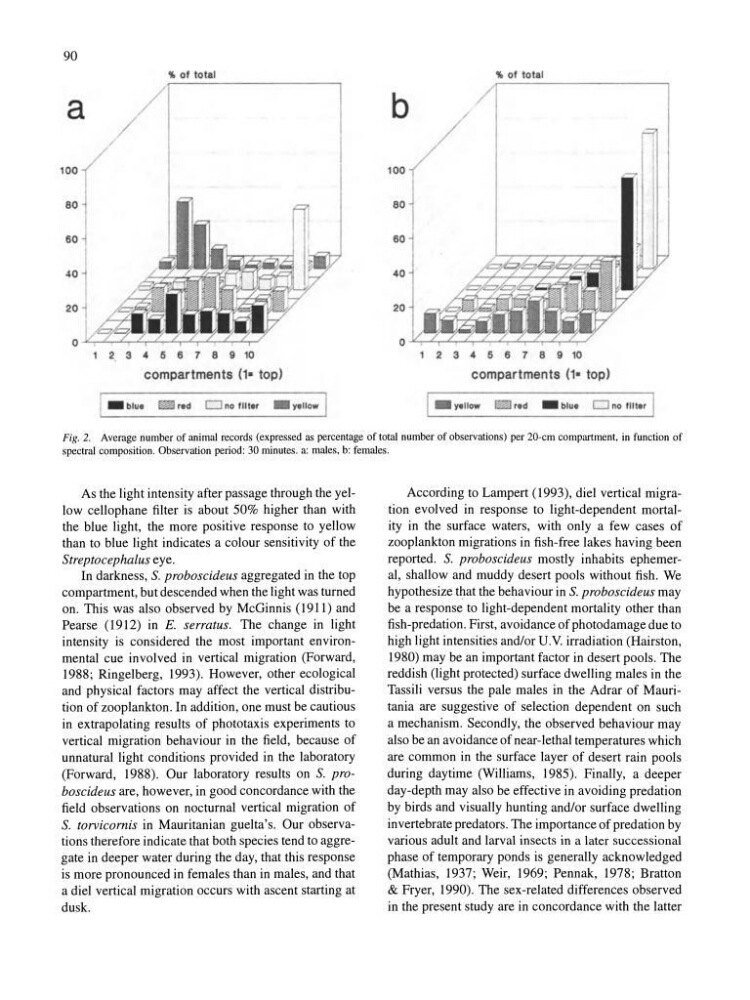
Fig. 2. Average number of animal records (expressed as percentage of total number of observations) per 20-cm compartment. in function of
spectral composition. Observation period: 30 minutes. a: males. b: females.
As the light intensity after passage through the yellow cellophane filter is about 50% higher than with
the blue light, the more positive response to yellow
than to blue light indicates a colour sensitivity of the
Streptocephalus eye.
In darkness, S. proboscideus aggregated in the top
compartment, but descended when the light was turned
on. This was also observed by McGinnis (1911) and
Pearse (1912) in E. serratus. The change in light
intensity is considered the most important environmental cue involved in vertical migration (Forward,
1988; Ringelberg, 1993). However, other ecological
and physical factors may affect the vertical distribution of zooplankton. In addition, one must be cautious
in extrapolating results of phototaxis experiments to
vertical migration behaviour in the field, because of
unnatural light conditions provided in the laboratory
(Forward, 1988). Our laboratory results on S. proboscideus are, however, in good concordance with the
field observations on nocturnal vertical migration of
S. torvicornis in Mauritanian guelta's. Our observations therefore indicate that both species tend to aggregate in deeper water during the day, that this response
is more pronounced in females than in males, and that
a diel vertical migration occurs with ascent starting at
dusk.
According to Lampert (1993), diel vertical migration evolved in response to light-dependent mortality in the surface waters, with only a few cases of
zooplankton migrations in fish-free lakes having been
reported. S. proboscideus mostly inhabits ephemeral, shallow and muddy desert pools without fish. We
hypothesize that the behaviour in S. proboscideus may
be a response to light-dependent mortality other than
fish-predation. First, avoidance of photodamage due to
high light intensities and/or u.v irradiation (Hairston,
1980) may be an important factor in desert pools. The
reddish (light protected) surface dwelling males in the
Tassili versus the pale males in the Adrar of Mauritania are suggestive of selection dependent on such
a mechanism. Secondly, the observed behaviour may
also be an avoidance of near-lethal temperatures which
are common in the surface layer of desert rain pools
during daytime (Williams, 1985). Finally, a deeper
day-depth may also be effective in avoiding predation
by birds and visually hunting and/or surface dwelling
invertebrate predators. The importance of predation by
various adult and larval insects in a later successional
phase of temporary ponds is generally acknowledged
(Mathias, 1937; Weir, 1969; Pennak, 1978; Bratton
& Fryer, 1990). The sex-related differences observed
in the present study are in concordance with the latter
'4 of total
1 2. 3 4 6 6 7 8 9 10
compartments (1- top)
i _
blue 00 ,ed 0 no IIIle, _ yellow
b
'4 of total
1 2 3 4 6 6 7 8 9 10
compartments (1- top)
_
yellow
~ ,ed _ blue 0 no IlIIe, I
Fig. 2. Average number of animal records (expressed as percentage of total number of observations) per 20-cm compartment. in function of
spectral composition. Observation period: 30 minutes. a: males. b: females.
As the light intensity after passage through the yellow cellophane filter is about 50% higher than with
the blue light, the more positive response to yellow
than to blue light indicates a colour sensitivity of the
Streptocephalus eye.
In darkness, S. proboscideus aggregated in the top
compartment, but descended when the light was turned
on. This was also observed by McGinnis (1911) and
Pearse (1912) in E. serratus. The change in light
intensity is considered the most important environmental cue involved in vertical migration (Forward,
1988; Ringelberg, 1993). However, other ecological
and physical factors may affect the vertical distribution of zooplankton. In addition, one must be cautious
in extrapolating results of phototaxis experiments to
vertical migration behaviour in the field, because of
unnatural light conditions provided in the laboratory
(Forward, 1988). Our laboratory results on S. proboscideus are, however, in good concordance with the
field observations on nocturnal vertical migration of
S. torvicornis in Mauritanian guelta's. Our observations therefore indicate that both species tend to aggregate in deeper water during the day, that this response
is more pronounced in females than in males, and that
a diel vertical migration occurs with ascent starting at
dusk.
According to Lampert (1993), diel vertical migration evolved in response to light-dependent mortality in the surface waters, with only a few cases of
zooplankton migrations in fish-free lakes having been
reported. S. proboscideus mostly inhabits ephemeral, shallow and muddy desert pools without fish. We
hypothesize that the behaviour in S. proboscideus may
be a response to light-dependent mortality other than
fish-predation. First, avoidance of photodamage due to
high light intensities and/or u.v irradiation (Hairston,
1980) may be an important factor in desert pools. The
reddish (light protected) surface dwelling males in the
Tassili versus the pale males in the Adrar of Mauritania are suggestive of selection dependent on such
a mechanism. Secondly, the observed behaviour may
also be an avoidance of near-lethal temperatures which
are common in the surface layer of desert rain pools
during daytime (Williams, 1985). Finally, a deeper
day-depth may also be effective in avoiding predation
by birds and visually hunting and/or surface dwelling
invertebrate predators. The importance of predation by
various adult and larval insects in a later successional
phase of temporary ponds is generally acknowledged
(Mathias, 1937; Weir, 1969; Pennak, 1978; Bratton
& Fryer, 1990). The sex-related differences observed
in the present study are in concordance with the latter