

.r:
()
100
80
60
40
+-'
20
o
.r:
4o
+-'
C
([)
a
~ 100
([)
D([)
>
80
+-'
o
::J
E 60
::J
()
40
20
•
a
25
50
•
•
•
i
75
100
125
o
15
•
150
D
24
• LMT'
,. LTR
• BMT
a
•
o
25
50
75
100
125
150
hours of incubation
c
c
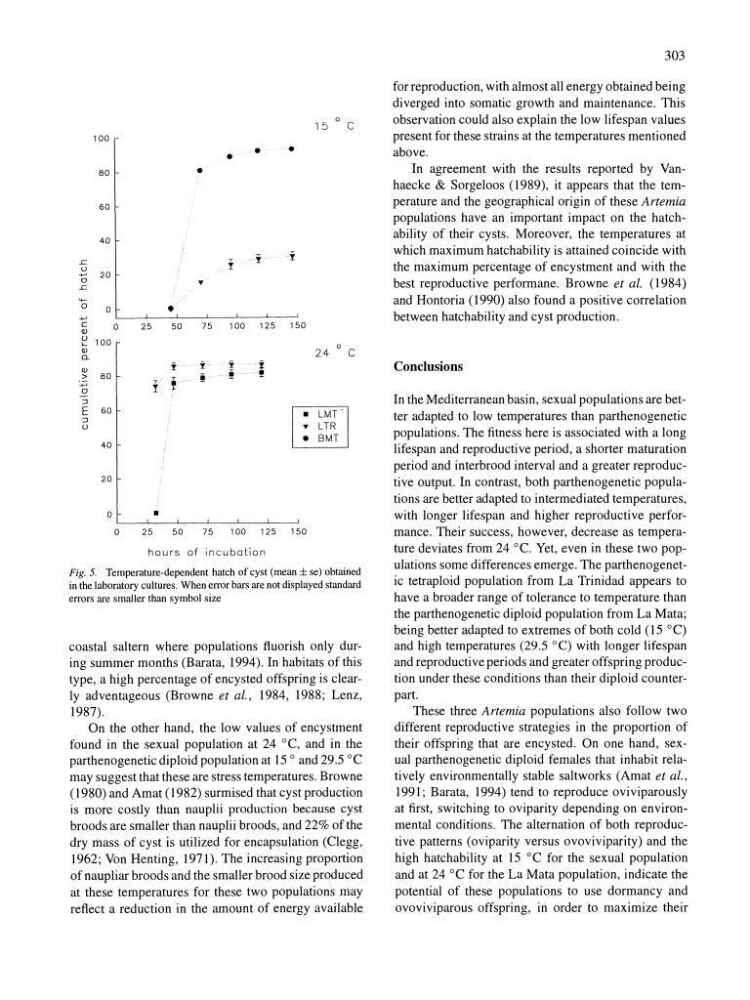
Fig. 5. Temperature-dependent hatch of cyst (mean ± se) obtained
in the laboratory cultures. When error bars are not displayed standard
errors are smaller than symbol size
coastal saltern where populations fluorish only during summer months (Barata, 1994). In habitats of this
type, a high percentage of encysted offspring is clearly adventageous (Browne et at., 1984, 1988; Lenz,
1987).
On the other hand, the low values of encystment
found in the sexual population at 24 DC, and in the
parthenogenetic diploid population at 15 D and 29.5 DC
may suggest that these are stress temperatures. Browne
(1980) and Amat (1982) surmised that cyst production
is more costly than nauplii production because cyst
broods are smaller than nauplii broods, and 22% of the
dry mass of cyst is utilized for encapsulation (Clegg,
1962; Von Henting, 1971). The increasing proportion
of naupliar broods and the smaller brood size produced
at these temperatures for these two populations may
reflect a reduction in the amount of energy available
303
for reproduction, with almost all energy obtained being
diverged into somatic growth and maintenance. This
observation could also explain the low lifespan values
present for these strains at the temperatures mentioned
above .
In agreement with the results reported by Vanhaecke & Sorgeloos (1989), it appears that the temperature and the geographical origin of these Artemia
populations have an important impact on the hatchability of their cysts. Moreover, the temperatures at
which maximum hatchability is attained coincide with
the maximum percentage of encystment and with the
best reproductive performane. Browne et at. (1984)
and Hontoria (1990) also found a positive correlation
between hatchability and cyst production.
Conclusions
In the Mediterranean basin, sexual populations are better adapted to low temperatures than parthenogenetic
populations. The fitness here is associated with a long
lifespan and reproductive period, a shorter maturation
period and interbrood interval and a greater reproductive output. In contrast, both parthenogenetic populations are better adapted to intermediated temperatures,
with longer lifespan and higher reproductive performance. Their success, however, decrease as temperature deviates from 24 DC. Yet, even in these two populations some differences emerge. The parthenogenetic tetraploid population from La Trinidad appears to
have a broader range of tolerance to temperature than
the parthenogenetic diploid population from La Mata;
being better adapted to extremes of both cold (15 DC)
and high temperatures (29.5 DC) with longer lifespan
and reproductive periods and greater offspring production under these conditions than their diploid counterpart.
These three Artemia populations also follow two
different reproductive strategies in the proportion of
their offspring that are encysted. On one hand, sexual parthenogenetic diploid females that inhabit relatively environmentally stable saltworks (Amat et at.,
1991; Barata, 1994) tend to reproduce oviviparously
at first, switching to oviparity depending on environmental conditions. The alternation of both reproductive patterns (oviparity versus ovoviviparity) and the
high hatchability at 15 DC for the sexual population
and at 24 DC for the La Mata population, indicate the
potential of these populations to use dormancy and
ovoviviparous offspring, in order to maximize their
()
100
80
60
40
+-'
20
o
.r:
4o
+-'
C
([)
a
~ 100
([)
D([)
>
80
+-'
o
::J
E 60
::J
()
40
20
•
a
25
50
•
•
•
i
75
100
125
o
15
•
150
D
24
• LMT'
,. LTR
• BMT
a
•
o
25
50
75
100
125
150
hours of incubation
c
c
Fig. 5. Temperature-dependent hatch of cyst (mean ± se) obtained
in the laboratory cultures. When error bars are not displayed standard
errors are smaller than symbol size
coastal saltern where populations fluorish only during summer months (Barata, 1994). In habitats of this
type, a high percentage of encysted offspring is clearly adventageous (Browne et at., 1984, 1988; Lenz,
1987).
On the other hand, the low values of encystment
found in the sexual population at 24 DC, and in the
parthenogenetic diploid population at 15 D and 29.5 DC
may suggest that these are stress temperatures. Browne
(1980) and Amat (1982) surmised that cyst production
is more costly than nauplii production because cyst
broods are smaller than nauplii broods, and 22% of the
dry mass of cyst is utilized for encapsulation (Clegg,
1962; Von Henting, 1971). The increasing proportion
of naupliar broods and the smaller brood size produced
at these temperatures for these two populations may
reflect a reduction in the amount of energy available
303
for reproduction, with almost all energy obtained being
diverged into somatic growth and maintenance. This
observation could also explain the low lifespan values
present for these strains at the temperatures mentioned
above .
In agreement with the results reported by Vanhaecke & Sorgeloos (1989), it appears that the temperature and the geographical origin of these Artemia
populations have an important impact on the hatchability of their cysts. Moreover, the temperatures at
which maximum hatchability is attained coincide with
the maximum percentage of encystment and with the
best reproductive performane. Browne et at. (1984)
and Hontoria (1990) also found a positive correlation
between hatchability and cyst production.
Conclusions
In the Mediterranean basin, sexual populations are better adapted to low temperatures than parthenogenetic
populations. The fitness here is associated with a long
lifespan and reproductive period, a shorter maturation
period and interbrood interval and a greater reproductive output. In contrast, both parthenogenetic populations are better adapted to intermediated temperatures,
with longer lifespan and higher reproductive performance. Their success, however, decrease as temperature deviates from 24 DC. Yet, even in these two populations some differences emerge. The parthenogenetic tetraploid population from La Trinidad appears to
have a broader range of tolerance to temperature than
the parthenogenetic diploid population from La Mata;
being better adapted to extremes of both cold (15 DC)
and high temperatures (29.5 DC) with longer lifespan
and reproductive periods and greater offspring production under these conditions than their diploid counterpart.
These three Artemia populations also follow two
different reproductive strategies in the proportion of
their offspring that are encysted. On one hand, sexual parthenogenetic diploid females that inhabit relatively environmentally stable saltworks (Amat et at.,
1991; Barata, 1994) tend to reproduce oviviparously
at first, switching to oviparity depending on environmental conditions. The alternation of both reproductive patterns (oviparity versus ovoviviparity) and the
high hatchability at 15 DC for the sexual population
and at 24 DC for the La Mata population, indicate the
potential of these populations to use dormancy and
ovoviviparous offspring, in order to maximize their