

300
80
70
"
60
0
c:
QJ
~ 50
Q.
' "
QJ
QJ
>
40
u
'0
:l
LTR
"
~ 30
::
Q.
' "
~
0 20
10
LMT
0
10
15
20
25
30
35
temperature ee)
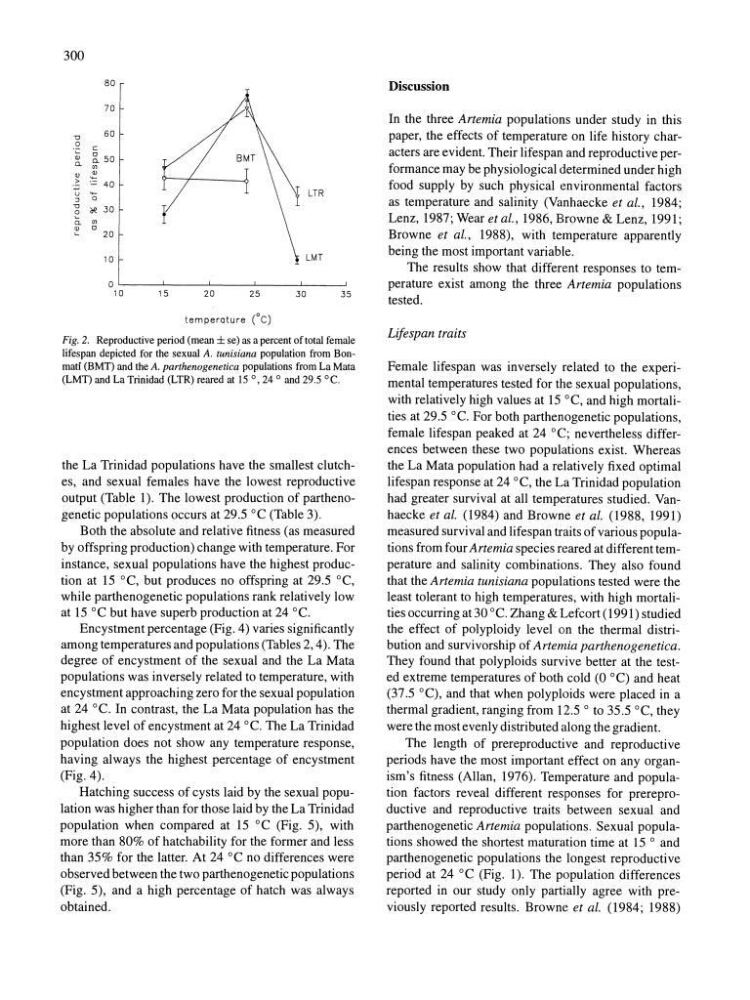
Fig. 2. Reproductive period (mean ± se) as a percent of total female
lifespan depicted for the sexual A. tunisiana population from Bonmati (BMT) and the A. parthenogenetica populations from La Mata
(LMT) and La Trinidad (LTR) reared at 15 °.24 ° and 29.5 0c.
the La Trinidad populations have the smallest clutches, and sexual females have the lowest reproductive
output (Table 1). The lowest production of parthenogenetic populations occurs at 29.5 °C (Table 3).
Both the absolute and relative fitness (as measured
by offspring production) change with temperature. For
instance, sexual populations have the highest production at 15°C, but produces no offspring at 29.5 0c,
while parthenogenetic populations rank relatively low
at 15°C but have superb production at 24 0c.
Encystment percentage (Fig. 4) varies significantly
among temperatures and populations (Tables 2, 4). The
degree of encystment of the sexual and the La Mata
populations was inversely related to temperature, with
encystment approaching zero for the sexual population
at 24°C. In contrast, the La Mata population has the
highest level of encystment at 24°C. The La Trinidad
population does not show any temperature response,
having always the highest percentage of encystment
(Fig. 4).
Hatching success of cysts laid by the sexual population was higher than for those laid by the La Trinidad
population when compared at 15°C (Fig. 5), with
more than 80% of hatchability for the former and less
than 35% for the latter. At 24°C no differences were
observed between the two parthenogenetic populations
(Fig. 5), and a high percentage of hatch was always
obtained.
Discussion
In the three Artemia populations under study in this
paper, the effects of temperature on life history characters are evident. Their lifespan and reproductive performance may be physiological determined under high
food supply by such physical environmental factors
as temperature and salinity (Vanhaecke et af., 1984;
Lenz, 1987; Wear et al., 1986, Browne & Lenz, 1991;
Browne et af., 1988), with temperature apparently
being the most important variable.
The results show that different responses to temperature exist among the three Artemia populations
tested.
Lifespan traits
Female lifespan was inversely related to the experimental temperatures tested for the sexual populations,
with relatively high values at 15°C, and high mortalities at 29.5 °C. For both parthenogenetic populations,
female lifespan peaked at 24°C; nevertheless differences between these two populations exist. Whereas
the La Mata population had a relatively fixed optimal
lifespan response at 24°C, the La Trinidad population
had greater survival at all temperatures studied. Vanhaecke et af. (1984) and Browne et af. (1988, 1991)
measured survival and lifespan traits of various populations from four Artemia species reared at different temperature and salinity combinations. They also found
that the Artemia tunisiana populations tested were the
least tolerant to high temperatures, with high mortalities occurring at 30°C. Zhang & Lefcort (1991) studied
the effect of polyploidy level on the thermal distribution and survivorship of Artemia parthenogenetica.
They found that polyploids survive better at the tested extreme temperatures of both cold (0 0c) and heat
(37.5 0C), and that when polyploids were placed in a
thermal gradient, ranging from 12.5 ° to 35.5 °C, they
were the most evenly distributed along the gradient.
The length of prereproductive and reproductive
periods have the most important effect on any organism's fitness (Allan, 1976). Temperature and population factors reveal different responses for prereproductive and reproductive traits between sexual and
parthenogenetic Artemia populations. Sexual populations showed the shortest maturation time at 15 ° and
parthenogenetic populations the longest reproductive
period at 24°C (Fig. 1). The population differences
reported in our study only partially agree with previously reported results. Browne et af. (1984; 1988)
80
70
"
60
0
c:
QJ
~ 50
Q.
' "
QJ
QJ
>
40
u
'0
:l
LTR
"
~ 30
::
Q.
' "
~
0 20
10
LMT
0
10
15
20
25
30
35
temperature ee)
Fig. 2. Reproductive period (mean ± se) as a percent of total female
lifespan depicted for the sexual A. tunisiana population from Bonmati (BMT) and the A. parthenogenetica populations from La Mata
(LMT) and La Trinidad (LTR) reared at 15 °.24 ° and 29.5 0c.
the La Trinidad populations have the smallest clutches, and sexual females have the lowest reproductive
output (Table 1). The lowest production of parthenogenetic populations occurs at 29.5 °C (Table 3).
Both the absolute and relative fitness (as measured
by offspring production) change with temperature. For
instance, sexual populations have the highest production at 15°C, but produces no offspring at 29.5 0c,
while parthenogenetic populations rank relatively low
at 15°C but have superb production at 24 0c.
Encystment percentage (Fig. 4) varies significantly
among temperatures and populations (Tables 2, 4). The
degree of encystment of the sexual and the La Mata
populations was inversely related to temperature, with
encystment approaching zero for the sexual population
at 24°C. In contrast, the La Mata population has the
highest level of encystment at 24°C. The La Trinidad
population does not show any temperature response,
having always the highest percentage of encystment
(Fig. 4).
Hatching success of cysts laid by the sexual population was higher than for those laid by the La Trinidad
population when compared at 15°C (Fig. 5), with
more than 80% of hatchability for the former and less
than 35% for the latter. At 24°C no differences were
observed between the two parthenogenetic populations
(Fig. 5), and a high percentage of hatch was always
obtained.
Discussion
In the three Artemia populations under study in this
paper, the effects of temperature on life history characters are evident. Their lifespan and reproductive performance may be physiological determined under high
food supply by such physical environmental factors
as temperature and salinity (Vanhaecke et af., 1984;
Lenz, 1987; Wear et al., 1986, Browne & Lenz, 1991;
Browne et af., 1988), with temperature apparently
being the most important variable.
The results show that different responses to temperature exist among the three Artemia populations
tested.
Lifespan traits
Female lifespan was inversely related to the experimental temperatures tested for the sexual populations,
with relatively high values at 15°C, and high mortalities at 29.5 °C. For both parthenogenetic populations,
female lifespan peaked at 24°C; nevertheless differences between these two populations exist. Whereas
the La Mata population had a relatively fixed optimal
lifespan response at 24°C, the La Trinidad population
had greater survival at all temperatures studied. Vanhaecke et af. (1984) and Browne et af. (1988, 1991)
measured survival and lifespan traits of various populations from four Artemia species reared at different temperature and salinity combinations. They also found
that the Artemia tunisiana populations tested were the
least tolerant to high temperatures, with high mortalities occurring at 30°C. Zhang & Lefcort (1991) studied
the effect of polyploidy level on the thermal distribution and survivorship of Artemia parthenogenetica.
They found that polyploids survive better at the tested extreme temperatures of both cold (0 0c) and heat
(37.5 0C), and that when polyploids were placed in a
thermal gradient, ranging from 12.5 ° to 35.5 °C, they
were the most evenly distributed along the gradient.
The length of prereproductive and reproductive
periods have the most important effect on any organism's fitness (Allan, 1976). Temperature and population factors reveal different responses for prereproductive and reproductive traits between sexual and
parthenogenetic Artemia populations. Sexual populations showed the shortest maturation time at 15 ° and
parthenogenetic populations the longest reproductive
period at 24°C (Fig. 1). The population differences
reported in our study only partially agree with previously reported results. Browne et af. (1984; 1988)