

272
ANOST R'" ACA
CHIROCEPHALIDAE
BRANCHINECTELLINAE
BBANCHINECIELLA
• MEDIA
CHIROCEPHALIDAE ( EUBRANCHIPOPINAE )
PREPANOSURUS ; e BIROSTRATUS 0 HANKO I
o VLADIMIRI
SIPHONOPHANES ; . ORUSII
THAMNOCEPHALlPAE
BRANCHINELLA ; A SPINOSA
LlNOERIELLIPAE
LINPERIELLA ; ~ MASSALIENSIS
~ SP, - ("OCCIDENTALIS" , Spain)
'" .
t:,..; _. . . . ;
~
.', I- ,•
e\. ,
-....
'-..F..,
~ ...... -
' .
,"
t
.. ~
,
.
. '
"
z' ~
r: .~
, . ~
~,
. . ,
:--, :
:'~ y..~~ .t.
I
.)'
r~.'>
'
J,
'J
"
. ' \
)
?
' - - - .
"
.'
.' ,
I
'I
- --. .
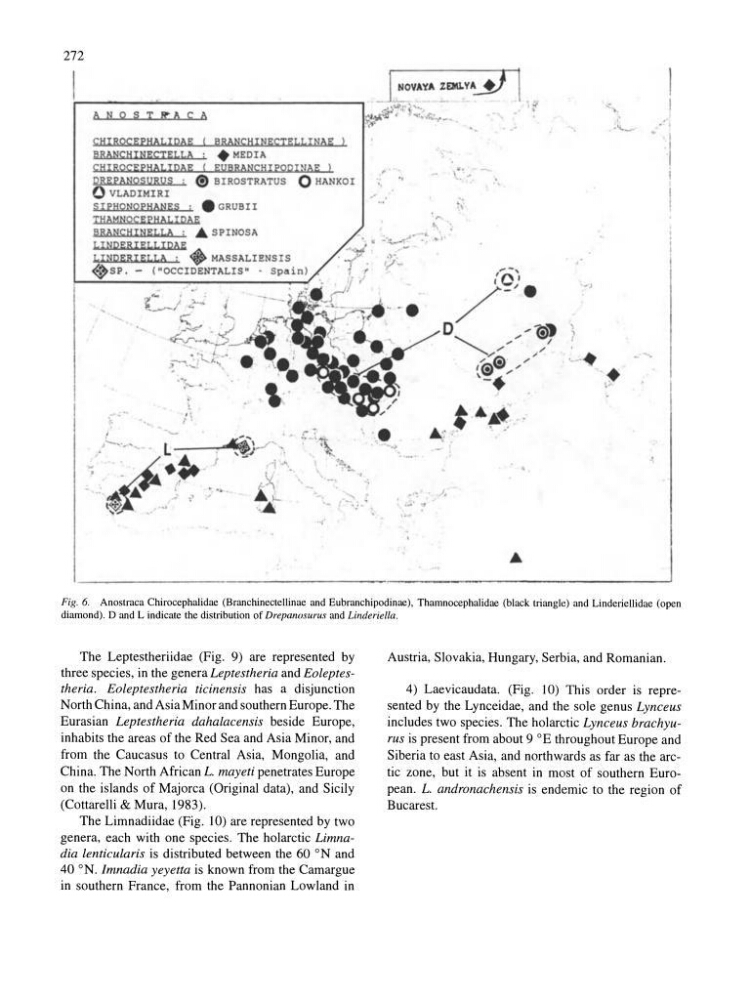
Fig. 6. Anostraca Chirocephalidae (Branchinectellinae and Eubranchipodinae), Thamnocephalidae (black triangle) and Linderiellidae (open
diamond). D and L indicate the distribution of Drepanosurus and Linderiella.
The Leptestheriidae (Fig. 9) are represented by
three species, in the genera Leptestheria and Eoleptestheria. Eoleptestheria ticinensis has a disjunction
North China, and Asia Minor and southern Europe. The
Eurasian Leptestheria dahalacensis beside Europe,
inhabits the areas of the Red Sea and Asia Minor, and
from the Caucasus to Central Asia, Mongolia, and
China, The North African L. mayeti penetrates Europe
on the islands of Majorca (Original data), and Sicily
(Cottarelli & Mura, 1983).
The Limnadiidae (Fig. 10) are represented by two
genera, each with one species. The hoi arctic Limnadia lenticularis is distributed between the 60 oN and
40 oN. Imnadia yeyetta is known from the Camargue
in southern France, from the Pannonian Lowland in
Austria, Slovakia, Hungary, Serbia, and Romanian.
4) Laevicaudata. (Fig. 10) This order is represented by the Lynceidae, and the sole genus Lynceus
includes two species. The holarctic Lynceus brachyurus is present from about 9 °E throughout Europe and
Siberia to east Asia, and northwards as far as the arctic zone, but it is absent in most of southern European. L. andronachensis is endemic to the region of
Bucarest.
ANOST R'" ACA
CHIROCEPHALIDAE
BRANCHINECTELLINAE
BBANCHINECIELLA
• MEDIA
CHIROCEPHALIDAE ( EUBRANCHIPOPINAE )
PREPANOSURUS ; e BIROSTRATUS 0 HANKO I
o VLADIMIRI
SIPHONOPHANES ; . ORUSII
THAMNOCEPHALlPAE
BRANCHINELLA ; A SPINOSA
LlNOERIELLIPAE
LINPERIELLA ; ~ MASSALIENSIS
~ SP, - ("OCCIDENTALIS" , Spain)
'" .
t:,..; _. . . . ;
~
.', I- ,•
e\. ,
-....
'-..F..,
~ ...... -
' .
,"
t
.. ~
,
.
. '
"
z' ~
r: .~
, . ~
~,
. . ,
:--, :
:'~ y..~~ .t.
I
.)'
r~.'>
'
J,
'J
"
. ' \
)
?
' - - - .
"
.'
.' ,
I
'I
- --. .
Fig. 6. Anostraca Chirocephalidae (Branchinectellinae and Eubranchipodinae), Thamnocephalidae (black triangle) and Linderiellidae (open
diamond). D and L indicate the distribution of Drepanosurus and Linderiella.
The Leptestheriidae (Fig. 9) are represented by
three species, in the genera Leptestheria and Eoleptestheria. Eoleptestheria ticinensis has a disjunction
North China, and Asia Minor and southern Europe. The
Eurasian Leptestheria dahalacensis beside Europe,
inhabits the areas of the Red Sea and Asia Minor, and
from the Caucasus to Central Asia, Mongolia, and
China, The North African L. mayeti penetrates Europe
on the islands of Majorca (Original data), and Sicily
(Cottarelli & Mura, 1983).
The Limnadiidae (Fig. 10) are represented by two
genera, each with one species. The hoi arctic Limnadia lenticularis is distributed between the 60 oN and
40 oN. Imnadia yeyetta is known from the Camargue
in southern France, from the Pannonian Lowland in
Austria, Slovakia, Hungary, Serbia, and Romanian.
4) Laevicaudata. (Fig. 10) This order is represented by the Lynceidae, and the sole genus Lynceus
includes two species. The holarctic Lynceus brachyurus is present from about 9 °E throughout Europe and
Siberia to east Asia, and northwards as far as the arctic zone, but it is absent in most of southern European. L. andronachensis is endemic to the region of
Bucarest.