

250
Immature
adult
Old
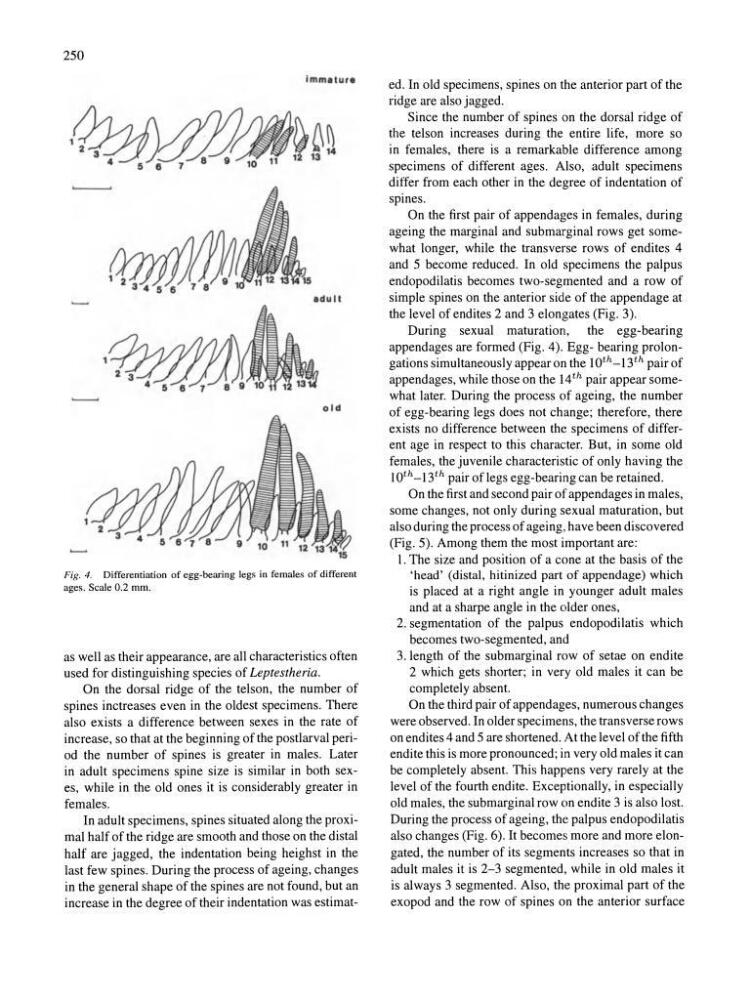
Fig. 4. Differentiation of egg-bearing legs in females of different
ages. Scale 0.2 mm.
as well as their appearance, are all characteristics often
used for distinguishing species of Leptestheria.
On the dorsal ridge of the telson, the number of
spines inctreases even in the oldest specimens. There
also exists a difference between sexes in the rate of
increase, so that at the beginning of the postlarval period the number of spines is greater in males. Later
in adult specimens spine size is similar in both sexes, while in the old ones it is considerably greater in
females .
In adult specimens, spines situated along the proximal half of the ridge are smooth and those on the distal
half are jagged, the indentation being heighst in the
last few spines. During the process of ageing, changes
in the general shape of the spines are not found, but an
increase in the degree of their indentation was estimated. In old specimens, spines on the anterior part of the
ridge are also jagged.
Since the number of spines on the dorsal ridge of
the tel son increases during the entire life, more so
in females , there is a remarkable difference among
specimens of different ages. Also, adult specimens
differ from each other in the degree of indentation of
spmes.
On the first pair of appendages in females, during
ageing the marginal and submarginal rows get somewhat longer, while the transverse rows of endites 4
and 5 become reduced. In old specimens the palpus
endopodilatis becomes two-segmented and a row of
simple spines on the anterior side of the appendage at
the level of endites 2 and 3 elongates (Fig. 3).
During sexual maturation, the egg-bearing
appendages are formed (Fig. 4). Egg- bearing prolongations simultaneously appear on the 10 th _13 th pair of
appendages, while those on the 14th pair appear somewhat later. During the process of ageing, the number
of egg-bearing legs does not change; therefore, there
exists no difference between the specimens of different age in respect to this character. But, in some old
females, the juvenile characteristic of only having the
loth_13 th pair of legs egg-bearing can be retained.
On the first and second pair of appendages in males,
some changes, not only during sexual maturation, but
also during the process of ageing , have been discovered
(Fig. 5). Among them the most important are:
1. The size and position of a cone at the basis of the
'head' (distal, hitinized part of appendage) which
is placed at a right angle in younger adult males
and at a sharpe angle in the older ones,
2. segmentation of the pal pus endopodilatis which
becomes two-segmented, and
3. length of the submarginal row of setae on endite
2 which gets shorter; in very old males it can be
completely absent.
On the third pair of appendages, numerous changes
were observed. In older specimens, the transverse rows
on endites 4 and 5 are shortened. At the level of the fifth
endite this is more pronounced; in very old males it can
be completely absent. This happens very rarely at the
level of the fourth endite. Exceptionally, in especially
old males, the submarginal row on endite 3 is also lost.
During the process of ageing, the palpus endopodilatis
also changes (Fig. 6). It becomes more and more elongated, the number of its segments increases so that in
adult males it is 2-3 segmented, while in old males it
is always 3 segmented. Also, the proximal part of the
exopod and the row of spines on the anterior surface
Immature
adult
Old
Fig. 4. Differentiation of egg-bearing legs in females of different
ages. Scale 0.2 mm.
as well as their appearance, are all characteristics often
used for distinguishing species of Leptestheria.
On the dorsal ridge of the telson, the number of
spines inctreases even in the oldest specimens. There
also exists a difference between sexes in the rate of
increase, so that at the beginning of the postlarval period the number of spines is greater in males. Later
in adult specimens spine size is similar in both sexes, while in the old ones it is considerably greater in
females .
In adult specimens, spines situated along the proximal half of the ridge are smooth and those on the distal
half are jagged, the indentation being heighst in the
last few spines. During the process of ageing, changes
in the general shape of the spines are not found, but an
increase in the degree of their indentation was estimated. In old specimens, spines on the anterior part of the
ridge are also jagged.
Since the number of spines on the dorsal ridge of
the tel son increases during the entire life, more so
in females , there is a remarkable difference among
specimens of different ages. Also, adult specimens
differ from each other in the degree of indentation of
spmes.
On the first pair of appendages in females, during
ageing the marginal and submarginal rows get somewhat longer, while the transverse rows of endites 4
and 5 become reduced. In old specimens the palpus
endopodilatis becomes two-segmented and a row of
simple spines on the anterior side of the appendage at
the level of endites 2 and 3 elongates (Fig. 3).
During sexual maturation, the egg-bearing
appendages are formed (Fig. 4). Egg- bearing prolongations simultaneously appear on the 10 th _13 th pair of
appendages, while those on the 14th pair appear somewhat later. During the process of ageing, the number
of egg-bearing legs does not change; therefore, there
exists no difference between the specimens of different age in respect to this character. But, in some old
females, the juvenile characteristic of only having the
loth_13 th pair of legs egg-bearing can be retained.
On the first and second pair of appendages in males,
some changes, not only during sexual maturation, but
also during the process of ageing , have been discovered
(Fig. 5). Among them the most important are:
1. The size and position of a cone at the basis of the
'head' (distal, hitinized part of appendage) which
is placed at a right angle in younger adult males
and at a sharpe angle in the older ones,
2. segmentation of the pal pus endopodilatis which
becomes two-segmented, and
3. length of the submarginal row of setae on endite
2 which gets shorter; in very old males it can be
completely absent.
On the third pair of appendages, numerous changes
were observed. In older specimens, the transverse rows
on endites 4 and 5 are shortened. At the level of the fifth
endite this is more pronounced; in very old males it can
be completely absent. This happens very rarely at the
level of the fourth endite. Exceptionally, in especially
old males, the submarginal row on endite 3 is also lost.
During the process of ageing, the palpus endopodilatis
also changes (Fig. 6). It becomes more and more elongated, the number of its segments increases so that in
adult males it is 2-3 segmented, while in old males it
is always 3 segmented. Also, the proximal part of the
exopod and the row of spines on the anterior surface