

249
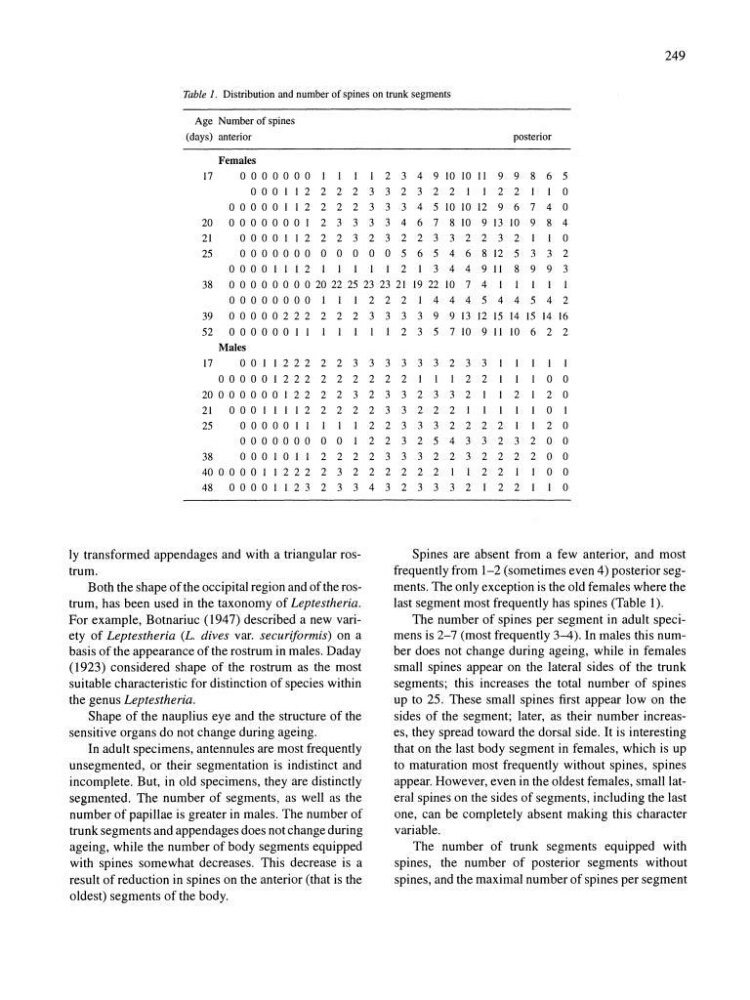
Table 1. Distribution and number of spines on trunk segments
Age Number of spines
(days) anterior
posterior
Females
17
o 0 0 0 0 0 0
I I 2 3 4 9101011 9 9 8 6 5
000 I I 2 2 2 2 3 3 2 3 2 2 I I 2 2 I
0
00000112 2 2 2 3 3 3 4 5 10 10 12 9 6 7 4 0
20 000 0 0 0 0 I 2 3 3 3 3 4 6 7 8 10 9 13 10 9 8 4
21
0000112 2 2 3 2 3 2 2 3 3 2 2 3 2 I
0
25
o 0 0 0 0 0 0 0 0 0 0 0 5 6 5 4 6 8 12 5 3 3 2
00001112 I I I I I 2 I 3 4 4 9 11 8 9 9 3
38
o 0 0 0 0 0 0 0 20 22 25 23 23 21 19 22 10 7 4 I
I
o 0 0 0 0 0 0 0
39 o 0 0 002 2 2 2 2 2
52 00000011
I
Males
17
0011222 2 2 3
o 0 0 0 0 I 222 2 2 2
20 0 0 0 0 0 0 I 2 2 2 2 3
21
00011112 2 2 2
25
0000011 I
o 0 0 0 0 0 0 0 0
38
0001011 2 2 2
40 0 0 0 0 I I 2 2 2 2 3 2
48 00001123 2 3 3
ly transformed appendages and with a triangular rostrum.
Both the shape of the occipital region and of the rostrum, has been used in the taxonomy of Leptestheria.
For example, Botnariuc (1947) described a new variety of Leptestheria (L. dives var. securiformis) on a
basis of the appearance of the rostrum in males. Daday
(1923) considered shape of the rostrum as the most
suitable characteristic for distinction of species within
the genus Leptestheria.
Shape of the nauplius eye and the structure of the
sensitive organs do not change during ageing.
In adult specimens, antennules are most frequently
unsegmented, or their segmentation is indistinct and
incomplete. But, in old specimens, they are distinctly
segmented. The number of segments, as well as the
number of papillae is greater in males. The number of
trunk segments and appendages does not change during
ageing, while the number of body segments equipped
with spines somewhat decreases. This decrease is a
result of reduction in spines on the anterior (that is the
oldest) segments of the body.
2 2
3 3
3 3
2 2
2 3
2 3
2 2
2 2
2 3
2 2
4 3
2
4 4 4 5 4 4 5 4 2
3 3 9 9 13 12 15 14 15 14 16
2 3 5 7 10 9 11 10 6 2 2
3 3 3 2 3 3
2
2 2
0 0
3 2 3 3 2
2
2 0
3 2 2 2 I
0 I
3 3 3 2 2 2 2 I
2 0
3 2 5 4 3 3 2 3 2 0 0
3 3 2 2 3 2 2 2 2 0 0
2 2 2 I I 2 2
0 0
2 3 3 3 2 I 2 2
0
Spines are absent from a few anterior, and most
frequently from 1-2 (sometimes even 4) posterior segments. The only exception is the old females where the
last segment most frequently has spines (Table 1).
The number of spines per segment in adult specimens is 2-7 (most frequently 3-4). In males this number does not change during ageing, while in females
small spines appear on the lateral sides of the trunk
segments; this increases the total number of spines
up to 25. These small spines first appear low on the
sides of the segment; later, as their number increases, they spread toward the dorsal side. It is interesting
that on the last body segment in females, which is up
to maturation most frequently without spines, spines
appear. However, even in the oldest females, smalllateral spines on the sides of segments, including the last
one, can be completely absent making this character
variable.
The number of trunk segments equipped with
spines, the number of posterior segments without
spines, and the maximal number of spines per segment
Table 1. Distribution and number of spines on trunk segments
Age Number of spines
(days) anterior
posterior
Females
17
o 0 0 0 0 0 0
I I 2 3 4 9101011 9 9 8 6 5
000 I I 2 2 2 2 3 3 2 3 2 2 I I 2 2 I
0
00000112 2 2 2 3 3 3 4 5 10 10 12 9 6 7 4 0
20 000 0 0 0 0 I 2 3 3 3 3 4 6 7 8 10 9 13 10 9 8 4
21
0000112 2 2 3 2 3 2 2 3 3 2 2 3 2 I
0
25
o 0 0 0 0 0 0 0 0 0 0 0 5 6 5 4 6 8 12 5 3 3 2
00001112 I I I I I 2 I 3 4 4 9 11 8 9 9 3
38
o 0 0 0 0 0 0 0 20 22 25 23 23 21 19 22 10 7 4 I
I
o 0 0 0 0 0 0 0
39 o 0 0 002 2 2 2 2 2
52 00000011
I
Males
17
0011222 2 2 3
o 0 0 0 0 I 222 2 2 2
20 0 0 0 0 0 0 I 2 2 2 2 3
21
00011112 2 2 2
25
0000011 I
o 0 0 0 0 0 0 0 0
38
0001011 2 2 2
40 0 0 0 0 I I 2 2 2 2 3 2
48 00001123 2 3 3
ly transformed appendages and with a triangular rostrum.
Both the shape of the occipital region and of the rostrum, has been used in the taxonomy of Leptestheria.
For example, Botnariuc (1947) described a new variety of Leptestheria (L. dives var. securiformis) on a
basis of the appearance of the rostrum in males. Daday
(1923) considered shape of the rostrum as the most
suitable characteristic for distinction of species within
the genus Leptestheria.
Shape of the nauplius eye and the structure of the
sensitive organs do not change during ageing.
In adult specimens, antennules are most frequently
unsegmented, or their segmentation is indistinct and
incomplete. But, in old specimens, they are distinctly
segmented. The number of segments, as well as the
number of papillae is greater in males. The number of
trunk segments and appendages does not change during
ageing, while the number of body segments equipped
with spines somewhat decreases. This decrease is a
result of reduction in spines on the anterior (that is the
oldest) segments of the body.
2 2
3 3
3 3
2 2
2 3
2 3
2 2
2 2
2 3
2 2
4 3
2
4 4 4 5 4 4 5 4 2
3 3 9 9 13 12 15 14 15 14 16
2 3 5 7 10 9 11 10 6 2 2
3 3 3 2 3 3
2
2 2
0 0
3 2 3 3 2
2
2 0
3 2 2 2 I
0 I
3 3 3 2 2 2 2 I
2 0
3 2 5 4 3 3 2 3 2 0 0
3 3 2 2 3 2 2 2 2 0 0
2 2 2 I I 2 2
0 0
2 3 3 3 2 I 2 2
0
Spines are absent from a few anterior, and most
frequently from 1-2 (sometimes even 4) posterior segments. The only exception is the old females where the
last segment most frequently has spines (Table 1).
The number of spines per segment in adult specimens is 2-7 (most frequently 3-4). In males this number does not change during ageing, while in females
small spines appear on the lateral sides of the trunk
segments; this increases the total number of spines
up to 25. These small spines first appear low on the
sides of the segment; later, as their number increases, they spread toward the dorsal side. It is interesting
that on the last body segment in females, which is up
to maturation most frequently without spines, spines
appear. However, even in the oldest females, smalllateral spines on the sides of segments, including the last
one, can be completely absent making this character
variable.
The number of trunk segments equipped with
spines, the number of posterior segments without
spines, and the maximal number of spines per segment